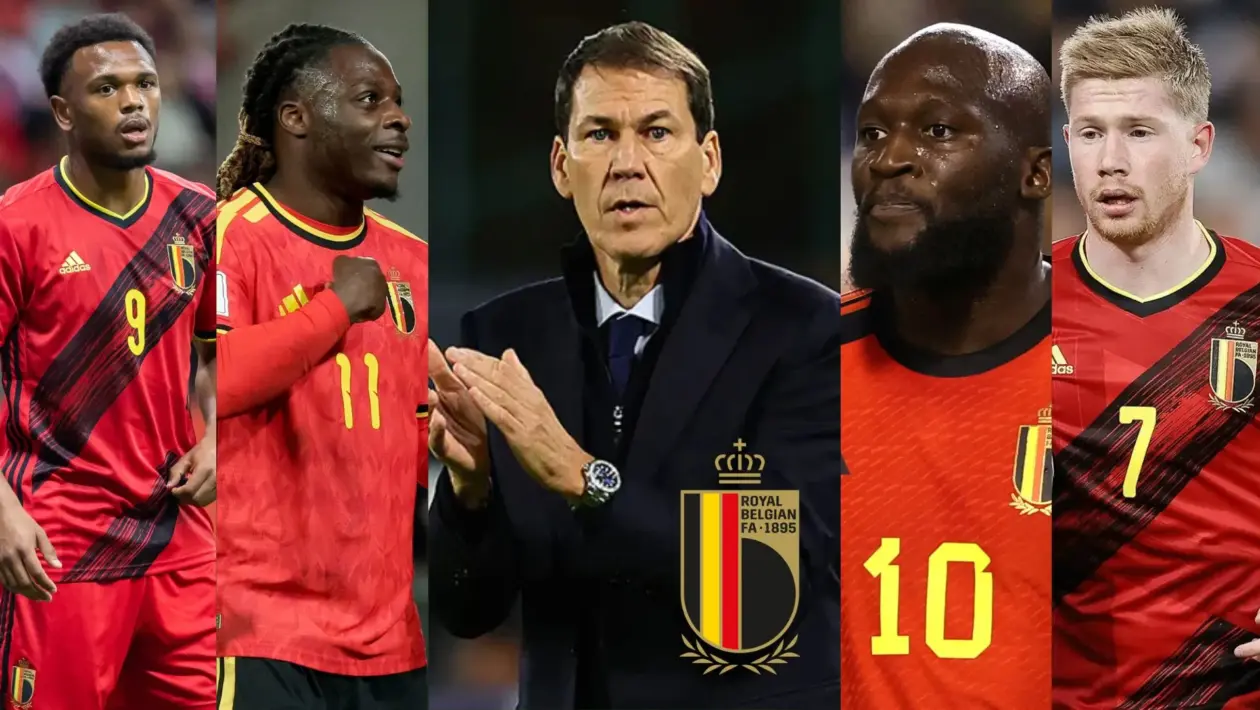
The Red Devils are back — and Rudi Garcia has made his final call. Belgium’s head coach officially announced his 26-man FIFA World Cup 2026 squad on May 15, 2026, on Belgian television — ahead of the June 1 FIFA deadline. The announcement ended weeks of speculation about the golden generation’s survivors, the Lukaku fitness gamble, and the most controversial omission of Belgium’s World Cup cycle: Malick Fofana, their qualifying top scorer, left out.
Under Garcia, Belgium have transformed from a team that crashed out of the Qatar 2022 group stage — without winning a single knockout match — into a structured, clearly-organised side with a distinct tactical identity.
The veterans who remain — Kevin De Bruyne, Romelu Lukaku, Thibaut Courtois, and Axel Witsel — form a spine of experience alongside a new generation of Premier League and European stars ready to go where Belgium’s golden generation ultimately could not.
Drawn into Group G alongside Egypt, Iran, and New Zealand, Belgium arrive as heavy favourites to advance — and with realistic ambitions of going deep into the knockout rounds. Here is everything you need to know.
Belgium’s Final 26-Man Squad for FIFA World Cup 2026
Table of Contents
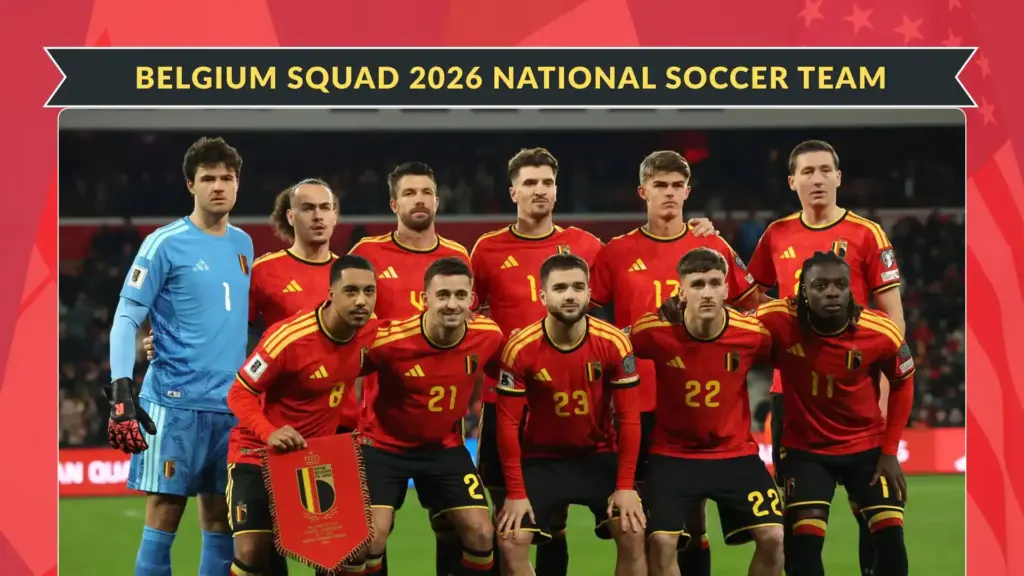
Rudi Garcia’s complete, officially confirmed 26-man roster for the 2026 FIFA World Cup, announced on May 15, 2026:
- Goalkeepers: Thibaut Courtois (Real Madrid), Senne Lammens (Manchester United), Mike Penders (Racing Strasbourg).
- Defenders: Timothy Castagne (Fulham), Zeno Debast (Sporting), Maxim de Cuyper (Brighton), Koni de Winter (AC Milan), Brandon Mechele (Club Brugge), Thomas Meunier (Lille), Nathan Ngoy (Lille), Joaquin Seys (Club Brugge), Arthur Theate (Eintracht Frankfurt).
- Midfielders: Kevin de Bruyne (Napoli), Amadou Onana (Aston Villa), Nicolas Raskin (Rangers), Youri Tielemans (Aston Villa), Hans Vanaken (Club Brugge), Axel Witsel (Girona).
- Forwards: Charles de Ketelaere (Atalanta), Jeremy Doku (Manchester City), Matias Fernandez-Pardo (Lille), Romelu Lukaku (Napoli), Dodi Lukebakio (Benfica), Diego Moreira (Strasbourg), Alexis Saelemaekers (AC Milan), Leandro Trossard (Arsenal).
Rudi Garcia: The French Coach Building Belgium’s New Era
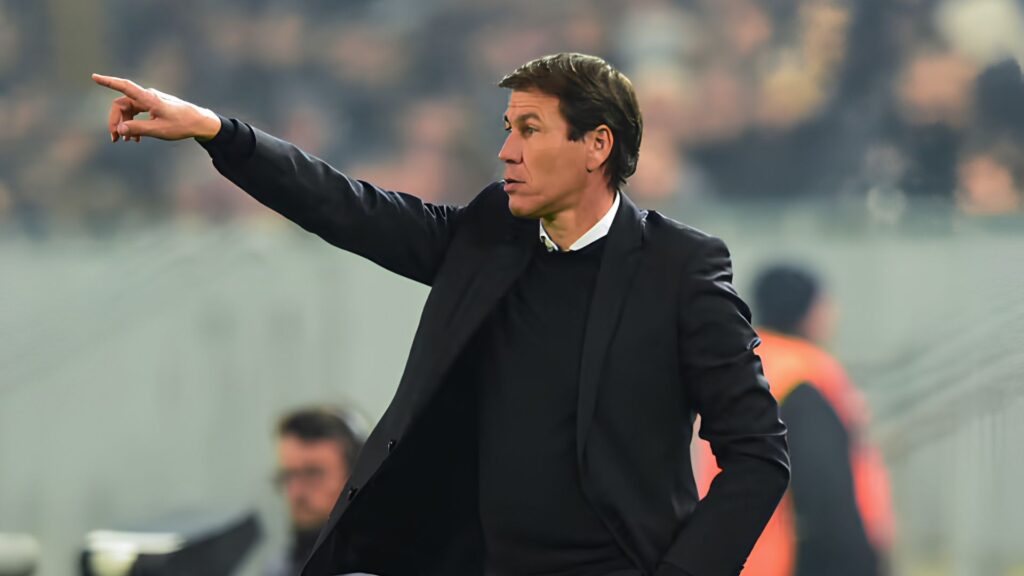
The story of this Belgium squad begins with the man who assembled it — and Rudi Garcia’s arrival is itself one of the most significant developments in Belgian football over the past decade.
Garcia was appointed Belgium head coach on January 24, 2025, replacing Domenico Tedesco after Belgium’s Nations League struggles. He became the first French manager to lead the Belgian national team, signing a contract through the end of the 2026 World Cup.
This is his debut in international management after building his reputation across six club posts in four countries — Lille, Roma, Marseille, Lyon, Al-Nassr, and Napoli.
The impact was immediate. Garcia helped Belgium avoid relegation to the Nations League League B in his first two games as manager. Then came the World Cup qualifying campaign — Belgium topped UEFA Group J unbeaten, sealing the deal with a 7-0 thrashing of Liechtenstein.
His clear tactical identity — a 4-2-3-1 with De Bruyne as the creative hub, Tielemans and Onana as the double pivot, and Doku and Trossard providing pace and width — has given Belgium a clarity they lacked in their Qatar decline.
Belgium won 5-2 against the United States in Atlanta on March 28, 2026, and drew 1-1 with Mexico in their pre-tournament preparation — results that showed the system at its best with De Bruyne and Lukaku clicking.
The Big Talking Points before Final Squad: Fofana Excluded, Lukaku Fitness Gamble, Openda Out
No Belgium squad announcement in recent memory has generated more debate — and Garcia delivered three selection decisions that dominated conversation across Belgian football.
Malick Fofana: The Shocking Omission
The loudest reaction came from the omission of Malick Fofana. Fofana finished as Belgium’s top scorer in World Cup qualifying with six goals but did not make the final 26. Garcia preferred the pace and experience of Doku, Trossard, and Saelemaekers in the wide areas.
For a player who was the joint-top qualifying scorer and one of the most exciting young forwards in European football, the exclusion is genuinely stunning. Garcia’s reasoning is clear in its tactical logic — Doku and Trossard are more established in his system and better suited to the specific demands of the 4-2-3-1.
But for the Belgium World Cup 2026 Squad of Final 26 Players, it is a painful decision that will be scrutinised relentlessly if Belgium’s attack misfires in North America.
Romelu Lukaku: The Fitness Gamble
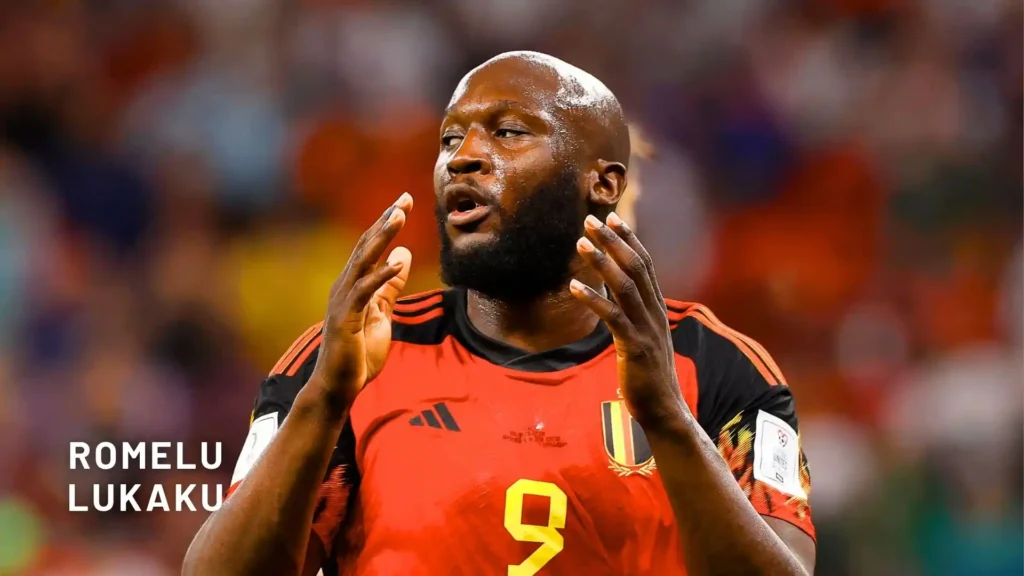
The most high-stakes selection call is Romelu Lukaku. Garcia has gambled on Romelu Lukaku, despite the 33-year-old playing just an hour of competitive football this season. Belgium’s all-time top scorer with 89 international goals last started in February before a hamstring injury.
It is a genuinely audacious call. A player who has been fit for approximately 60 minutes of competitive football is being taken to a World Cup. The risk is obvious — if Lukaku cannot find his fitness and sharpness in training and warm-up matches, he could arrive at the tournament as a passenger.
The potential reward is equally obvious — a fit Lukaku at a World Cup is still one of the most dangerous strikers on the planet.
Garcia has backed the gamble. Belgium’s entire tournament could hinge on whether it pays off.
Lois Openda: Another Painful Cut
Lois Openda, one of Belgium’s most consistent forwards at club level, also didn’t make the final list.
The RB Leipzig striker — one of the Bundesliga’s most prolific forwards was left out alongside Fofana, meaning two of Belgium’s most dangerous attacking talents in European football are watching the World Cup from home.
Garcia’s preference for experience over pure form is the clear explanation — but the omissions are not without risk.
Key Players to Watch at the Belgium World Cup roster 2026
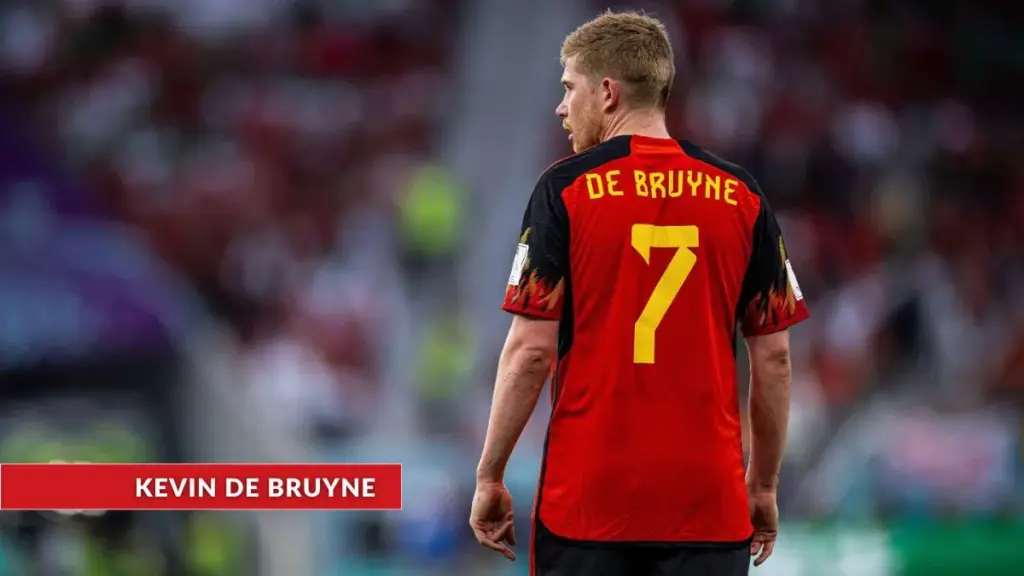
Kevin De Bruyne — The Creative Heartbeat
Kevin De Bruyne leads Belgium’s squad with 117 caps as of the squad announcement in May 2026, making him the country’s most experienced active international. The Napoli midfielder — formerly of Manchester City, where he won six Premier League titles — is 34 years old and arriving at what is almost certainly his final World Cup.
De Bruyne’s ability to control tempo, deliver inch-perfect passes, and score from distance makes him the single most important player in Belgium’s entire system. Garcia’s 4-2-3-1 is built specifically around giving De Bruyne freedom in the number 10 role — and when he is fit and in form, Belgium are genuinely capable of beating anyone in the tournament. The question is fitness: De Bruyne has battled injury issues throughout his career, and at 34, every match must be managed carefully.
Thibaut Courtois — The Real Madrid Wall
Thibaut Courtois anchors the goalkeeping unit from Real Madrid. The towering shot-stopper is widely regarded as one of the two or three best goalkeepers in the world — a distinction he has held for the best part of a decade. His Champions League winner’s medals, his record of saves in the biggest moments, and his commanding presence in the box make him the foundation of everything Belgium do defensively. At 32, Courtois arrives at this World Cup in the prime of his goalkeeping career.
Youri Tielemans — The New Captain
Youri Tielemans captains a 26-man squad built around Kevin De Bruyne, Romelu Lukaku, and Thibaut Courtois. The Aston Villa midfielder has grown into one of the Premier League’s most complete central midfielders — combining defensive discipline, technical quality, and leadership in a way that makes him the ideal captain for this transitional Belgium side. Tielemans and Amadou Onana anchor the midfield as a world-class double pivot.
Amadou Onana — The Physical Force
Aston Villa’s Amadou Onana is one of the most physically dominant midfielders in European football — a combative, powerful ball-winner who gives Belgium a defensive intensity in midfield that previous squads lacked. His partnership with Tielemans gives Garcia’s 4-2-3-1 the defensive solidity to allow De Bruyne genuine freedom to create. At 23, Onana is making his first World Cup — and at his best, he is one of the best holding midfielders at the entire tournament.
Jérémy Doku — The Unstoppable Winger
Manchester City’s Jérémy Doku is Belgium’s most direct and electrifying attacking threat — a winger of pure pace and instinct whose ability to beat defenders in one-on-one situations is almost unmatched in world football. Doku is Belgium’s most direct threat, and his selection ahead of qualifying top scorer Fofana tells you everything about how Garcia views his system. When Doku is running at full pace with the ball at his feet, no full-back in the world is comfortable. Against Egypt, Iran, and New Zealand, he will cause chaos.
Leandro Trossard — The Arsenal Versatile Threat
Arsenal’s Leandro Trossard is one of the most technically complete players in Belgium’s squad — capable of operating as a winger, a number 10, or a second striker. His ability to link play, create space, and score from tight angles gives Garcia a genuine tactical wildcard. Trossard’s Premier League experience and Champions League football at Arsenal give him a comfort level on the big stage that younger players are still developing.
Matias Fernandez-Pardo — The First Call-Up
Matias Fernandez-Pardo, 21, earns his first call-up after committing his international future to Belgium this month. The Lille forward — who could have represented Colombia — represents exactly the kind of young, technically gifted talent Garcia wants to blend into this squad. His inclusion is a long-term statement as much as an immediate one: this is not just a squad for 2026, but the beginning of a new Belgian generation.
Garcia’s System: The 4-2-3-1 That Makes Belgium Tick
Garcia uses a 4-2-3-1. Tielemans and Onana hold the defensive shape as the double pivot. De Bruyne operates as the number 10. Doku and Trossard push from the flanks.
The system’s strength is its clarity — every player knows their role. The double pivot of Tielemans and Onana shields a defence that includes young centre-backs like 22-year-old Zeno Debast, giving them protection against the physical strikers they will face. De Bruyne’s freedom in the number 10 role is the creative engine. And the wide pair of Doku and Trossard give Belgium constant attacking width and pace to stretch any defensive block.
Predicted Starting XI (4-2-3-1):
- GK: Thibaut Courtois
- DF: Thomas Meunier, Koni De Winter, Arthur Theate, Maxim De Cuyper
- FW: Jérémy Doku, Romelu Lukaku, Leandro Trossard
- MF: Amadou Onana, Youri Tielemans, Kevin De Bruyne
Belgium’s World Cup History: The Golden Generation’s Unfinished Business
Belgium’s World Cup record is one of football’s most bittersweet stories — a nation that produced arguably the most talented generation in European football over 10 years and never won a single trophy.
- 2018 (Russia): Belgium’s finest hour — third place, defeating Brazil in the quarter-finals and England in the third-place play-off. A famous generation at their peak.
- 2022 (Qatar): Total collapse. Belgium’s golden generation peaked in Russia in 2018 and crashed out in Qatar in 2022 without a single knockout match. Eliminated in the group stage in one of the tournament’s most shocking exits.
Now, with De Bruyne, Lukaku, Courtois, and Witsel making their final World Cup appearances, and a new generation in Tielemans, Onana, and Doku ready to take over, this squad represents both an ending and a beginning.
The goal is not just to advance from Group G. It is to go further than 2018. To win the tournament the golden generation promised but could never deliver.
Belgium’s Group G Fixtures — FIFA World Cup 2026
Belgium is in Group G with Egypt, Iran, and New Zealand — widely seen as one of the most favourable draws in the tournament.
🇧🇪 Belgium vs 🇪🇬 Egypt — June 15, 2026 | Lumen Field, Seattle, Washington | 3:00 PM ET
🇧🇪 Belgium vs 🇮🇷 Iran — June 21, 2026 | SoFi Stadium, Los Angeles, California
🇳🇿 New Zealand vs 🇧🇪 Belgium — June 27, 2026 | BC Place, Vancouver, Canada
Belgium are expected to beat Egypt comfortably in Seattle. Egypt, however — with Mohamed Salah and Omar Marmoush leading their attack — are capable of a giant-killing if Belgium are complacent. Iran provide a compact defensive challenge in Los Angeles that could frustrate Garcia’s attack if De Bruyne and Doku are not at their best. New Zealand, as the group’s lowest-ranked side, represent the clearest route to maximum points in Vancouver.
Belgium must top this group. Anything less would be a significant disappointment given the quality available.
Can Belgium Finally Win the World Cup?
The question has haunted Belgian football for a decade. The answer, for the first time in years, feels genuinely possible.
Despite the golden generation having been and gone, the Red Devils may well be jostling among the favourites. The squad Garcia has assembled blends the experience of De Bruyne, Lukaku, and Courtois with the energy and Premier League quality of Tielemans, Onana, Doku, and Trossard. The system is clear. The group is winnable. And beyond the group, Belgium have the quality to compete with any team in the tournament.
The golden generation’s last chapter is being written in North America. Tielemans wears the armband. De Bruyne pulls the strings. Courtois guards the goal. And Lukaku — if fit — is still the most physically dominant centre-forward in European football.
Belgium have never won the World Cup. This squad might be their best chance in a generation. North America awaits. The Red Devils are ready.
When was Belgium’s World Cup 2026 squad officially announced?
Rudi Garcia announced the official 26-man squad on May 15, 2026, on Belgian television — ahead of the June 1 FIFA deadline.
Who is Belgium’s captain at the 2026 World Cup?
Youri Tielemans, the Aston Villa midfielder, captains the side.
Is Kevin De Bruyne in Belgium’s World Cup squad?
Yes. De Bruyne, now 34 and playing for Napoli in Serie A, is in the squad with 117 caps and remains Belgium’s creative heartbeat.
Why was Malick Fofana excluded despite being Belgium’s top qualifier scorer?
Garcia preferred the experience and system fit of Doku, Trossard, and Saelemaekers. Fofana’s six qualifying goals were not enough to earn a place in the final 26.
Is Romelu Lukaku fit for the World Cup?
Lukaku has played just one hour of competitive football this season due to a hamstring injury. Garcia has included him as a gamble — his fitness heading into the tournament is the biggest question about Belgium’s squad.
Which group is Belgium in at the 2026 World Cup?
Belgium are in Group G alongside Egypt, Iran, and New Zealand.
When does Belgium play their first 2026 World Cup match?
Belgium open against Egypt on June 15, 2026 at Lumen Field in Seattle, Washington (3:00 PM ET).
What is Belgium’s best ever World Cup result?
Third place at the 2018 World Cup in Russia — defeating Brazil in the quarter-finals and England in the third-place play-off.