
The 2026 FIFA World Cup is already redefining demand-driven pricing, with ticket costs creeping higher across multiple matches just days into the earliest sales windows as lower-priced categories vanish quickly and premium seats reprice upward at marquee venues.
Powered by a 48-team, 16-city spectacle across the United States, Mexico, and Canada, the variable pricing model is responding in real time to surging interest especially for USMNT games and knockout rounds signaling that inventory will remain fluid and prices may continue to adjust between windows even before the draw locks in matchups.
The cheapest ticket for the 2026 World Cup final is already priced at more than ten times what fans paid for the same match in Qatar just four years ago — a clear sign that the 2026 edition is shaping up to be a World Cup designed largely for the wealthy.
The surge in 2026 World Cup ticket prices has raised serious questions about affordability for ordinary fans. The cheapest ticket for the final now costs more than ten times what supporters paid during Qatar 2022, making this edition one of the most expensive in FIFA history.
Organizers emphasize expanded venues and improved fan experiences across North America, but many feel the pricing strategy is making the tournament inaccessible to average football fans, turning it into an event primarily aimed at wealthier audiences.
This is the first time in history that FIFA has used dynamic pricing for a World Cup.
What changed this week in the 2026 FIFA World Cup ticket prices
Table of Contents
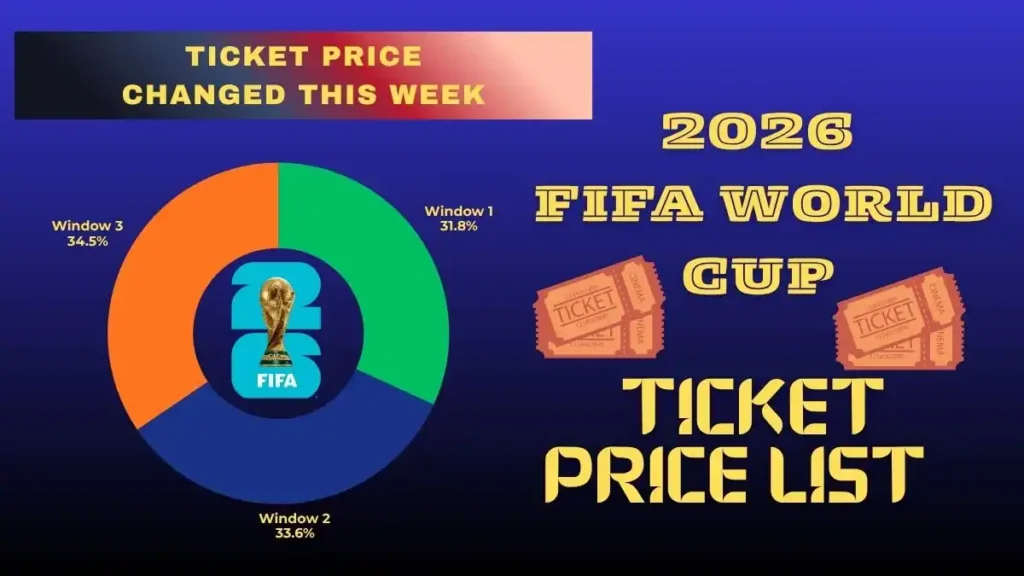
After the first 24 hours of the early lottery phase, several ticket categories — especially premium Category 1 and mid-tier Category 3 — saw noticeable price increases across multiple matches.
Ticket prices for USMNT games and major venues like SoFi Stadium in Los Angeles and MetLife Stadium in New Jersey rose sharply due to high demand.
Several first-phase ticket allotments sold out quickly, leading to further price hikes expected in upcoming sales windows.
Concrete examples fans reported
- USMNT second group match:
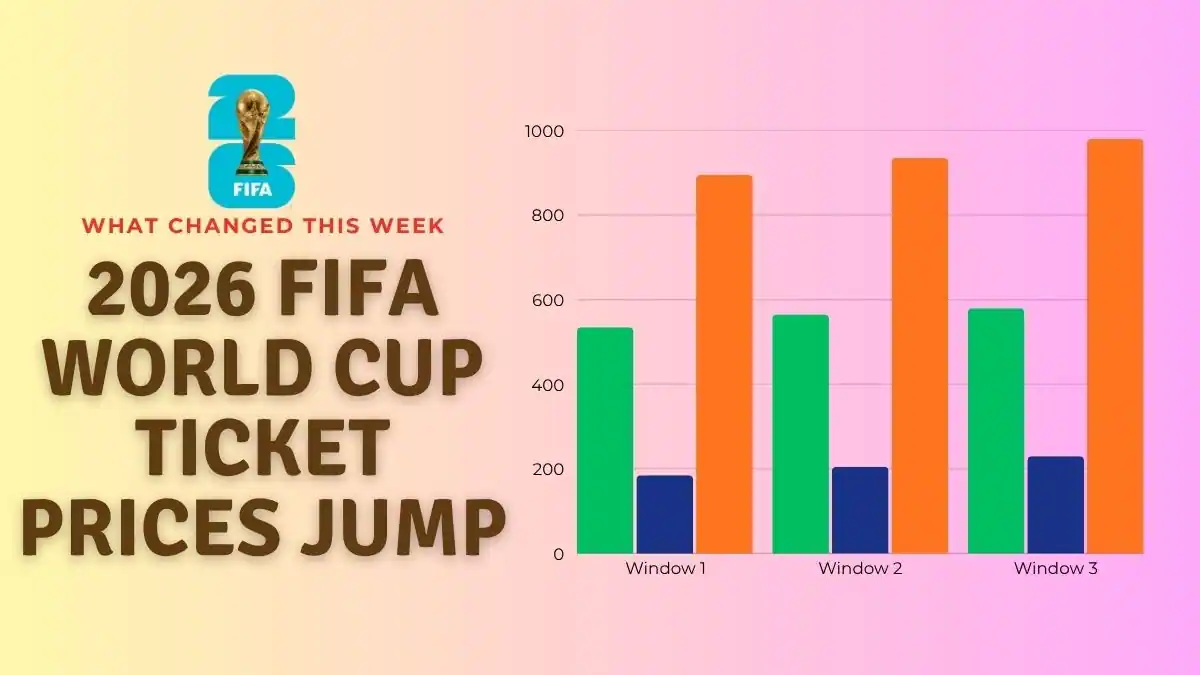
- Category 1: 535 → 565 USD
- Category 3: 185 → 205 USD
- Round of 16 at MetLife Stadium:
- Category 1: 895 → 935 → 980 USD, phir first-phase allotment sold out
- Similar approx $$5\%$$ Category 1 hikes reported for:
- Three of four quarterfinals
- At least three Round of 16 matches
- Round of 32 opener at SoFi Stadium
- USMNT third group match at SoFi
Quick view: sample price movements
| Match/Stage | Category | Window 1 | Window 2 | Window 3 | Status/Note |
|---|---|---|---|---|---|
| USMNT Group (2nd game) | Cat 1 | 535 | 565 | — | Demand-led increase |
| USMNT Group (2nd game) | Cat 3 | 185 | 205 | — | Mid-tier squeeze |
| Round of 16 (MetLife) | Cat 1 | 895 | 935 | 980 | First-phase sold out |
| Quarterfinals (3 of 4) | Cat 1 | — | %5% up | — | Premium interest |
| Round of 16 (multiple) | Cat 1 | — | %5% up | — | Knockout pull |
| Round of 32 (SoFi) | Cat 1 | — | %5% up | — | Big-market effect |
| USMNT Group (3rd game, SoFi) | Cat 1 | — | %5% up | — | Host-nation demand |
Note: Figures reflect early lottery-phase windows and can change again as inventory shifts and the Dec 5 draw clarifies matchups.
Why prices are rising now
- Variable pricing 101: Prices adjust based on real-time demand and remaining inventory across categories and venues; premium seating tends to move first.
- Host-nation effect: USMNT fixtures in large-capacity, high-profile stadiums draw outsized local interest.
- Pre-draw uncertainty premium: Popular teams and marquee cities attract buyers even without confirmed matchups, pushing early demand.
- Inventory cadence: First-phase allotments are finite; as pockets sell down, subsequent windows can open at higher price points.
Fan impact and early signals
- Lower categories (Cat 4, parts of Cat 3) deplete quickly, compressing fans into higher tiers.
- Knockout rounds, especially at NFL-scale venues, show the steepest early jumps.
- Final and opening matches remain the most price-sensitive; rapid sell-through pushes fans to resale or alternative matches.
What to expect next
- Post-draw repricing: After the Dec 5 draw, expect further adjustments — marquee matchups, star teams, and favorable travel clusters likely see spikes.
- Uneven market: Some group-stage matches in smaller markets or involving less popular teams might stabilize or even decline later, depending on demand.
- Resale dynamics: Official resale can introduce volatility; late bargains for low-demand matches are possible, while premium fixtures may trend higher.
Practical tips to save money
- Buy early in a window: Early arrivals typically see better availability before micro-hikes trigger.
- Be flexible on venue and day: Weekday fixtures and secondary markets often stay closer to initial price bands.
- Prioritize category over row: Category jumps hurt more than row changes; lock the right category first.
- Consider clusters: Target cities with multiple matches over consecutive days to cut travel and maximize value.
- Set a hard budget: Variable pricing tempts overreach; pre-set limits prevent panic-buying.
Key takeaways
- Early demand has already triggered price hikes across multiple 2026 matches, sometimes within days.
- Variable pricing means prices can rise or fall; high-demand games tend to ratchet up with each window.
- Strategy matters: Category, timing, and venue flexibility can significantly impact total spend.
FAQs: 2026 World Cup ticket prices and variable pricing
What is variable (dynamic) pricing?
Variable pricing adjusts ticket prices based on real-time demand, venue, seat category, and remaining inventory; high-demand matches can rise quickly during sales windows.
Why are prices rising even before the draw?
Early sales windows showed unusually high demand for USMNT fixtures, flagship venues like SoFi and MetLife, and knockout rounds, so initial allocations sold through and triggered incremental price increases.
Can prices also go down later?
Yes, in theory dynamic pricing can adjust downward on lower-demand fixtures or when inventory is replenished, but marquee games and host-nation matches typically trend upward.
What happens to prices after the Dec 5 draw?
After the draw, expect repricing on star matchups, rivalry games, convenient travel clusters, and prime dates; some neutral or lower-profile group matches may stay flatter.
Which matches are most affected by price jumps?
USMNT group matches, knockout rounds in NFL-scale stadiums, and big-market venues (e.g., Los Angeles, New York/New Jersey) have shown the earliest and steepest increases.
Why are Category 4 tickets so hard to get?
Category 4 is limited and the first target for cost-conscious buyers; these allocations can be exhausted within 24–48 hours, leaving mainly Category 1–2 and residual Category 3.
Are hospitality tickets affected by dynamic pricing?
Hospitality packages use separate pricing structures; they are generally fixed as bundled products with less frequent dynamic swings.
What’s the difference between lottery and first-come, first-served?
Lottery phases allocate tickets randomly within a window regardless of entry time, while first-come, first-served rounds are live inventory drops where timing and speed determine success.
Is buying on the official resale platform safe?
Yes, the official resale channel is the safest option, though fees may apply and prices for high-demand matches can exceed face value.
Are standard tickets refundable?
Standard public tickets are typically non-refundable; the safe alternative is to list through the official resale platform rather than using unofficial channels.
What are the per-match ticket limits?
Per-match, per-account limits (often 4–6) and overall caps may apply; exact limits are specified in each sales-phase email or on the ticketing portal.
Will seats be together for multi-ticket orders?
Multi-seat orders are generally assigned together, but adjacency is not guaranteed in high-demand categories or when inventory is tight.
What payment methods are accepted?
During Visa presale phases, Visa may be required; general public phases typically accept a broader set of cards. Failed payments can cause allocations to lapse.
Are there special prices for children or seniors?
Standard public pricing does not usually include age-based discounts; accessibility tickets follow separate policies and quotas.
How do accessibility (wheelchair/ADA) tickets work?
Accessibility categories include dedicated quotas and companion seats; early requests are recommended due to limited inventory and venue-specific availability.
Do prices change every few minutes?
Updates are driven by policy thresholds and automated triggers, not minute-by-minute changes; noticeable adjustments often coincide with allocation rollovers and new windows.
Will more tickets be released in later phases?
Yes, initial windows cover only part of total inventory; subsequent lotteries, first-come rounds, and post-draw releases add fresh batches.
What are the best strategies to save money?
- Enter early in a window and pre-decide backup categories.
- Target weekday or afternoon fixtures and secondary markets.
- Plan city clusters to watch multiple matches while reducing travel costs.
Are third-party marketplaces safe?
Unofficial marketplaces carry risks (fraud, invalid barcodes, cancellations); official channels remain the safest route.
Is it better to switch the category or row to save?
Locking the right category has the biggest budget impact; row and section trade-offs are easier to manage once the category is secured.