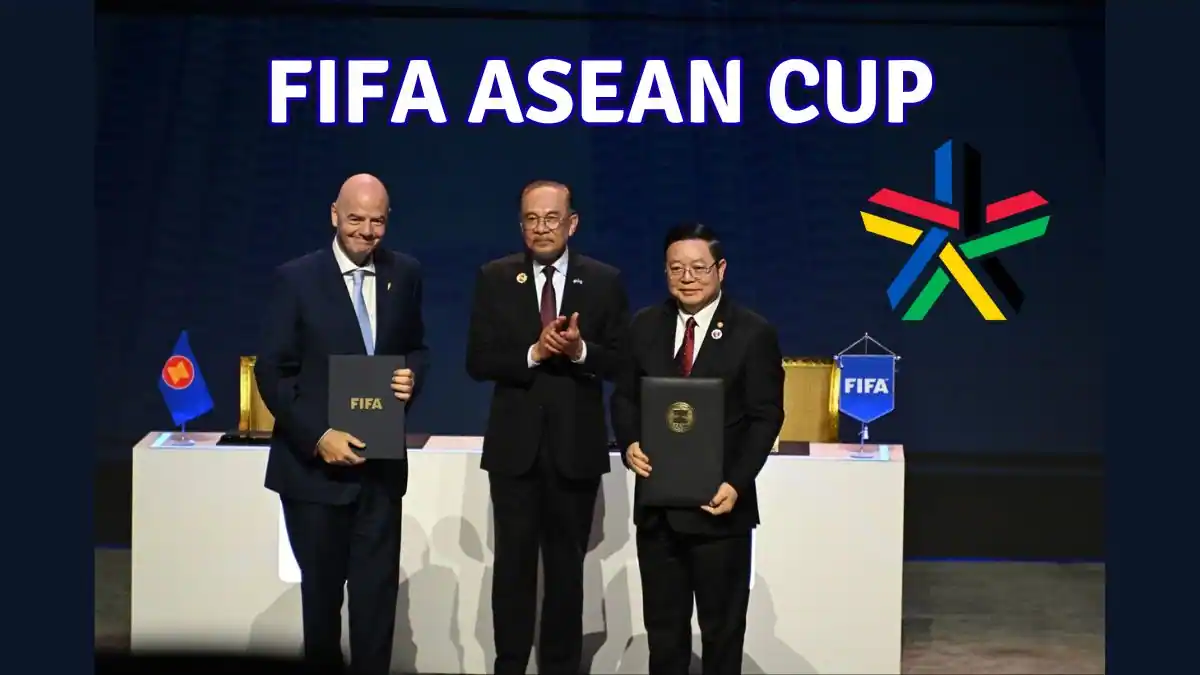
In a landmark move to ignite football passion across Southeast Asia, FIFA President Gianni Infantino has announced the launch of the FIFA ASEAN Cup, a brand-new international tournament exclusively for the 11 member states of the Association of Southeast Asian Nations (ASEAN).
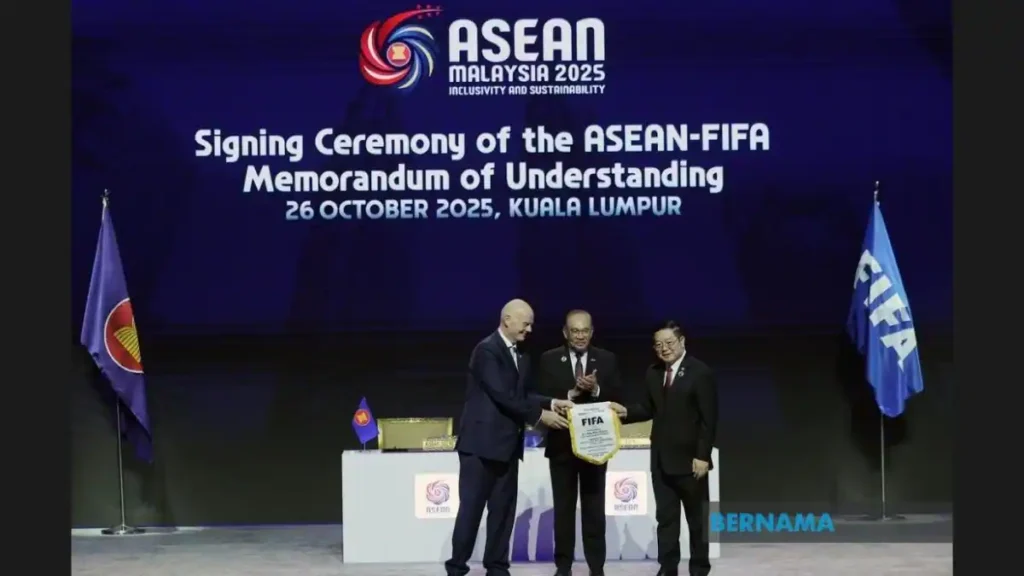
The revelation came during a high-profile signing ceremony in Kuala Lumpur today, where FIFA inked a Memorandum of Understanding (MoU) with ASEAN, solidifying a partnership aimed at elevating the region’s football ecosystem.
This isn’t just another cup; it’s a strategic boost designed to unite nations through the beautiful game, scheduled to debut in 2026 during FIFA international match windows.
The announcement has sent ripples of excitement through the football world, with fans and experts hailing it as a “Southeast Asian World Cup in miniature.”
By aligning the tournament with FIFA’s designated windows, it ensures that star players based overseas—like Thailand’s Chanathip Songkrasin in Japan or Vietnam’s Quang Hai in Europe can represent their countries without club conflicts. “Football unites the world, and together with all 11 ASEAN countries, we are creating the FIFA ASEAN Cup,” Infantino declared at the event.”It’s a tournament that will bring the best talents together, boost national team football in the ASEAN region, and support the development of our sport across all of Southeast Asia.”
The Birth of the FIFA ASEAN Cup: What We Know So Far
The FIFA ASEAN Cup emerges from a collaborative vision to address the unique challenges faced by ASEAN football federations.
Southeast Asia, home to over 680 million people, has long been a hotbed of untapped potential—think of the electric atmospheres at AFF Suzuki Cup finals or the rising stars from the SEA Games.
Yet, limited exposure on the global stage has hindered growth. This new competition steps in as a dedicated platform, featuring all 11 ASEAN nations: Brunei, Cambodia, Indonesia, Laos, Malaysia, Myanmar, Philippines, Singapore, Thailand, Timor-Leste, and Vietnam.
Details are still unfolding, but early outlines paint a vibrant picture:
- Format: A compact knockout tournament, likely with group stages leading to semifinals and a grand final, mirroring the intensity of continental qualifiers.
- Debut Date: Set for 2026, with exact fixtures to be confirmed post-MoU implementation.
- Venues: Rotating across host nations to foster regional pride and infrastructure upgrades—Indonesia’s Gelora Bung Karno Stadium or Thailand’s Rajamangala could be early frontrunners.
- Eligibility: Open to senior national teams, emphasizing inclusivity and high-stakes rivalries like the classic Thailand-Vietnam clashes.
This initiative builds on FIFA’s broader Forward Programme, which has already invested millions in ASEAN grassroots development, coach education, and women’s football. “We’re not just playing matches; we’re building legacies,” said ASEAN Secretary-General Kao Kim Hourn, who co-signed the MoU.
The agreement also paves the way for joint initiatives in youth academies, referee training, and fan engagement tech.
Why This Matters: Boosting Talent and Unity in Southeast Asia

For a region where football is more than a sport—it’s a cultural heartbeat—the FIFA ASEAN Cup arrives at a pivotal moment. Indonesia’s meteoric rise to Asian Cup quarterfinalists in 2023 showcased the hunger for success, while the Philippines’ AFF triumphs have inspired a new generation.
Yet, without a recurring, FIFA-backed showcase, these stories often fade into biennial AFF cycles.
Experts predict the tournament will accelerate player pathways to Europe and the Middle East. Imagine a 20-year-old Vietnamese phenom netting a winner against Malaysia, catching the eye of a Premier League scout. Or how it could harmonize with the expanded AFC Asian Cup, creating a feeder system for Asia’s elite.
On the unity front, amid ASEAN’s diverse tapestry, the cup doubles as a diplomatic bridge—think shared anthems under floodlights, post-match feasts blending pad thai and nasi goreng.
Looking Ahead: Challenges and Excitement for 2026
No launch is ever without its challenges. Coordinating logistics across 11 countries, from Brunei’s small fields to Indonesia’s widespread islands, will push organizers to their limits.
Add unpredictable weather—monsoons don’t respect schedules—and differences in infrastructure, and it’s a real test. Still, FIFA’s experience with events like the Arab Cup shows they’re up to the task.
As preparations ramp up, all eyes turn to the inaugural draw, expected early next year. Will Vietnam’s steel defend their AFF crown?
Can the Philippines channel their underdog spirit? Or will Indonesia’s golden generation dominate? One thing’s certain: The FIFA ASEAN Cup will etch Southeast Asia deeper into football’s global narrative.
For more on emerging tournaments, national team updates, and FIFA’s global push, stay tuned to GlobalSoccerDigest.com. What’s your bold prediction for the first champions? Drop it in the comments!