
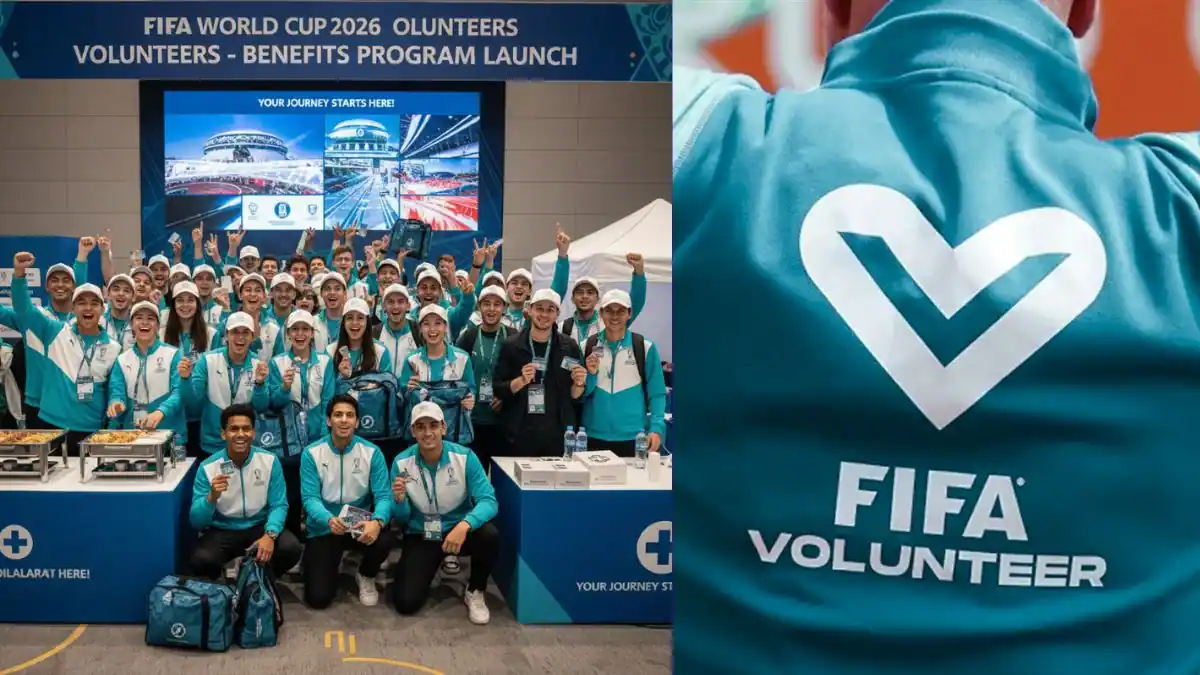
Volunteering at the FIFA World Cup is a once-in-a-lifetime chance to be at the heart of world football, meet fans, work at iconic stadiums, and gain valuable event experience. The FIFA World Cup 2026 edition, hosted across the United States (with matches also in Canada and Mexico), will need thousands of volunteers across many roles.
This guide walks you through the complete volunteer selection process and answers the most common question: if you volunteer, who pays for travel, accommodation and meals, especially if you’re applying from outside the host country?
FIFA World Cup 2026 Volunteer Benefits – Uniforms, Training, Accreditation & Perks
Table of Contents
Who can apply for the FIFA World Cup 2026 Volunteer, and what is the basic eligibility?

- Age: Most host-city volunteer programmes require applicants to be at least 18 years old at the start of the tournament (some roles may allow 16–17 with parental consent).
- Language: English is essential for many roles; additional language skills (Spanish, French, Portuguese, Arabic, etc.) are an advantage.
- Legal right to work/entry: You must be eligible to enter and work/volunteer in the host country (visa rules apply).
- Availability: Volunteers usually commit to a minimum number of shifts/days, including pre-tournament training and match days.
- Health & background: Good health and a clean background check are often required.
Typical volunteer roles
- Guest services (stadium ushers, info desks)
- Accreditation & access control
- Team liaison and player services (specialised roles)
- Media support and press operations
- Transport coordination (driver assistants, marshalling)
- Logistics, staging and venue operations
- Fan zones, community programmes and fan engagement.
What volunteers typically receive (non-monetary benefits)?
- Official volunteer uniform and accreditation badge for duty periods.
- Training and a certificate of participation/reference letter on request.
- Meals or refreshments during assigned shifts (varies by venue and host-city policy).
- Local support while on duty (briefings, local transport between assigned venues or shuttles for shifts in some cities).
- Access to unique experiences: behind-the-scenes areas, networking, and event volunteering reference.
Who pays the expenses?
If you volunteer, you should plan to cover your own international travel (airfare), accommodation, everyday living costs and visa fees. FIFA and local organisers normally do not pay for your international flights or hotel.
What is often provided are uniforms, on-shift meals/refreshments, training, accreditation and sometimes local transport when you are travelling to/from assigned shifts — but these do not replace international travel and lodging costs.
Specific note for applicants coming from outside the host nation
- Airfare: You will very likely need to purchase and pay for your own return international flights to the United States (or to the host city where you will be volunteering).
- Accommodation: Volunteers are normally responsible for booking and paying for their own accommodation. Some host-city volunteer programmes may share guidance on recommended hotels, hostels or volunteer dorms, but free lodging is rare for global events of this scale.
- Meals: Meals are commonly provided during your scheduled shifts; however, off-shift meals and general living expenses are your responsibility.
- Visa & entry: You must obtain the correct visa to enter the US (or Canada/Mexico for matches there); visa application fees and related costs are your responsibility. Start the visa process well in advance — processing times and requirements vary by country.
- Insurance & medical: Arrange appropriate travel and health insurance yourself; some host programmes require proof of insurance.
Why do organisers usually not cover these costs?
Large global events manage thousands of volunteers and generally treat volunteering as an unpaid service.
Covering international travel and lodging for all would be a major logistical and financial undertaking; instead, organisers focus resources on training, accreditation, uniforms and on-shift support.
Practical tips to reduce financial burden (ideas that actually work)
- Apply early and choose a host city strategically: If you can volunteer in a city you can reach more cheaply (or where you already plan to travel), your costs fall dramatically.
- Look for local volunteer branches / regional hubs: Some countries or football federations coordinate group travel or shared accommodation for volunteers — check national football association announcements.
- Sponsorship/employer support: Ask employers, community organisations, or local sponsors to help with partial funding in return for publicity or sponsorship credits. Many organisations are happy to sponsor an employee for a high-profile volunteering role.
- Fundraising/crowdsourcing: Use crowdfunding for a volunteering project — explain how you’ll represent your community and what you’ll do.
- Stay in budget accommodation or with friends/family: Book hostels, short-term rentals, or shared rooms for the tournament period; book early for best rates.
- Apply for student discounts or look for volunteer travel groups: Student organisations, clubs or travel groups sometimes organise cheaper packages for volunteers.
- Limit your stay: If allowed by the programme, volunteer only for the days you’re assigned rather than the entire tournament period to reduce accommodation costs.
Visa & documentation checklist
- Valid passport (with at least 6 months’ validity recommended).
- Appropriate visa for entry to the host country (US visa for outside passport holders – check the US embassy/consulate website).
- Proof of acceptance as an official volunteer (offer letter) – sometimes needed for visa interviews.
- Proof of funds/return ticket (depending on visa rules).
- Travel insurance details.
- Any required vaccinations or health documentation.
What Volunteers Receive at the 2026 FIFA World Cup?
Here are the details of the service and what it covers in a detailed format of FIFA World Cup 2026 Volunteer Benefits:
| Service | What it covers | Notes / Typical details |
|---|---|---|
| Official Volunteer Uniform | Shirts, jackets, badges, and other branded items for duty | Required to wear while on shift; usually provided free of charge. |
| Volunteer Accreditation / Credentials | Access passes for assigned areas and match-day zones | Activate after training and final checks; vital for stadium access. |
| Mandatory Training & Briefings | Online modules + in-person briefings covering role duties, safety | Attendance usually compulsory before receiving accreditation. |
| On-shift Meals / Refreshments | Food and drinks provided during assigned shifts | Varies by venue — usually a meal or vouchers for match-day duty. |
| Local Transport (during shifts) | Shuttles or transport support between assigned venues (sometimes) | Not guaranteed for all roles or cities — depends on host-city policy. |
| On-site Support & Supervision | Team leaders, help desks and shift supervisors while on duty | Provides guidance, shift handovers and immediate problem resolution. |
| Role-specific Equipment | Radios, lanyards, handbooks, signage or other tools needed for the role | Issued as required for tasks like accreditation, transport, and media support. |
| Certificate of Participation & Reference | Official certificate, possible reference/letter on request | Good for CVs and future event applications. |
| Recognition Pack / Merchandise | Souvenirs, thank-you gifts or volunteer mementoes | Often distributed after the event as a token of appreciation. |
| Access to Exclusive Experiences | Behind-the-scenes access, meet-and-greet opportunities (varies) | Not guaranteed for all volunteers; It depends on role and privileges. |
| Medical & Emergency Support (on-site) | First aid and medical teams are available at venues | Immediate care is provided during duty; travel health insurance remains personal responsibility. |
| Discounts / Local Perks | Possible local discounts (transport, shops, fan events) — if arranged | Depends on host-city partnerships; not universal. |
| Visa / Travel Assistance | Information and invitation letters (sometimes) | Organisers may provide proof of acceptance for visa interviews, but visa fees and international travel are usually your responsibility. |
| Travel Insurance | — | Volunteers are typically expected to arrange their own travel/health insurance. |
FIFA World Cup 2026 Volunteer Benefits Common questions (short FAQ)

Q: Are volunteer roles paid?
A: No — official volunteer roles for major tournaments are unpaid. Benefits are typically non-monetary (uniforms, accreditation, training, on-shift meals).
Q: Will FIFA pay for my flight and hotel?
A: Generally, no. You should plan to pay for your international flight and hotel. Local on-shift transport may sometimes be arranged, but it varies by host city.
Q: Can I apply if I don’t live in the host country?
A: Yes — international volunteers apply and are accepted — but you are responsible for travel, visas and accommodation unless a specific local programme states otherwise.
Q: How competitive is the selection?
A: Very competitive for popular roles and for applicants from overseas. Demonstrated customer-service experience, language skills, and flexible availability improve your chances.
Q: When should I apply?
A: Apply as soon as the official 2026 volunteer portal opens and watch host-city pages for deadlines. Applications typically open well in advance of the tournament and close once roles are filled.
Final checklist before you apply for the FIFA World Cup 2026 Volunteer
If you can cover your travel and accommodation, volunteering at the 2026 FIFA World Cup is an exceptional career and life experience. The networking, skills, memories and the possibility of future sports events opportunities often make the personal cost worthwhile.
For international applicants, plan well in advance, explore sponsorship or group-travel options, and verify visa requirements early.
- Update your CV / volunteer experience and prepare two references.
- Check your passport expiry and begin visa preparation early.
- Determine preferred roles and ensure realistic availability for training and match days.
- Budget for airfare, hotel, local transport, meals off-shift and insurance.
- Ensure your application highlights clear and honest details about your availability and your motivations for wanting to volunteer.




I really appreciated for provide this crucial news on time