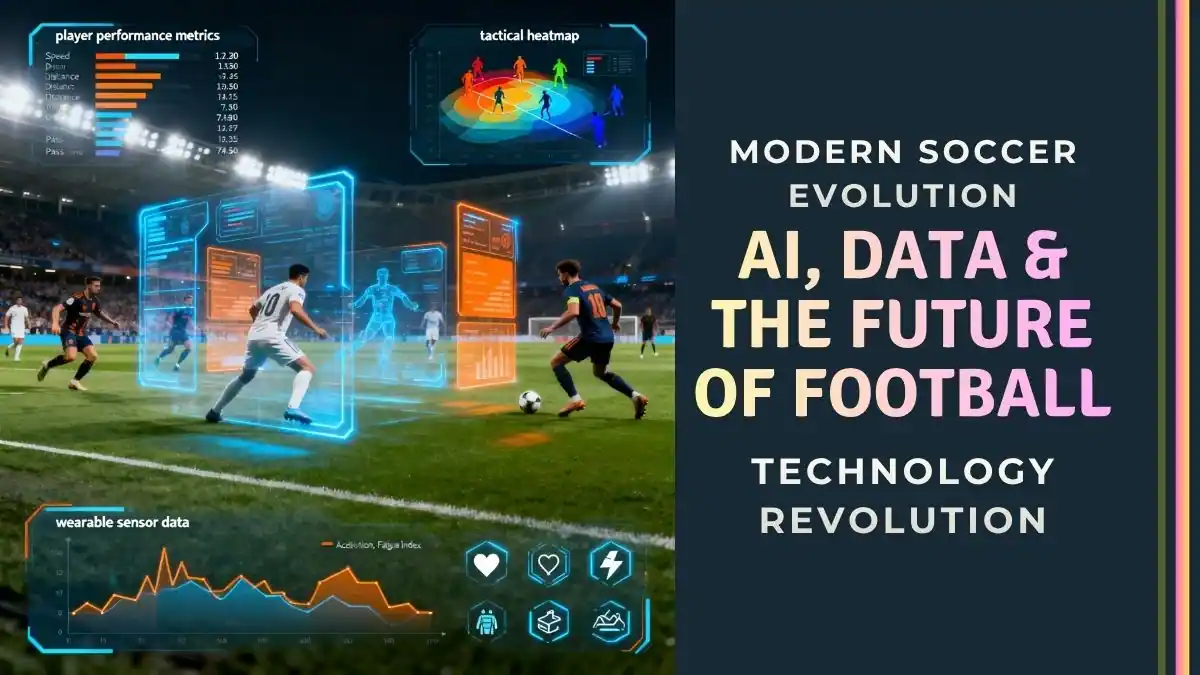
Modern Soccer is evolving at lightning speed, and the road to the FIFA tournaments, major leagues and FIFA World Cup 2026 is paved with data. We are witnessing a dramatic transformation where intuition meets evidence. With the official integration of ‘Football AI’ and advanced wearable tech, every sprint, pass, and tactical shift is now calculated in milliseconds.
With major innovations like Adidas’ TRIONDA sensor technology and AI-enabled refereeing, the 2026 tournament will change how fans experience the beautiful game forever. Let’s dive deep into the data-driven revolution that is redefining football strategy, player performance, and injury prevention on the world’s biggest stage.”
Modern soccer is evolving rapidly with AI, wearable technology, and advanced data analytics revolutionizing player performance, tactical strategies, and injury prevention across FIFA tournaments and major leagues.
Here’s how AI and data are reshaping modern soccer tournaments to FIFA World Cup at every level.
The Data-Driven Revolution in Modern Soccer
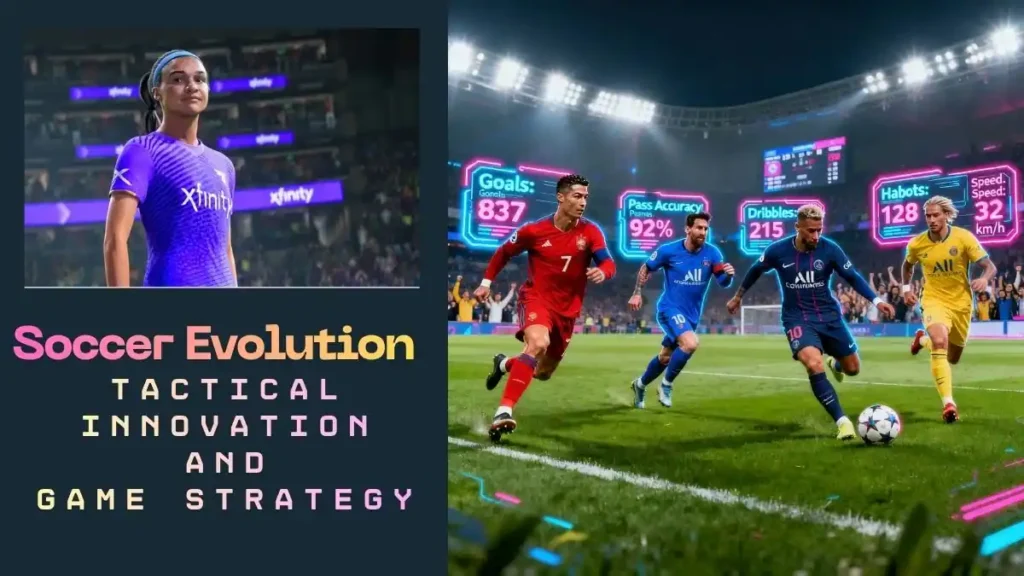
Soccer, once a sport defined purely by passion, skill, and intuition, has undergone a dramatic transformation in recent years. The introduction of artificial intelligence (AI) and advanced data analytics has revolutionized how teams prepare, play, and develop talent.
From scouting systems that identify hidden gems across continents to real-time tactical adjustments powered by machine learning, technology has become the invisible twelfth player on every pitch.
From Intuition to Evidence
Traditional football relied on the keen eyes of coaches and scouts, whose decisions were guided by experience and instinct.
Today, every second of professional football generates vast amounts of data through GPS trackers, optical tracking systems, wearable technology, and advanced camera angles. This includes:
Physical Metrics:
- Distance covered and sprint speed
- Heart rate variability and player workload
- Acceleration patterns and deceleration zones
- Recovery time and fatigue indicators
Technical Data:
- Pass completion rates and accuracy under pressure
- Shot efficiency and conversion rates
- First touch quality and ball control metrics
- Dribble success percentage
Tactical Information:
- Positional heatmaps and movement patterns
- Defensive positioning and pressing intensity
- Ball recovery patterns and transition speed
- Off-ball awareness and spatial intelligence
This wealth of information transforms subjective observations into measurable insights, allowing teams to make evidence-based decisions that maximize performance.
AI in Player Scouting and Recruitment
The End of Traditional Scouting?
AI and machine learning have fundamentally changed how clubs identify and recruit talent. While scouts still play an important role, their traditional methods are now supplemented by powerful algorithms that can analyze thousands of players simultaneously.
Modern Scouting Platforms:
aiScout: This platform allows clubs to review players from established professionals to lesser-known talents in amateur leagues worldwide. By comparing individual performances to ideal role profiles, clubs can identify prospects who might otherwise go unnoticed.
Comparisonator: Enables scouts to compare player statistics across multiple leagues and match them against similar athletes, helping decision-makers prioritize targets who suit their team’s style.
Video Analysis + AI: Clubs combine AI-driven video analysis with statistical models to assess not just what players do, but how they might adapt to new competitive environments.
Predicting Player Potential
One of AI’s most powerful applications is forecasting how a player will perform in a new league or tactical system. Machine learning examines:
- Historical performance data
- Tactical adaptability indicators
- Physical attributes and growth trajectories
- Injury likelihood and recovery patterns
- Potential resale value projections
For example, a club might identify a midfielder with impressive pressing statistics in a smaller league. AI simulations can test whether these numbers would hold up against faster, more physical opposition, helping clubs avoid costly transfer mistakes.
Reducing Bias in Talent Identification
Traditional scouting can be influenced by unconscious biases related to a player’s appearance, reputation, or background.
AI offers a way to reduce these effects by anonymizing footage and focusing purely on performance metrics. Players who might not fit conventional expectations for a position can be assessed fairly, opening opportunities for talent that might otherwise be overlooked.
Leading Examples:
- Brighton & Hove Albion and Brentford are renowned for data-driven scouting, often uncovering players missed by larger clubs
- Sevilla collaborates with IBM’s WatsonX to analyze global player data for shortlisting candidates that align with tactical and financial goals
- Ajax, PSG, Manchester City, Chelsea, and Nottingham Forest have all invested heavily in AI tools to refine transfer decisions
Performance Optimization and Training
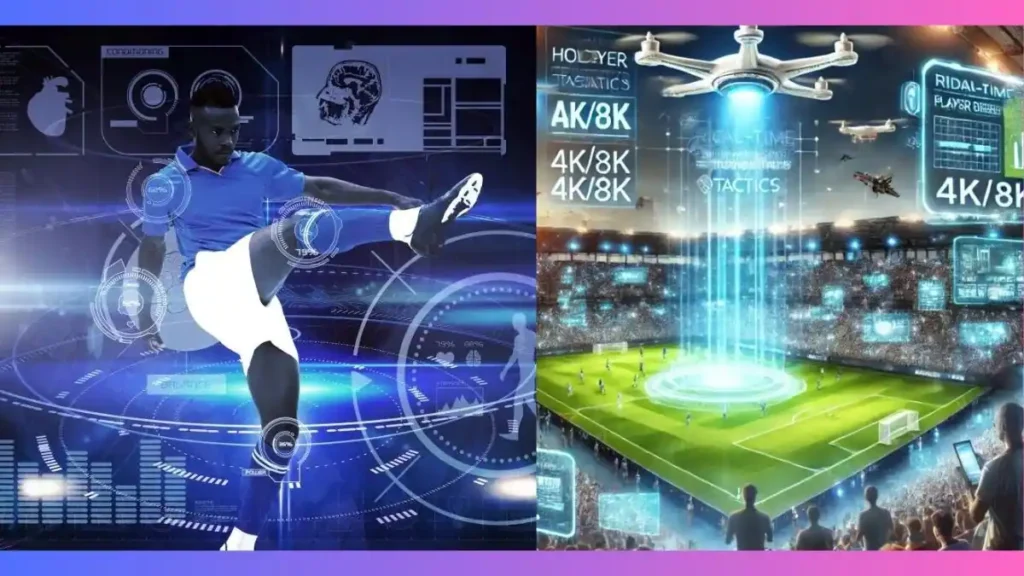
Wearable Technology Revolution
GPS tracking systems from companies like Catapult Sports and STATSports have evolved to provide advanced metrics that were once unimaginable:
Real-Time Monitoring:
- Player speed and distance covered per session
- Heart rate variability during high-intensity periods
- Acceleration/deceleration patterns
- Sprint frequency and recovery intervals
Top clubs like Manchester City leverage these technologies to maintain their competitive edge. City’s coaching staff uses GPS data to monitor player workload during training sessions, adjusting intensity to prevent overtraining and reduce injury risk.
This approach has contributed to the team’s consistent performance over long Premier League seasons.
Personalized Training Programs
AI enables truly individualized training regimens tailored to each player’s needs:
Case Study: Marcus Rashford
After incorporating smart ball training into his routine, Manchester United’s Marcus Rashford saw a 15% improvement in his free-kick accuracy over a single season. His coach noted: “The immediate feedback from the smart ball has allowed Marcus to make micro-adjustments to his technique that would have been impossible to identify with the naked eye”.
Smart Football Technology:
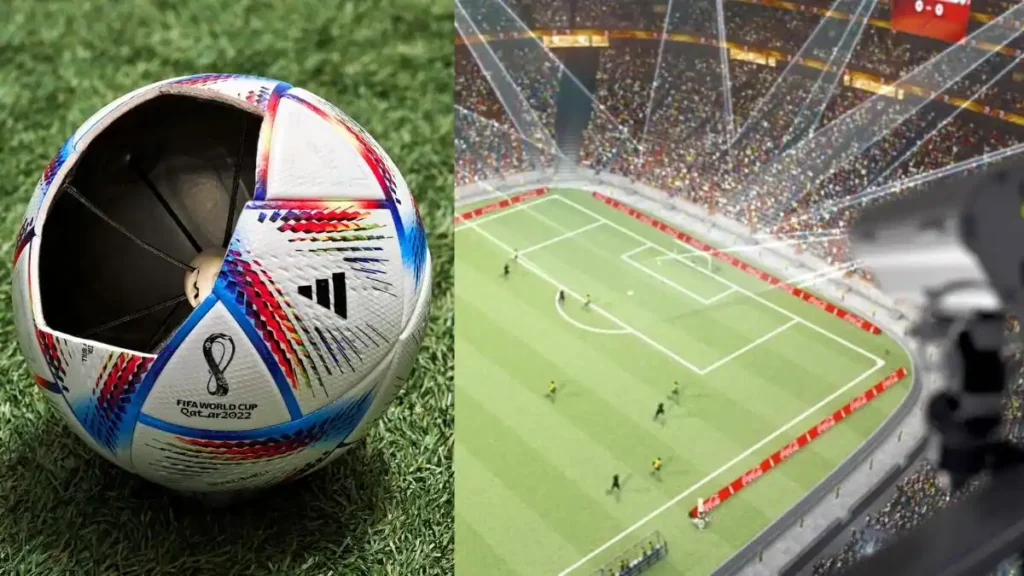
Smart balls embedded with sensors provide instant feedback on:
- Strike velocity and spin rate
- Impact point accuracy
- Trajectory prediction
- Optimal kicking technique recommendations
Injury Prevention and Management
AI systems can now predict injury risks before they manifest:
Predictive Models:
- Analyzing workload accumulation over weeks and months
- Identifying biomechanical stress patterns
- Monitoring recovery quality through sleep data
- Flagging early warning signs of muscle fatigue
By tracking how a player’s performance changes under fatigue, AI can recommend rest periods or modified training loads to prevent injuries. This data-driven approach helps extend careers and keeps key players available during crucial matches.
Tactical Innovation and Game Strategy
Real-Time Tactical Analysis
AI has transformed how coaches approach matches, providing insights that inform decision-making before, during, and after games.
Pre-Match Preparation:
Opponent Analysis: Data analytics provides deep insights into an opponent’s playing style, key players, and tactical weaknesses. This might involve:
- Identifying pressing triggers and defensive vulnerabilities
- Understanding build-up patterns and passing tendencies
- Analyzing set-piece routines and marking schemes
Game Plan Development: Based on analysis of both their own team and the opponent, coaches devise game plans that maximize chances of success.
In-Game Adjustments:
During matches, AI tools can alert coaching staff to:
- Sudden drops in individual player performance
- Potential injury risks based on movement patterns
- Tactical patterns emerging from the opponent
- Optimal substitution timing to maintain intensity
Teams across Europe and Asia use machine learning algorithms to analyze player movement, fatigue levels, and in-game decision-making in real-time. AI systems can identify tactical weaknesses faster than human analysts, helping coaches adjust strategies on the fly.
Post-Match Analysis:
After games, AI systems generate detailed reports combining statistics and video highlights of key moments. Coaches analyze these to:
- Understand team performance patterns
- Evaluate individual contributions
- Identify areas for tactical refinement
- Prepare for upcoming opponents
Virtual Reality and Augmented Reality Training
VR systems are breaking new ground by enhancing players’ spatial awareness and tactical understanding:
Rezzil Platform:
This immersive training platform simulates match scenarios, helping players improve decision-making skills without physical strain. A typical VR training session might involve:
- Wearing a headset and using controllers to interact with virtual environments
- Practicing reading the game and making split-second decisions
- Reviewing past matches from different perspectives
- Accumulating ‘mental reps’ without on-field wear and tear
Tactical Preparation:
Teams can now recreate an opponent’s formation and playing style in virtual environments, allowing players to experience and prepare for upcoming matches in highly realistic settings.
Ajax’s youth academy has been at the forefront of this technology, using VR to help young players develop tactical awareness from an early age.
Augmented Reality (Future Trend):
AR could soon become a staple in tactical sessions, allowing coaches and players to visualize and interact with game plans in 3D. Seeing plays come to life enhances understanding and retention, ensuring players are better prepared for matches.
Expected Goals (xG) and Advanced Metrics
Beyond Traditional Statistics
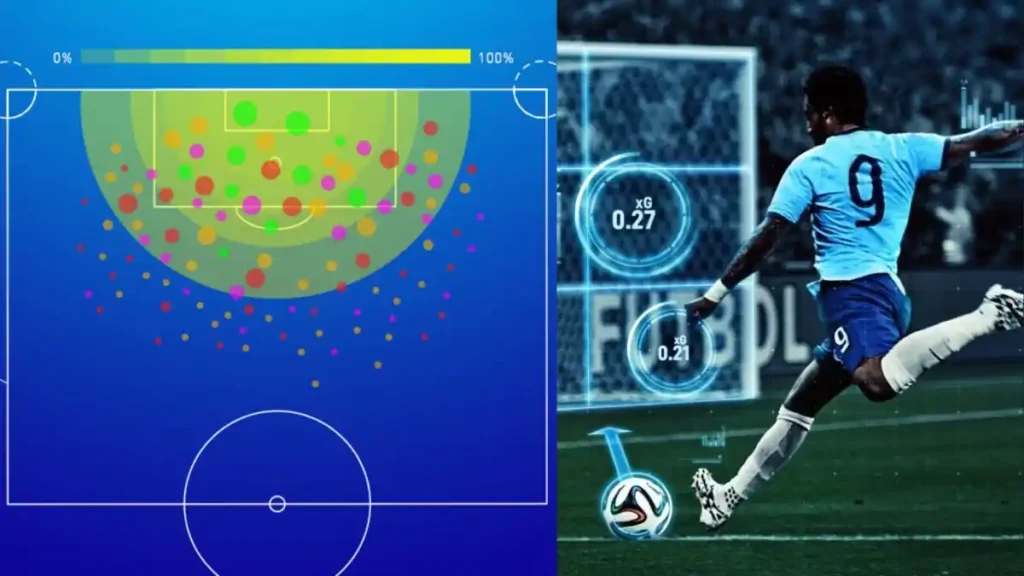
The rise of expected goals (xG) has fundamentally changed how football analyzes attacking efficiency
What is xG?
Expected goals assigns a probability (0 to 1) to every shot based on historical data about similar attempts. Factors include:
- Distance from goal
- Angle of shot
- Defensive pressure
- Type of assist (cross, through ball, etc.)
- Body part used (foot, head)
Applications:
- Performance Evaluation: Comparing actual goals to xG reveals whether a player/team is clinical or wasteful
- Tactical Insights: High xG but low goals suggests poor finishing; low xG with many goals indicates clinical efficiency or luck
- Transfer Decisions: Identifying undervalued players who create high-quality chances despite low goal tallies
Other Advanced Metrics:
- Expected Assists (xA): Probability that a pass leads to a goa
- Possession Value Added: Contribution to attacking potential through passing
- Defensive Actions Prevented: Impact of defensive positioning on opponent’s chances
AI-Powered Match Simulations
Predicting Outcomes Before Kickoff
Researchers and clubs now use AI to simulate entire matches or even
Google Research Football:
University of Waterloo researchers David Radke and Kyle Tilbury developed a system using Google Research Football’s reinforcement learning environment to simulate and record unlimited soccer matches. They generated data from 3,000 simulated games, creating rich datasets of passes, goals, and player movements.
Applications:
- Scenario Testing: Clubs can test tactical setups against simulated opponents
- Player Development: Analyzing how different player profiles perform in various systems
- Research Democratization: Smaller teams and researchers gain access to complex sports analytics data previously limited to elite clubs
While AI-generated players might not exactly replicate Lionel Messi, the simulated datasets are still highly useful for developing sports analysis tools.
The Business Side: Data Beyond the Pitch
Fan Engagement and Content
AI isn’t just transforming performance—it’s changing how fans experience football:
Analytics Platforms for Fans:
Many platforms now bring in-depth analytics, match insights, and player statistics to the public. These resources help fans understand the game beyond emotion—through information.
Personalized Content:
Just as AI shapes tactics on the pitch, it customizes fan experiences off it:
- Match prediction models
- Player comparison tools
- Historical performance databases
- Real-time statistical updates during matches
Revenue Optimization
Data analytics extends to commercial operations:
Business Applications:
- Performance Optimization: Working backward from goals (revenue, growth, performance) using data insights
- Risk Reduction: Making data-driven decisions that reduce business risk and increase performance
- Product Improvement: Using analytics for everything from product development to customer experience
Historic Success Stories in Modern Soccer
Leicester City’s Miracle Season (2015-16)
Perhaps the most striking example of successful data analytics use in soccer is Leicester City FC’s unexpected Premier League title in 2015-16.
Data-Driven Strategy:
- Focused on effective counter-attacks using data to analyze when and where to press opponents to win back the ball
- Utilized player performance data to monitor fitness levels and prevent injuries, ensuring key players remained available throughout the season
- Used analytics to identify undervalued players who fit their counter-attacking strategy, including Riyad Mahrez and N’Golo Kanté
The club’s innovative use of data analytics was a significant factor in their historic title win—a feat that defied 5000-1 odds.
FC Barcelona’s Tactical Mastery
Barcelona has long been at the forefront of data analytics integration:
Performance Analysis:
- Physical data (distance covered, sprint speed) personalizes training regimens to optimize player fitness and prevent injuries
- Tactical data analysis improves possession and passing accuracy, enhancing overall gameplay
- Individual player analysis evaluates strengths and weaknesses, enabling personalized development plans
Results:
Barcelona’s data-driven approach has contributed to sustained success domestically and in Europe, setting benchmarks for other clubs to follow.
Challenges and Limitations in Modern Soccer

Data Overload
With so much information available, clubs face the challenge of identifying what truly matters:
Key Issues:
- Underemployment of Experts: Surveys show data analytics use has grown, but there’s underemployment of qualified analysts and inconsistent data governance
- Limited Support Staff: Many clubs lack sufficient personnel to process and interpret vast datasets
- Information Paralysis: Too much data without clear prioritization can hinder rather than help decision-making
The Human Element
While AI provides powerful insights, football remains a human game:
What AI Can’t Replace:
- Emotional Intelligence: Reading team dynamics, managing egos, and motivating players
- Creative Instinct: Moments of individual brilliance that defy statistical prediction
- Cultural Fit: Understanding whether a player will adapt to a new club’s environment and philosophy
The most successful clubs blend data-driven insights with experienced human judgment.
Cost and Access Inequality
Advanced AI systems and tracking technologies are expensive, creating disparities:
Democratization Efforts:
Researchers like those at University of Waterloo are working to democratize access through simulated datasets and open-source tools. However, the gap between elite clubs with massive budgets and smaller teams remains significant.
Future Trends in Modern Soccer
Artificial Intelligence in Tactical Planning
AI is set to play an even bigger role in strategy development:
Emerging Applications:
- Automated Tactical Insights: AI tools can automatically generate tactical recommendations, saving coaches hours of manual analysis
- Opponent Prediction: Anticipating opponent tactics by analyzing vast historical datasets
- Formation Optimization: Recommending the best lineup and formation based on opponent strengths/weaknesses
Advanced Wearables and Biomechanics
The next generation of wearables promises even deeper insights:
Coming Innovations:
- Hydration Level Monitoring: Real-time tracking of fluid balance
- Muscle Stress Sensors: Detecting micro-tears before they become injuries
- Biomechanical Analysis: Perfecting technique and preventing injury through motion analysis
AI and Sports Medicine
Predictive models for injury prevention will become increasingly sophisticated:
Future Capabilities:
- Algorithms that predict injuries weeks in advance
- Personalized recovery protocols based on genetic and historical data
- Virtual simulations of rehabilitation progress
Multiagent Systems Research
At its core, football analytics is about understanding complex multiagent systems—how 22 players interact in dynamic environments:
Broader Implications:
The better AI becomes at modeling human behavior in sporting situations, the more useful it becomes for AI research generally. Advances in sports analytics will contribute to progress in:
- Robotics
- Complex decision-making models
Conclusion of Modern Soccer: The Beautiful Game Meets Big Data
The integration of AI and data analytics into football represents one of the most significant evolutions in the sport’s history. From scouting systems that identify hidden talent across continents to real-time tactical adjustments powered by machine learning, technology has become an indispensable part of modern football.
Yet football’s essence remains unchanged—it is still a game of passion, creativity, and human drama. The best teams don’t simply collect data; they blend statistical insight with the practical knowledge of experienced coaches, scouts, and players.
This marriage of art and algorithm is producing a faster, more tactical, and more exciting product on the pitch.
As Megan Rapinoe noted, the use of data analytics has led to “a much better product on the field. It’s kept athletes healthier, safer, and fitter and able to play more, which, ultimately, we always want to play as many games as possible”.
AI is set to play an increasingly significant role in the future of football, from forecasting tournament results to building virtual training setups and making advanced analytics accessible to clubs of all levels.
Yet, no matter how advanced the technology becomes, it will always exist to support the players, coaches, and fans who make football the world’s favorite sport.
The beautiful game has entered the age of big data, and the results are transforming how we play, watch, and understand football.
Modern Soccer Evolution in the 2026 FIFA World Cup
The 2026 FIFA World Cup will be the most technologically advanced in history, thanks to a partnership between FIFA and Lenovo that aims to incorporate “Football AI” into officiating, team performance, and fan engagement.
- AI-Enabled 3D Player Avatars
- Connected Ball Technology
- Enhanced Referee View
Equitable Data & Performance Analysis
- Football AI Pro
- Democratisation of Scouting
Immersive Fan Engagement
- Personalised Content Streams
- Fan Sentiment Platforms
- Smart Venue Navigation
Key Tournament Data Summary
| Feature | Technology/Provider | Impact |
|---|---|---|
| Official match ball | adidas TRIONDA | 500 Hz sensor for precise kick-point detection |
| Team Analysis tool | Football AI Pro | Generative AI assistant for all 48 teams |
| Officiating Support | 3D Player Avatars | Precise player scans for realistic offside replays |
| Broadcast Innovation | Referee View | AI-stabilised first-person referee body-cam footage |
| Official Tech Partner | Lenovo | Provides AI infrastructure and Intelligent Command Centres |
FAQs: AI and Data in Modern Soccer
How is AI improving player performance in soccer?
AI analyzes physical and technical data from wearables and video to create personalized training, optimize recovery, and prevent injuries.
In what ways does data analytics influence soccer tactics?
Coaches use real-time positional and event data powered by AI to develop strategies, make in-game adjustments, and exploit opponent weaknesses.
Can AI predict soccer match outcomes?
Yes, by assessing historical performance, player form, and situational factors, AI models forecast game results to aid team preparation.
How does AI affect player recruitment?
AI analyzes player metrics and biomechanics, reducing scouting bias and identifying undervalued talents with high potential.
What role does AI play in fan engagement?
AI delivers personalized content, real-time insights, and interactive experiences, enhancing the overall fan relationship with the sport.
What is the “Adidas TRIONDA” ball sensor?
It’s a 500 Hz sensor inside the official 2026 match ball that provides precise kick-point detection for instantaneous offside decisions.
How will Lenovo’s AI help teams in 2026?
Lenovo provides a “Football AI Pro” assistant to all 48 teams, offering generative insights for performance analysis and scouting.
What are 3D Player Avatars in World Cup 2026?
These are precise digital scans of players used for realistic offside replays and immersive fan broadcast experiences.