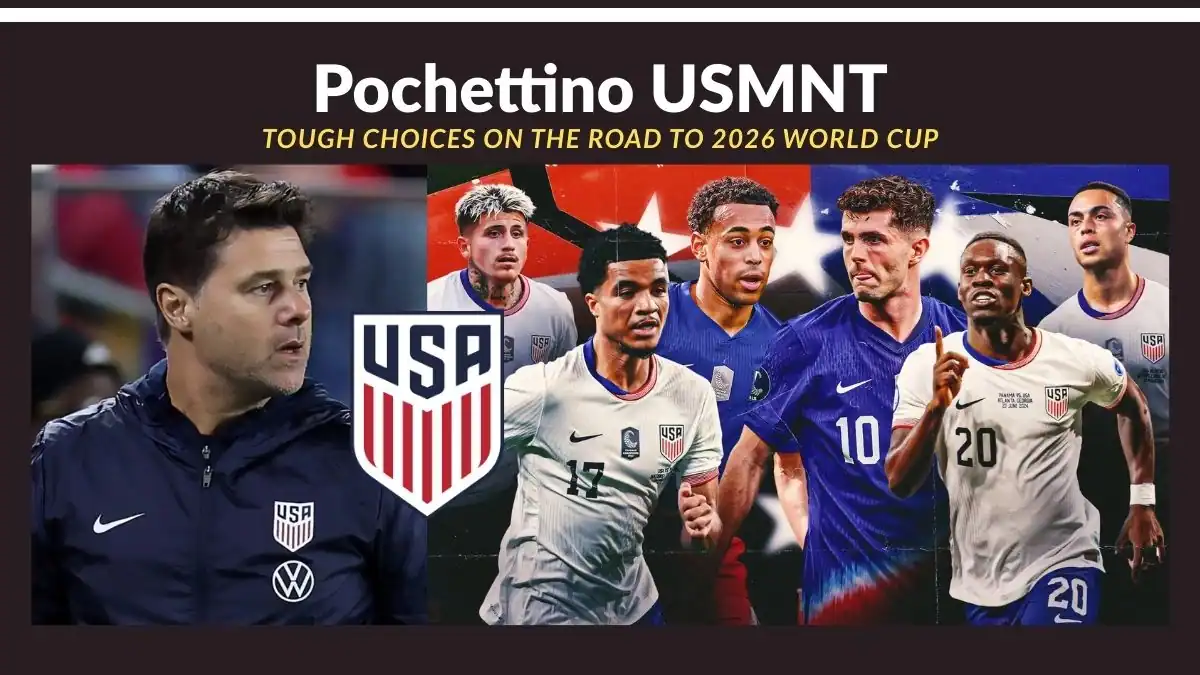
Pochettino USMNT roster changes 2025, How Pochettino is rebuilding the USMNT for 2026, USMNT midfield problems ahead of 2026 World Cup, Best USMNT XI under Pochettino for 2026
Mauricio Pochettino’s arrival as USMNT head coach brought immediate attention and high expectations. Tasked with preparing the United States for the 2026 World Cup, Pochettino has begun experimenting with players and strategies—a crucial but disruptive process that has led to headline-grabbing roster changes and sparked new concerns about the team’s readiness for a home tournament.
Recent call-ups and omissions—ranging from the return of Christian Pulisic to the exclusion of some established names—show Pochettino is testing depth and demanding competition for every spot.
The shake-up highlights both opportunities and pressing challenges: establishing a clear tactical identity, securing club minutes for top players, and addressing positional gaps ahead of 2026.
Pochettino USMNT – appointment & tactical profile
Table of Contents
Pochettino was formally appointed by U.S. Soccer in 2024 to lead the USMNT into the 2026 World Cup cycle.
Across Europe, Pochettino’s teams emphasise intensity, coordinated pressing, positional structure and flexible systems (often variants of 4-2-3-1 or 4-1-4-1). Expect a focus on fitness, transitions and compact pressing triggers.
Pochettino USMNT Recent form & key results
The USMNT’s results in regional competitions and friendlies under the new regime have been mixed—including disappointing Nations League results and a 2025 Gold Cup run that highlighted depth questions. These outcomes explain the roster tinkering and Pochettino’s insistence that no place is guaranteed.
Roster shake-up — headline moves
Return of established leaders (e.g., Christian Pulisic) alongside recalls for players showing club form. Notable omissions of players due to form, fitness or club situations (e.g., absences that have generated debate among analysts).
Introducing new call-ups and providing opportunities for young prospects to prove themselves against top-level opposition.
Pochettino USMNT – Top challenges to fix before the 2026 FIFA World Cup

Consistent club minutes for core players: Several USMNT regulars have uneven club minutes — Pochettino must coordinate with players (and expect some transfers) so his best XI plays regularly.
Midfield identity & depth: The central midfield (roles for 6/8/10) is unsettled—Yunus Musah’s fluctuating club role is a case study. The team needs a defined pivot, box-to-box runner and an attacking link.
Reliable striker solution: The US has rotation at forward but no undisputed, consistent penalty-box finisher at the elite level — Pochettino must find or develop a striker who scores regularly in top competition.
Defensive cohesion & full-back stability: Injuries and squad rotation have disrupted fullback consistency, making it crucial to establish a strong understanding between center-backs and fullbacks in Pochettino’s pressing system.
Injury management & sports science: With demanding club schedules, a personalized load management plan and rotation policy are essential to ensure players remain available for 2026.
A practical 2026 roadmap highlighting key focus areas for the United States soccer
Pochettino USMNT focusing on 7 key factors –
Enforce club-minute minimums & transfer guidance
Work with players, agents and clubs to prioritise moves that guarantee regular playing time. Where starters are benched, push for loans or transfers that offer consistent minutes so core USMNT players stay match-fit and sharp.
Define a tactical core and a backup plan
Settle on a primary system (for example, an aggressive 4-2-3-1 with a high press) and prepare two alternate shapes to handle different opponents. Drill set-piece variations and transitional traps until the ideas become automatic.
Midfield specialization & role clarity
Assign clear roles — anchor, box-to-box midfielder, and creator — and train players to master those responsibilities. Reskill or reframe players when needed (e.g., adapting a player into a holding pivot) and keep role expectations consistent across camps.
Targeted striker development & scouting
Invest in striker coaching clinics and track promising forwards in MLS and Europe. Use friendlies and pre-tournament camps to give potential centre-forwards regular minutes and build their confidence in penalty-area situations.
Defensive unit continuity
Keep a stable centre-back pairing where possible and rotate full-backs gradually to preserve cohesion. Emphasize pressing triggers, defensive communication and recovery runs to limit vulnerability during opponent transitions.
Sports science, load management & mental conditioning
Introduce personalised fitness and recovery plans, stronger load-management protocols, and mental-resilience training. These measures are essential for players juggling heavy club schedules and long travel windows.
Youth integration & scouting pipeline
Fast-track high-upside young defenders and midfielders in low-risk friendlies and expand scouting across MLS and Europe. Building a deeper talent pipeline ensures competitive depth and reduces last-minute selection surprises.
A possible 23-man template (concept)
- Goalkeepers: 2 established + 1 high-potential backup (rotate in camps).
- Defenders: 4 centre-backs (2 starters + rotation), 4 fullbacks (2 each side with cover).
- Midfielders: 2 holding, 2 box-to-box, 2 creators (flexible roles).
- Forwards: 1 reliable starter striker, 2 supporting forwards/wingers, 2 utility attackers.
Players to watch

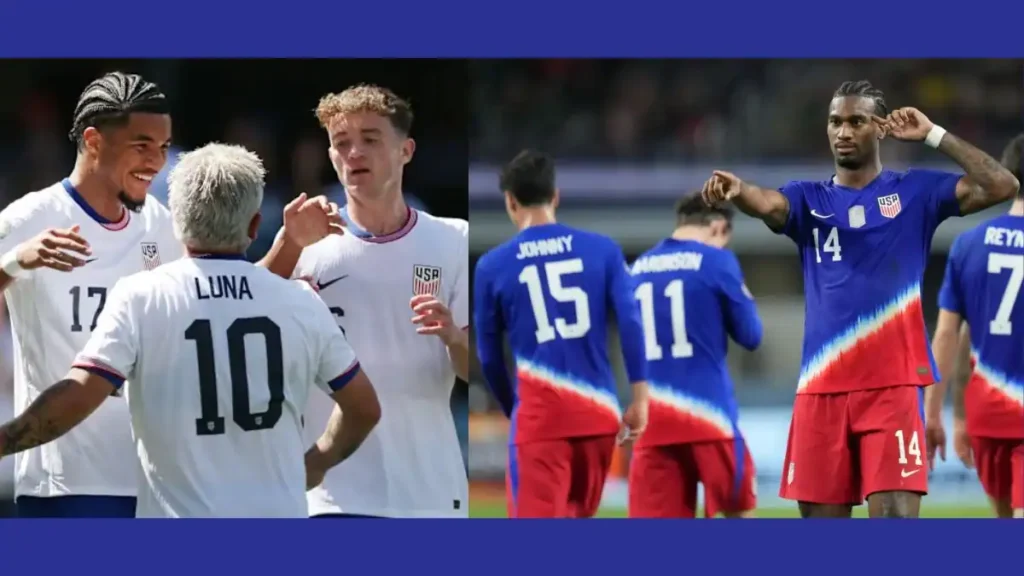
Pochettino USMNT squad, a few key players prominently in the starting XI.
- Christian Pulisic — experienced leader when fit (attacking top-level minutes matter).
- Tyler Adams — midfield anchor and leadership piece.
- Yunus Musah — high ceiling, needs consistent club minutes to reclaim role.
- Emerging youth (e.g., young centre-backs and wingers) — monitor for fast-tracking into camps.
Operational quick checklist for Pochettino
Set club-minute targets for all likely starters. Hold two intensive pre-World Cup camps with match scheduling vs strong opposition. Establish a clear 26/23-player hierarchy and communicate it to avoid late surprises.
Prioritise one or two striker solutions by mid-2025/early-2026. Invest in sports science hires to reduce injury risk during the 2025–26 season.
Pochettino’s roster shake-up is the right kind of disruption if it leads to clarity: a consistent tactical identity, players getting the right club minutes, and an honest hierarchy before the 2026 World Cup.
The clock is short; success depends on execution across club coordination, tactical drills, injury prevention and confident choices about key positions (especially midfield and striker). For U.S. fans, the next 12–18 months will reveal whether Pochettino can turn experimentation into trust and competitive results.