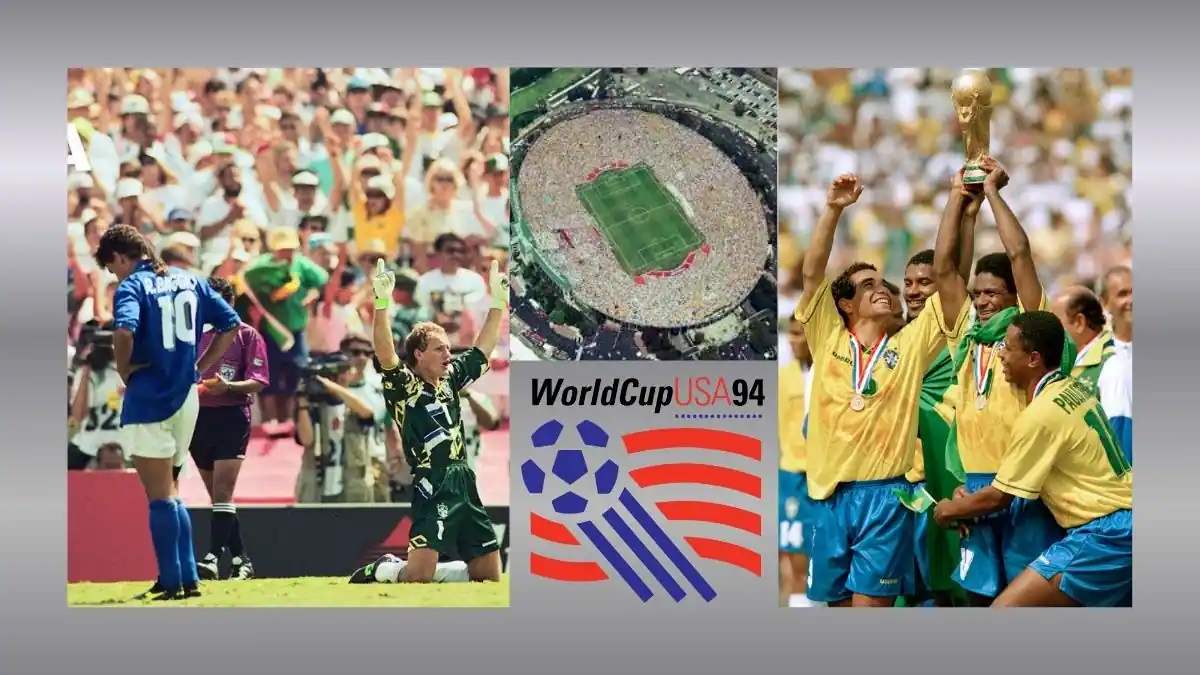
The 1994 FIFA World Cup, held in the United States from June 17 to July 17, 1994, stands as one of the most memorable tournaments in Soccer history. Brazil’s national Soccer team emerged as the champion, claiming their fourth and record-breaking World Cup title by defeating Italy in an epic final decided by penalties at the Rose Bowl in Pasadena, California.
This victory not only marked Brazil’s triumphant return to the top of world football after 24 years but also introduced a historic milestone: it was the first time any nation had won four FIFA World Cup titles. The tournament itself set unprecedented records, becoming the most financially successful World Cup ever hosted, with over 3.5 million spectators attending matches across nine American venues.
1994 FIFA World Cup Tournament of Firsts and Innovations
Table of Contents
The 1994 World Cup introduced several groundbreaking changes to international football that would reshape the sport’s competitive landscape.
For the first time in World Cup history, three points were awarded for a victory instead of two, a revolutionary rule designed to encourage more attacking and entertaining football following criticism of the defensive, low-scoring matches at the 1990 World Cup.
The tournament also witnessed the debut of three new nations— Greece, Nigeria, and Saudi Arabia – while Russia competed as an independent nation for the first time following the collapse of the Soviet Union.
Notably, the United States faced Switzerland in an indoor match at the Pontiac Silverdome near Detroit, Michigan, marking the first-ever indoor World Cup fixture in history.
The tournament showcased dramatic narratives and controversies that captivated global audiences.
Diego Maradona’s infamous doping scandal led to his withdrawal from competition, while Colombian defender Andrés Escobar’s own goal against the United States resulted in his tragic death shortly after returning home, amid speculation that his error had cost drug barons millions in gambling losses.
Despite these dark moments, the tournament ultimately celebrated the beautiful game and demonstrated the United States’ capability to successfully host a world-class sporting event against all skeptical predictions.
Brazil vs Italy 1994 FIFA World Cup Final- A Penalty Shootout for the Ages
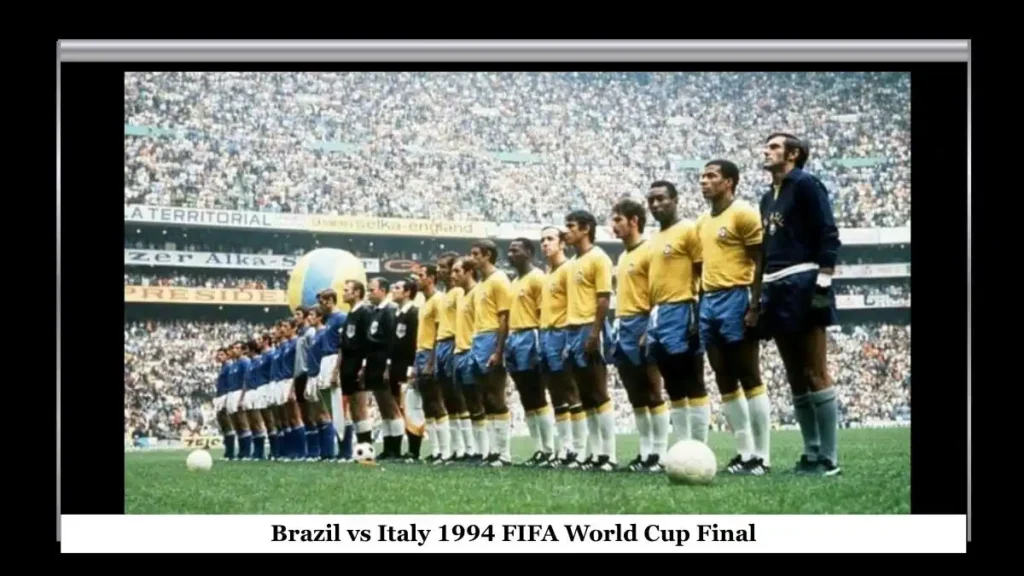
The championship final on July 17, 1994, between Brazil and Italy proved to be one of the most dramatic and tense matches in World Cup history.
Played at the iconic Rose Bowl Stadium in Pasadena before 94,194 spectators – the highest attendance for any World Cup final since the 1966 FIFA World Cup, the match remained locked at 0–0 after a grueling 120 minutes of regulation and extra time.
Despite both teams having numerous chances to break the deadlock, neither could find the back of the net, setting the stage for an unprecedented moment in World Cup history: the first-ever penalty shootout to decide a World Cup final.
The penalty shootout became an unforgettable drama filled with both heroic saves and crushing misses.
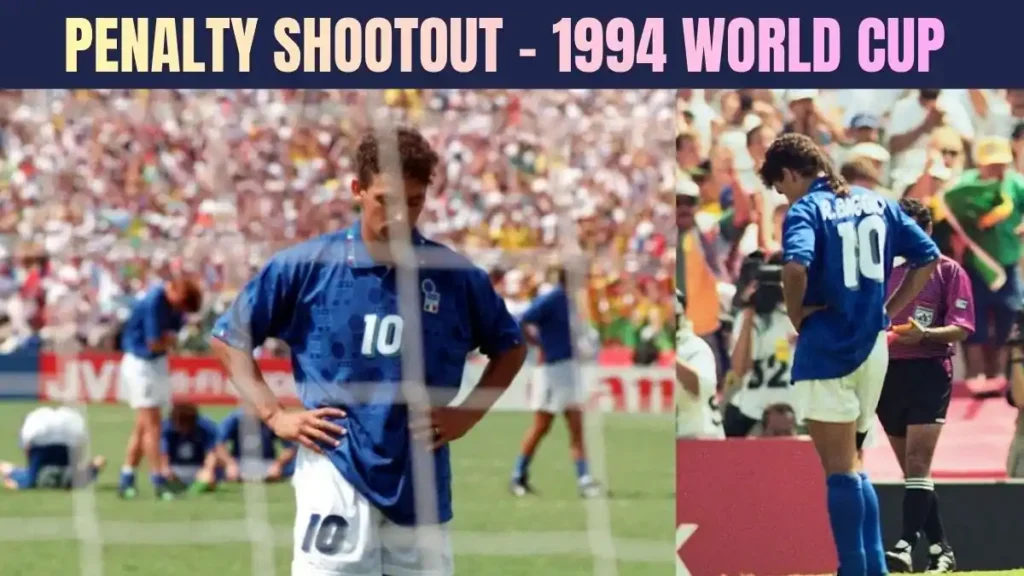
Brazil’s goalkeeper Cláudio Taffarel proved instrumental, making crucial saves to keep his team ahead. However, it was Italian legend Roberto Baggio’s (regarded as one of the greatest soccer players in history) infamous missed penalty that sealed Brazil’s fate.
Playing injured and having been the standout performer throughout the tournament, Baggio stepped up with Italy needing to score to keep their championship dreams alive. Instead of finding the net, Baggio blazed his shot high over the crossbar in an iconic moment that has been replayed countless times in football history, handing Brazil the trophy with a 3–2 penalty victory.
Brazil’s Path to Glory: A Smooth Ride to the 1994 FIFA World Cup Final
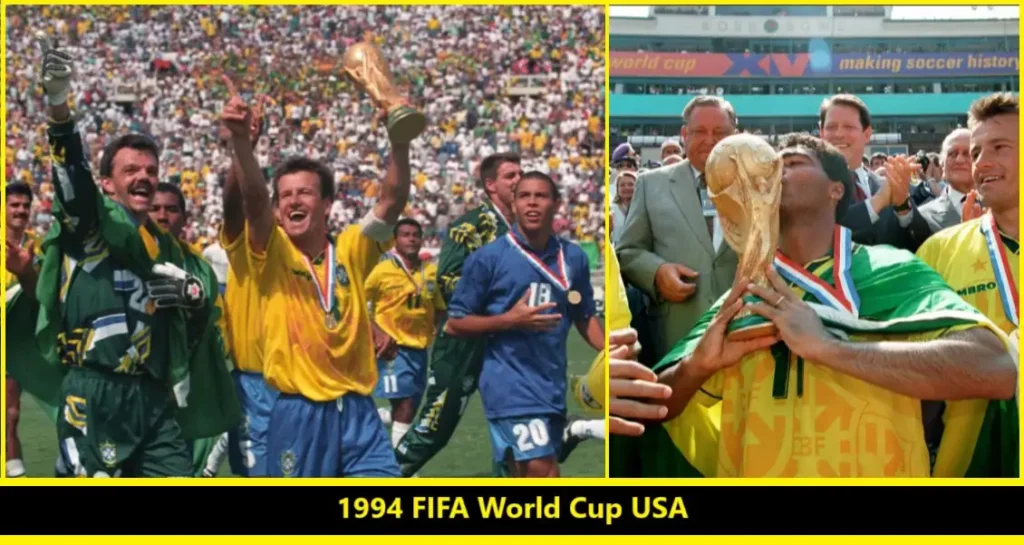
Brazil’s journey through the 1994 tournament was remarkably consistent and dominant. Under the management of Carlos Alberto Parreira, the Seleção began their campaign with a 2–0 victory over Russia in the opening match of the entire tournament at Stanford Stadium.
They continued their impressive form with a commanding 3–0 win over Cameroon, securing their Round of 16 qualification with a match to spare.
Their group stage concluded with a 1–1 draw against Sweden, demonstrating their control and tactical maturity throughout the opening phase.
In the knockout stages, Brazil displayed a level of mastery rarely seen in World Cup football. They defeated the United States 1–0 in the Round of 16, with Bebeto scoring the winning goal on Independence Day, an especially poignant moment for the American hosts.
Their quarterfinal clash with the Netherlands proved to be one of the tournament’s most thrilling matches, with Brazil emerging victorious 3–2 in a showcase of attacking prowess and resilience.
The semifinal against Sweden presented no difficulty, as Romário’s expert finishing secured a 1–0 victory, sending Brazil into their date with destiny in the final.
Throughout their knockout run, Brazil never trailed a single match, covering 270 minutes without conceding a lead—a testament to their defensive solidity and attacking efficiency.
The 1994 FIFA World Cup Tournament’s Standout Performances players
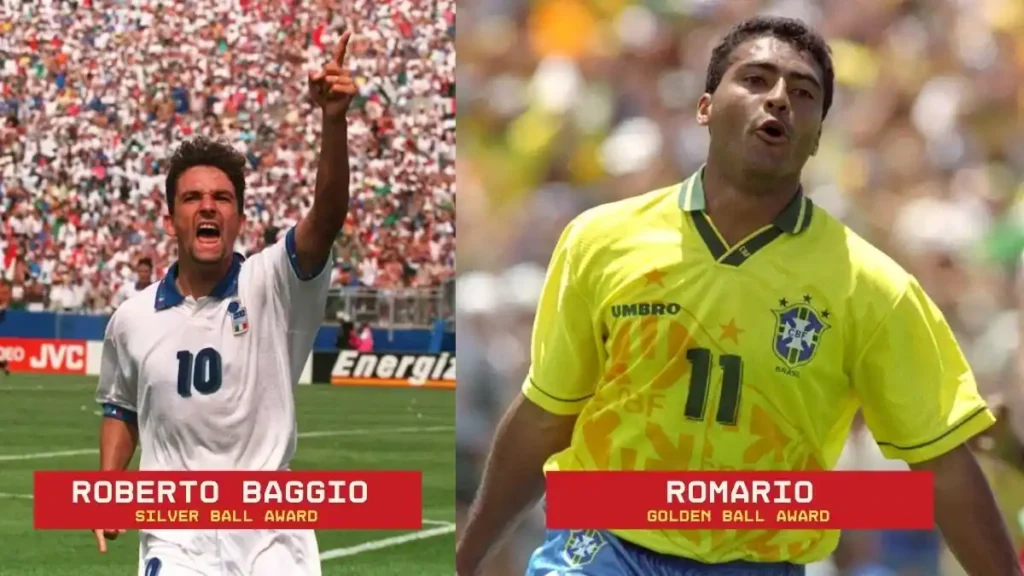
Several players left indelible marks on the 1994 World Cup. Romário, the Brazilian striker, won the Golden Ball as the tournament’s best player, scoring five crucial goals including the famous winner against Netherlands. His partnership with Bebeto proved devastating for opposing defenses throughout the competition.
For Italy, Roberto Baggio carried his team’s aspirations on his shoulders. Despite not scoring in the group stage, Baggio proved to be Italy’s savior in the knockout rounds, netting the crucial goal against Nigeria in the second round and scoring the winner against Spain in the quarterfinals.
He scored twice in Italy’s semifinal thrashing of Bulgaria (2–0), which impressed many observers. However, his moment of glory in the final would be overshadowed by his devastating penalty miss.
The tournament’s Golden Boot was shared by two strikers: Hristo Stoichkov of Bulgaria and Oleg Salenko of Russia, each scoring six goals.
Bulgaria’s Stoichkov delivered a stunning performance, leading the surprise team to the semi-finals—Bulgaria had never won a World Cup game in five previous tournaments before 1994.
Record-Breaking Attendance and Success in America
Despite soccer’s relative lack of mainstream popularity in the United States at the time, the 1994 World Cup became a resounding commercial and attendance success.
The tournament attracted a record-breaking total attendance of 3,587,538 spectators across 52 matches, averaging 68,991 fans per game– figures that remain unmatched to this day, even after the expansion to 32 teams in the 1998 World Cup. The 1994 FIFA World Cup is one of the Biggest FIFA World Cup ever in Soccer World Cup history.
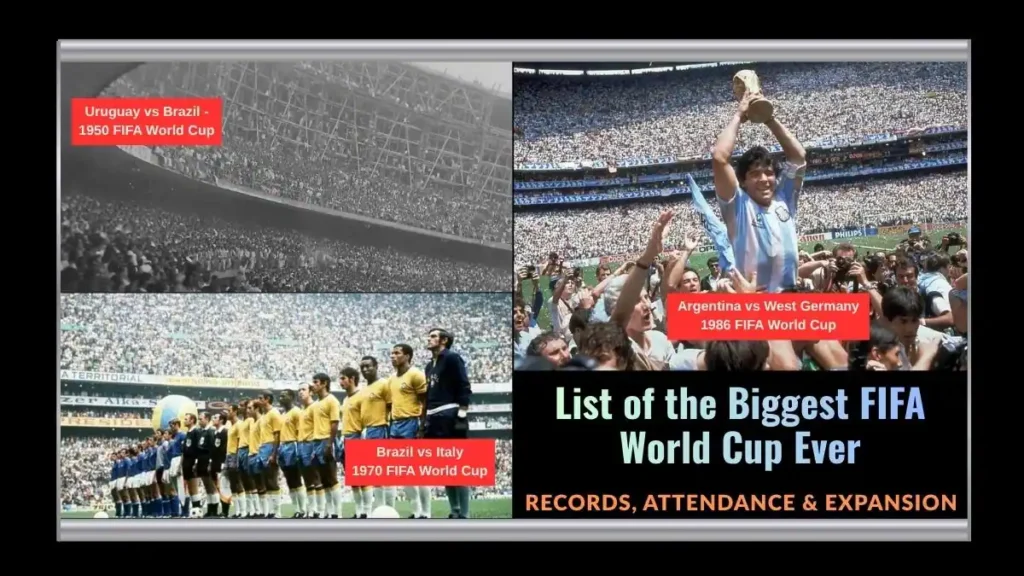
This extraordinary turnout demonstrated that American audiences could embrace football when given the opportunity, paving the way for the subsequent growth of soccer in the United States.
The Rose Bowl’s attendance of over 94,000 for the final remains the highest World Cup final attendance in the modern era, with only the 1950 Brazil tournament in the open-air Maracanã Stadium in Rio de Janeiro rivaling these numbers.
Legacy and Historical Significance
Brazil’s 1994 World Cup victory marked a defining moment in football history. The victory dedicated to the memory of Ayrton Senna, the legendary Formula One champion who had died in a racing accident just two and a half months before the final, added an emotional dimension to Brazil’s triumph.
Captain Dunga lifted the trophy, presenting it to a global audience and cementing Brazil’s place as the first nation ever to win four FIFA World Cups.
The tournament also solidified several legacies: Italy’s Franco Baresi became only the sixth player to win gold, silver, and bronze medals across multiple World Cup tournaments, a feat previously achieved by five German players in the 1974 World Cup.
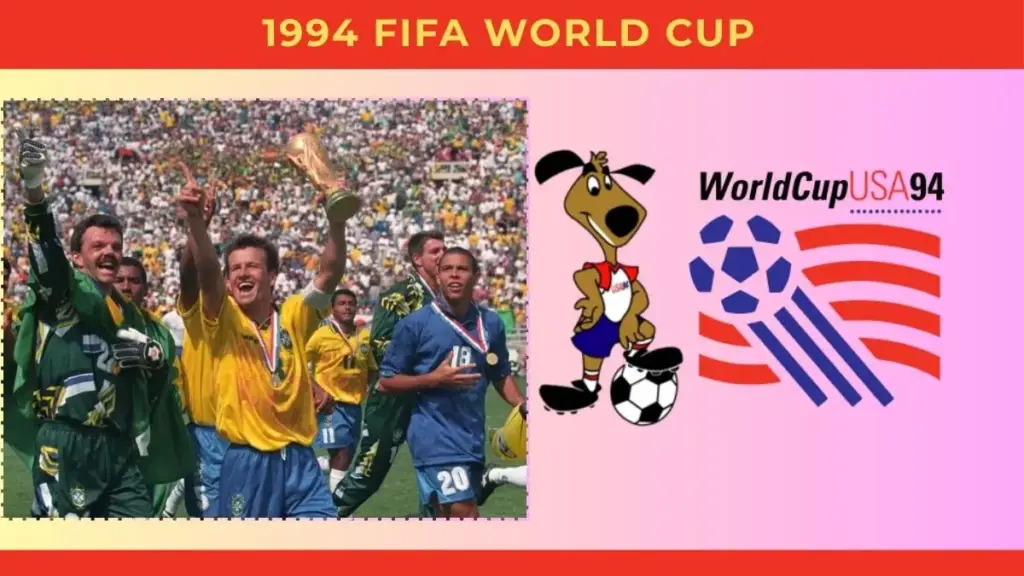
Meanwhile, the three-point victory rule introduced at this World Cup would become the standard worldwide for football competitions, revolutionizing how the sport was played and strategized at every level.
The 1994 FIFA World Cup proved that international football could thrive in unexpected venues and that the beautiful game’s universal appeal transcended cultural and geographical boundaries.
Brazil’s victory, decided by an unprecedented penalty shootout and marked by Roberto Baggio’s cosmic miss, remains one of sport’s most dramatic moments and the tournament stands as a watershed moment in both World Cup and global football history.
What is the Different story of the 1994 FIFA world Cup?
The 1994 FIFA World Cup, held in the United States, featured record-breaking attendances and dramatic moments — including Diego Maradona’s drug ban, Roberto Baggio’s missed penalty in the final, and Brazil’s victory over Italy on penalties (0–0, 3–2 pens), giving Brazil their fourth World Cup title.