
Women’s Soccer History is a story of resilience, passion, and progress. The game has traveled a long journey from its humble beginnings in the late 19th century to becoming a global sporting phenomenon today. Despite facing early bans and societal resistance, women’s football steadily grew in popularity, breaking barriers and inspiring generations of athletes around the world.
The first recorded women’s matches took place in England in the 1890s, marking the foundation of organized women’s football. However, in 1921, the Football Association banned women from playing on official grounds, calling the sport “unsuitable” for women.
This decision stunted growth for decades, but it could not stop the determination of female players. By the 1970s, bans were lifted, and international recognition began to take shape, paving the way for global competitions.
From the early pioneers who fought for the right to play to modern icons leading the sport on the world stage, Women’s Soccer History highlights a powerful evolution.
Today, with the FIFA Women’s World Cup drawing millions of viewers and professional leagues thriving across continents, women’s football stands as a symbol of equality, opportunity, and excellence in the sporting world.
- Women’s Association Football, or Women’s Football or Women’s Soccer
- The highest governing body – FIFA
Women’s Soccer History From the 1890s to 2025

The first recorded Women’s Soccer History matches took place in England in the 1890s, notably between factory teams in the industrial Midlands.
Despite growing popularity, the Football Association banned women’s matches on its member grounds in 1921, deeming the game “unsuitable” for women. This ban remained in place in England until 1971, stunting the sport’s early development.
The first recorded women’s soccer match took place on May 9, 1881, in Edinburgh (Easter Road), between the women’s teams of England and Scotland, and the Women’s World Cup was held in Italy in 1970; it is commonly referred to as “Coppa ’71” or the 1970 unofficial Women’s World Cup.
There is no reliable evidence for a match in 1891 or 1895 that predates this 1881 fixture. Here is Women’s Soccer History from World War to 2025 –
Post World War II and Growth in Europe
After World War II, women’s soccer slowly reemerged. In 1970, Italy held the first unofficial women’s European Championship, organized by independent bodies outside of UEFA.
England and other European nations saw the establishment of women’s leagues in the 1970s, although support remained limited.
FIFA Recognition and First Women’s World Cup (1991)
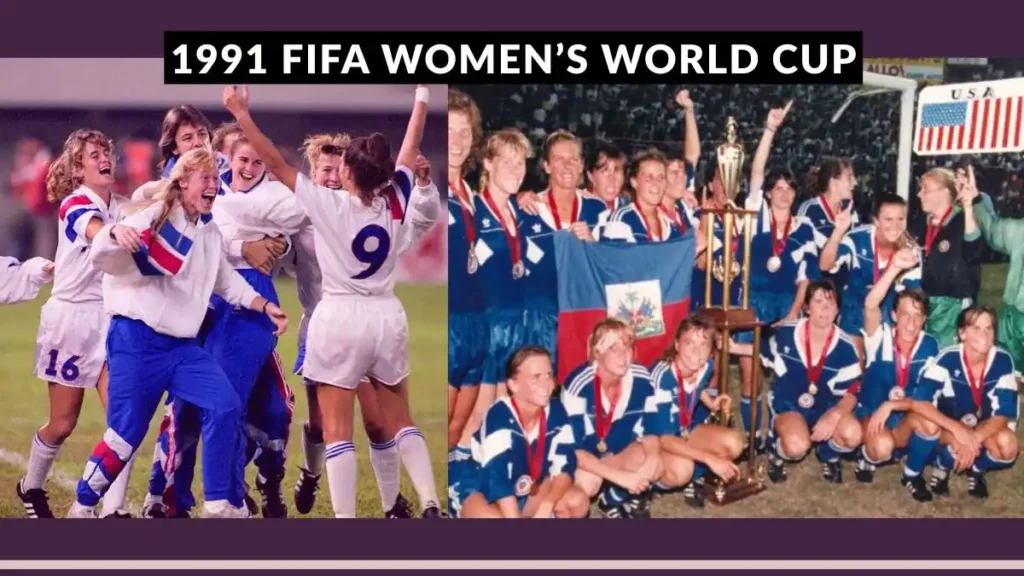
FIFA officially recognized women’s soccer in the 1980s and launched the inaugural FIFA Women’s World Cup in China in 1991 with 12 teams.
The United States won the first tournament, signaling the rise of North America as a global power in the women’s game.
Olympic Inclusion (1996)
Women’s soccer became an Olympic sport at the 1996 Atlanta Games, where eight teams competed. The United States claimed the first Olympic gold medal, cementing the sport’s growing international stature.
Expansion and Professionalization (2000s–Present)
The Women’s World Cup expanded to 16 teams in 1999 and 24 teams in 2015. Professional domestic leagues emerged globally: the WUSA (USA) in 2001, FA WSL (England) in 2011, NWSL (USA) in 2013, and Liga F (Spain) in 2021. These leagues improved player development and visibility.
Landmark Moments and Records

- The “99ers”: The 1999 U.S. Women’s National Team’s World Cup victory at the Rose Bowl sparked unprecedented interest and attendance.
- Marta’s Five Goals: Brazil’s Marta became the all-time leading scorer in Women’s World Cup history in 2019.
- Record Viewership: The 2019 World Cup final drew over 260 million viewers globally, setting a new benchmark for women’s sports.
Continued Growth and Future
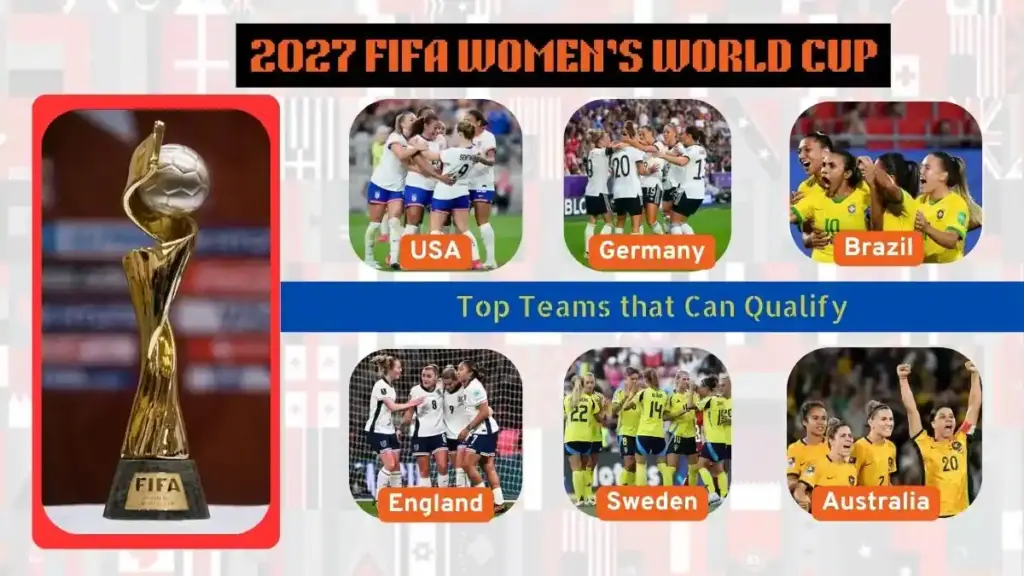
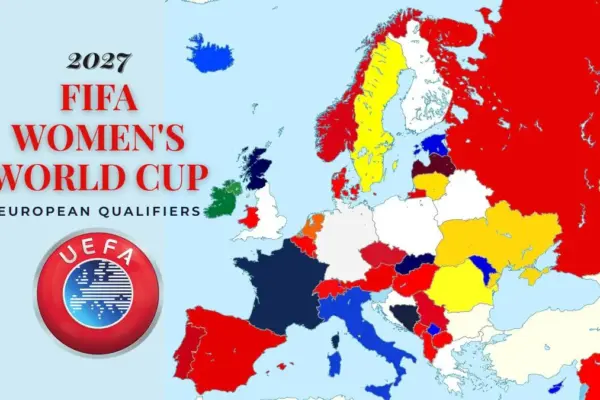
The 2023 FIFA Women’s World Cup in Australia/New Zealand saw record attendance and prize money, while the upcoming 2027 FIFA Women’s World Cup edition in Brazil marks the first Women’s World Cup in South America.
Governed by FIFA and confederations, women’s soccer continues to professionalize, with increasing investment, media coverage, and global participation surpassing 200 national teams.