In an unprecedented display of financial might, Premier League clubs spend more than £3.4 billion during the summer transfer window, shattering all prior global sports expenditure records. Driven by a furious deadline-day climax, English top-flight sides committed an astronomical £3.46 billion ($4.67 billion) on player acquisitions, eclipsing the previous benchmark of £3.14 billion.
The scale of investment highlights how far England’s top tier has distanced itself from continental Europe. Supported by domestic television rights, UEFA expansion revenue, and aggressive commercial growth, the Premier League has created an internal economic ecosystem where mid-table sides and newly promoted clubs compete directly against traditional Champions League royalty for prime talent.
Below is the verified, data-backed analysis breaking down the official spending totals, individual club expenditures, nine-figure blockbuster signings, and the broader financial forces reshaping football.
Premier League Summer Transfer Spending at a Glance

| Metric | Summer 2026 Total | Strategic Significance |
| Total League Outlay | £3.46 Billion ($4.67B) | New world record for a single transfer window |
| Average Club Spend | ~£173 Million | Illustrates spending depth across all 20 clubs |
| Deadline Day Expenditure | £475 Million | Surge from £391M spent on the final day of the previous summer |
| Top Spending Club | Manchester City (£458M) | Highest single-window outlay by any club in football history |
| £100m+ Deals Completed | 4 Signings | Nine-figure fees become standard for elite talent |
| Domestic League Trading | ~38% of Total Volume | Increased liquidity circulating directly between Premier League sides |
| Promoted Clubs Spend | £400M+ Combined | Massive survival-driven outlay by arriving Championship teams |
The £100M+ Mega Deals: Summer 2026’s Most Expensive Signings
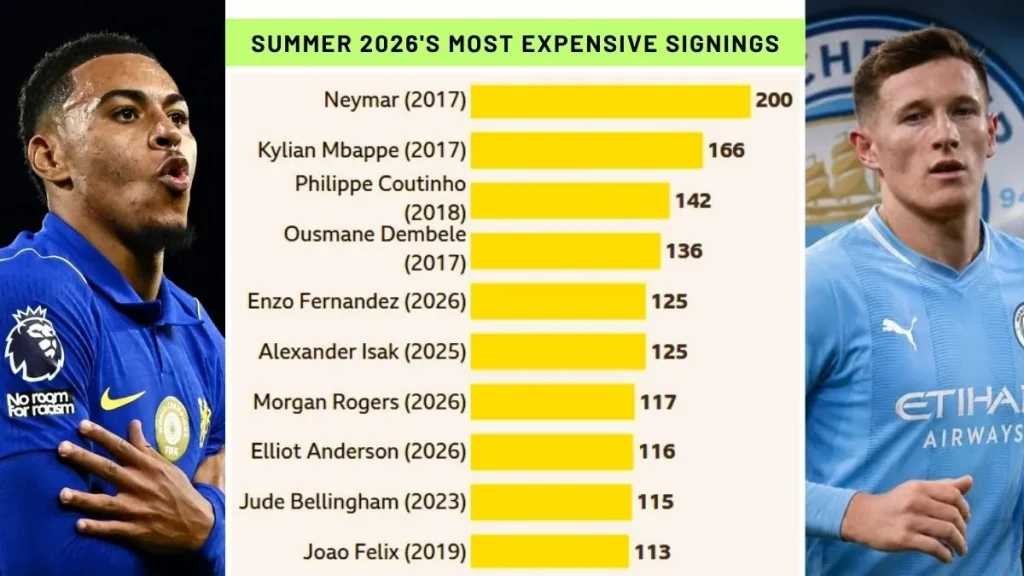
The window was defined by unprecedented valuation milestones, with four separate transfers commanding fees exceeding £100 million:
| Player | Position | Selling Club | Buying Club | Reported Transfer Fee |
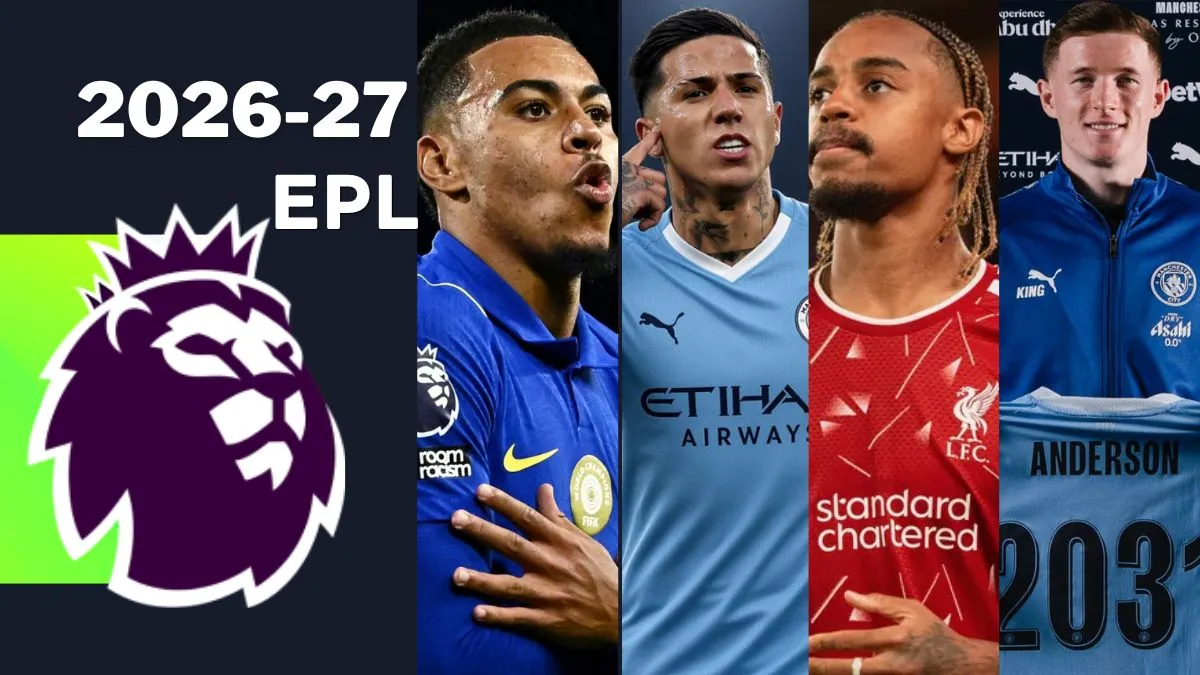
| Enzo Fernández | Central Midfield | Chelsea | Manchester City | £125.0 Million |
| Bradley Barcola | Winger / Forward | Paris Saint-Germain | Liverpool | £123.0 Million |
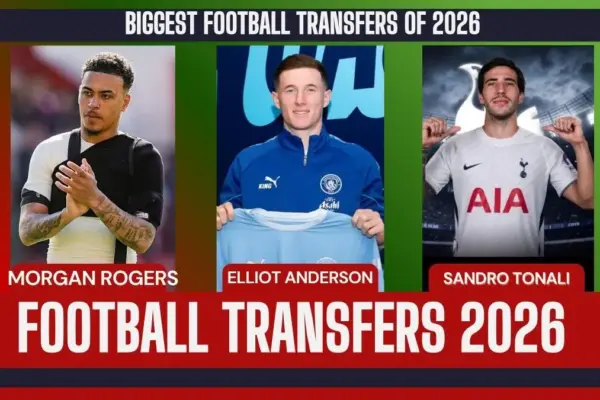
| Morgan Rogers | Attacking Midfield | Aston Villa | Chelsea | £117.0 Million |
| Elliot Anderson | Midfielder | Nottingham Forest | Manchester City | £116.0 Million |
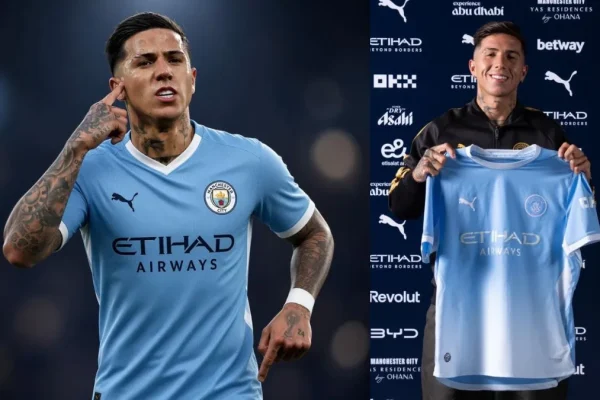
Manchester City’s late capture of Argentine World Cup winner Enzo Fernández for £125 million matched the all-time British transfer record, culminating an aggressive deadline-day push.
Concurrently, Chelsea balanced their ledger by acquiring Aston Villa sensation Morgan Rogers for £117 million, while Liverpool bolstered their frontline with Paris Saint-Germain’s Bradley Barcola in a package reaching £123 million.
Club-by-Club Spending Breakdown

While the total figure is historic, the distribution of capital reveals contrasting financial strategies across the table:
1. Manchester City — £458 Million
Manchester City set a new club and league record by splashing £458 million on fresh talent. Alongside the headline arrivals of Enzo Fernández (£125M) and Elliot Anderson (£116M), City recruited Everton winger Iliman Ndiaye for £65 million. Despite this unprecedented expenditure, City recouped £304 million in player sales, showcasing elite asset trading efficiency.
2. Chelsea — £349 Million
Chelsea remained among the most active operators in world football, committing £349 million to squad additions. In addition to securing Morgan Rogers, the Blues brought in Marco Palestra from Atalanta (£47M) and Aston Villa goalkeeper Emiliano Martínez (£7.5M). Remarkably, Chelsea generated £382 million from player exits—including the major sales of Enzo Fernández (£125M) and Nicolas Jackson (£65M)—finishing the window in a net-profit surplus.
3. Tottenham Hotspur — £302 Million
Determined to rebound into regular Champions League contention, Tottenham committed £302 million in strategic acquisitions, investing across defensive reinforcement and dynamic transitional midfield profiles.
4. Liverpool & Arsenal — £198 Million & £194 Million
Both title contenders acted with targeted precision:
- Liverpool (£198M): Built their window around the high-profile capture of Bradley Barcola to revitalize their wide attacking depth.
- Arsenal (£194M): Addressed central structural requirements by securing Newcastle United captain Bruno Guimarães for £75 million and Aston Villa defender Ezri Konsa for over £51 million.
5. Promoted Clubs Surpass £400 Million
Highlighting the sheer depth of English football’s economy, newly promoted sides—including Ipswich Town, Coventry City, and Hull City—combined to spend over £400 million to secure Premier League survival. Ipswich Town alone committed £171 million, outpacing the total summer expenditure of several entire European leagues.
Key Market Drivers: Why Spending Hit £3.46 Billion
- Domestic Trading Liquidity (The Internal Flywheel): Approximately 38% of all transfer expenditure was transacted directly between Premier League clubs. Rather than draining capital abroad, billions circulated internally from City, Chelsea, Villa, and Newcastle, keeping liquidity within the domestic pyramid.
- Post-World Cup Valuation Inflation: With the 2026 FIFA World Cup elevating player profiles globally, transfer valuations experienced double-digit percentage inflation across all positions.
- Transition to New Financial Regulations: Ahead of strict implementation dates for UEFA’s 70% Squad Cost Ratio and the Premier League’s 85% domestic threshold, clubs aggressively front-loaded multi-year amortized fees to secure generational assets early.
The Widening Chasm with Continental Europe
The Premier League’s £3.46 billion outlay accounts for nearly half of total global football transfer spending. While Serie A, La Liga, and the Bundesliga operated largely under sustainable self-funding models, mid-table English sides consistently offered fee packages and weekly wage guarantees that even continental champions struggled to rival.
As revenue gaps widen through global broadcast rights, England’s top tier operates not just as a domestic championship, but as a de facto global super league.
Frequently Asked Questions (FAQs)
How much did Premier League clubs spend in total during the Summer 2026 window?
Premier League clubs spent an all-time record £3.46 billion ($4.67 billion), comfortably surpassing the previous summer’s record of £3.14 billion.
Which club spent the most money in the Summer 2026 transfer window?
Manchester City was the biggest spender, committing approximately £458 million on player acquisitions, led by the £125 million signing of Enzo Fernández.
What was the most expensive transfer of the Summer 2026 window?
Enzo Fernández’s transfer from Chelsea to Manchester City for £125 million was the highest single fee of the window, equaling the British transfer record.
How much was spent on deadline day alone?
Premier League sides spent £475 million on deadline day, driving the overall window beyond the £3.4 billion threshold in the final hours before the 11:00 PM BST cutoff.