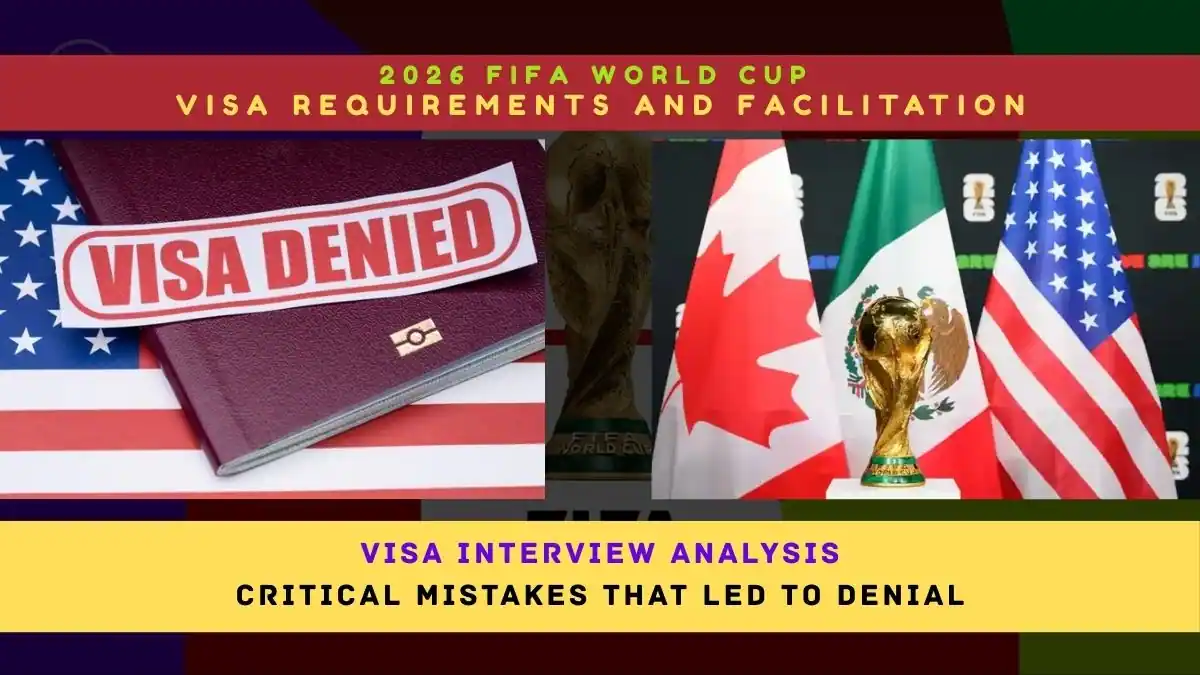
A 25-year-old Mumbai investment banker experienced a devastating US visa rejection that ended his 2026 FIFA World Cup dreams in under one minute. The applicant, earning ₹2 lakh per month post-tax, had meticulously planned to attend the World Cup with his father, continuing a tradition that began at the 2022 Qatar World Cup.
The banker’s visa interview at the US consulate was shockingly brief, lasting less than 60 seconds before receiving an outright rejection under Section 214(b). Despite his stable income, employment status, and clear travel plans, the consular officer provided no detailed explanation for the denial.
The 2026 FIFA World Cup will be held in the United States, Canada and Mexico with 48 teams in 16 cities. The FIFA World Cup 2026 ticket prices have just been launched, along with hospitality packages and the visa process. However, the question is why the visa process is being denied for fans.
Why was the applicant a US Visa Reject for the 2026 FIFA World Cup?
Interview Transcript: What Went Wrong
The complete interview exchange reveals the rapid-fire nature of the rejection:
Interview Transcript: What Went Wrong
The complete interview exchange reveals the rapid-fire nature of the rejection:
- Visa Officer (VO): “Hi, good morning, purpose of visit?”
- Applicant: “Huge football fan, been to the WC in Qatar in 22 with dad, and he promised he’d try and send me wherever the World Cup happens next, it’s in the US, so I want to go”
- VO: “How long?”
- Applicant: “I wanted to stay for 4 weeks, but my boss didn’t agree to it, and I can go for a max of 3 weeks”
- VO: “Which cities?”
- Applicant: “It all depends on what match tickets I can get, not certain which ones I’ll be able to get, so it’s totally up in the air”
- VO: “Anyone you know in the US?”
- Applicant: “Childhood friend, he’s a US citizen, works in Seattle”
- VO: “Who’s going to sponsor?”
- Applicant: “Dad’s going to sponsor my air tickets, the rest by myself” (officer made a slight face)
- VO: “Where do parents stay? Where do you stay?”
- Applicant: “Parents in Delhi, I’m in Mumbai because I work there”
- VO: “I’m sorry you were rejected”
Critical Mistakes Identified by Immigration Experts
Immigration analysts and online communities identified several red flags in the applicant’s responses that likely triggered the rejection:
Vague Travel Plans: The applicant’s statement that his itinerary was “totally up in the air” depending on match tickets suggested poor planning and raised concerns about his true intentions.
Financial Dependency: Despite earning ₹2 lakh monthly, having his father sponsor airfare created doubt about his financial independence and ability to support himself during the trip.
US Citizen Contact: Mentioning a childhood friend who is a US citizen in Seattle raised concerns about potential overstay risks or undisclosed sponsorship arrangements.
Extended Duration Confusion: Initially requesting 4 weeks but settling for 3 weeks after employer disapproval suggested unclear commitment to return dates.
Unnecessary Information: Providing excessive details about family conversations and promises rather than keeping responses concise and professional.
Expert Analysis: “Walking Red Flag” Assessment
Immigration experts and visa consultants provided harsh but realistic feedback about the application:
“You are a walking red flag,” commented one immigration specialist, highlighting multiple concerning factors:
- Ambiguous travel plans without fixed match tickets or cities
- Financial inconsistencies between earning capacity and sponsorship arrangement
- US connections that could facilitate overstaying
- Overlong stay duration for a sporting event
Professional advice emphasized that successful B1/B2 applications require:
- Specific, concrete travel itineraries with booked accommodations and events
- Clear financial independence without family sponsorship dependencies
- Minimal mention of US connections to avoid overstay suspicions
- Conservative trip durations that don’t exceed typical tourist patterns
Similar FIFA World Cup Visa Denial Pattern
This case represents part of a broader pattern of FIFA World Cup-related visa denials affecting Indian applicants in 2025. Another 24-year-old tech professional from Delhi faced similar rejection when applying for the 2026 World Cup, despite having three years of stable employment.
In that case, the applicant’s interview lasted longer but ended with the same Section 214(b) denial, with the visa officer specifically emphasizing the lack of international travel history. The applicant had mentioned attending the World Cup to see Messi’s final tournament, but was rejected despite offering to show approved leave documentation.
The Emotional Impact and Financial Loss
The Mumbai banker expressed devastation at missing the World Cup opportunity, particularly given the family tradition established in Qatar 2022. The rejection not only dashed immediate travel plans but also resulted in:
- Lost visa application fees (₹13,000+ including appointments)
- Wasted preparation time and documentation costs
- Missed the FIFA World Cup experience that may not repeat with the same participants
- Family disappointment after the father’s commitment to sponsor the trip
The case highlights the unpredictable nature of US visa adjudication, where even seemingly strong applicants with stable employment and clear travel purposes can face sudden rejections based on minor perceived inconsistencies or officer discretion.
This FIFA World Cup visa denial case serves as a cautionary tale for future applicants, demonstrating how preparation, presentation, and precise communication are crucial for B1/B2 visa success, regardless of financial stability or genuine travel intentions.