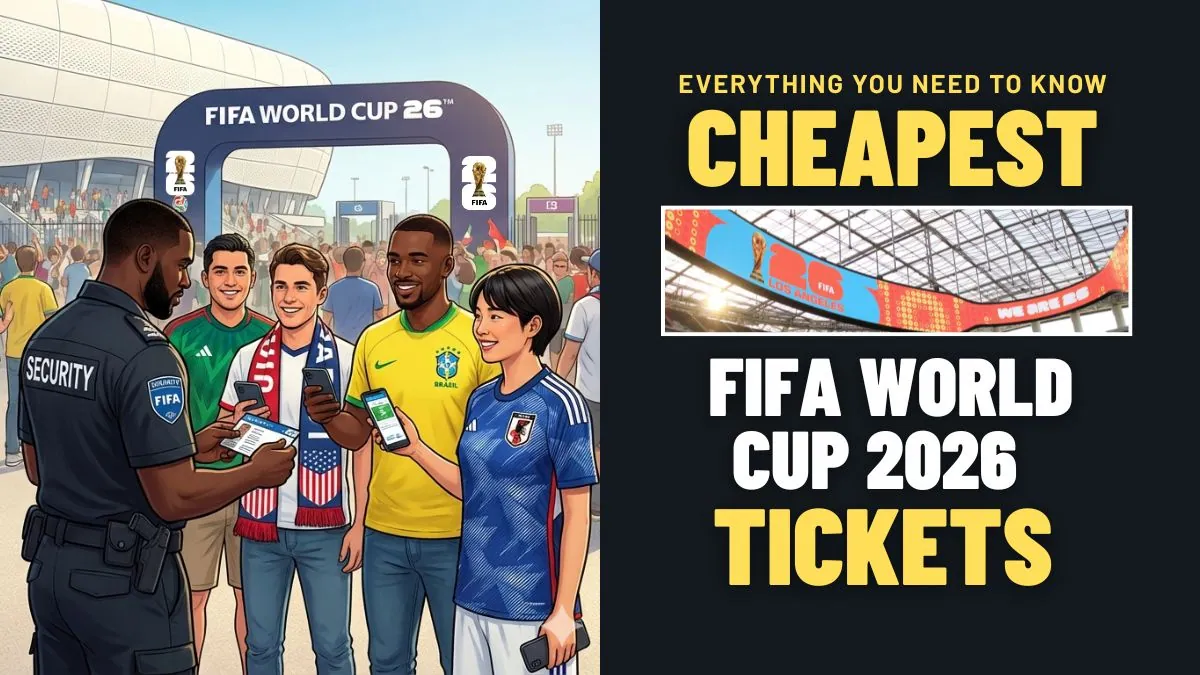
ecuring a seat for the first-ever 48-team tournament is no longer just about luck; it’s about strategy. With over 20 million requests already flooding FIFA’s portal, the competition off the pitch is just as intense as the action on it. If you are searching for the Cheapest FIFA World Cup 2026 Tickets, you need more than just a login—you need a plan.
From understanding Mexico’s budget-friendly venues to mastering the official ‘Supporter Entry Tier,’ this comprehensive guide covers everything you need to navigate the world’s most complex ticketing system and find the best value for your money.
We’ve crunched the numbers and scouted the best deals across 16 host cities to ensure you get to the stadium without breaking the bank.
1. The Most Expensive World Cup in History
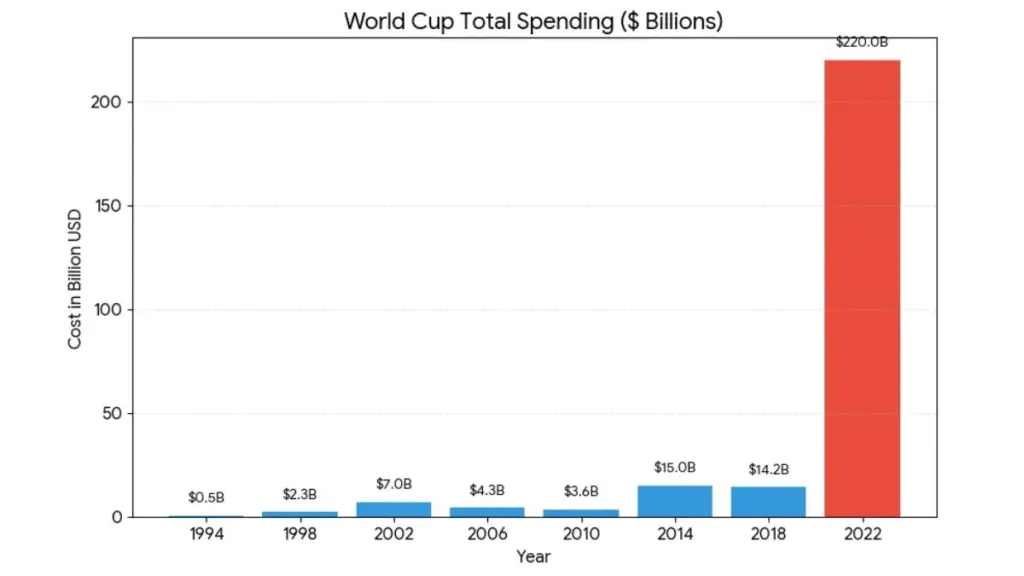
The FIFA World Cup 2026 is the most anticipated sporting event in a generation — and unfortunately, also the most expensive one in the tournament’s entire 96-year history.
Across the United States, Canada, and Mexico, fans from 200+ countries are competing for a limited pool of approximately 6.5 million tickets to 104 matches played over 39 days. Demand has been historic. During just the Random Selection Draw phase alone, FIFA received over 20 million ticket requests — a figure that dwarfs every previous World Cup combined.
The result? Prices have exploded at every level. The Final at MetLife Stadium in New Jersey has seen resale listings appear at anywhere from $5,000 to jaw-dropping $3 million per seat. Even modest group-stage matches are now trading on secondary markets for multiples of their official face values.
And yet — there is still hope for the budget-conscious fan.
FIFA introduced a flat $60 Supporter Entry Tier for every single match, including the Final. Some matches in Mexico and Canada remain genuinely among the most affordable options in the tournament. With smart strategy, careful timing, and the right platforms, it is still possible to attend a World Cup 2026 match without completely emptying your savings account.
This guide covers everything: official price structures, the Cheapest FIFA World Cup 2026 Tickets to target, all buying platforms, Mexico-specific rules, resale market dynamics, scam warnings, and money-saving tips that can genuinely save you hundreds of dollars.
Let’s start with the most important numbers.
2. Cheapest FIFA World Cup 2026 Tickets at a Glance
Before diving deep, here’s the fast answer to the most common questions:
| Ticket Type | Cheapest Official Face Value | Notes |
|---|---|---|
| Supporter Entry Tier ($60 flat) | $60 | Every match, allocated via national associations |
| Category 4 (Host Nation Residents) | ~$60–$90 | Proof of residency required; non-transferable |
| Category 3 Group Stage | ~$75–$100 | Upper tier; best value for non-residents |
| Category 2 Group Stage | ~$150–$250 | Mid-tier; good sightlines |
| Category 1 Group Stage | ~$200–$400 | Sideline lower bowl |
| Category 3 Round of 32 | ~$175–$250 | |
| Category 3 Round of 16 | ~$250–$350 | |
| Category 3 Quarterfinal | ~$350–$500 | |
| Category 3 Semifinal | ~$500–$700 | |
| Category 3 Final | ~$700–$900 | Upper tier |
| Category 1 Final | ~$1,100–$6,730 | Lower bowl, centre |
| Resale (secondary market) Opening Match | ~$1,170–$5,324+ | Already far above face value |
| Resale (secondary market) Final | ~$11,000–$3,000,000 | Extreme range on FIFA’s own resale portal |
The single most important takeaway: The only way to get genuinely cheap World Cup 2026 tickets is through official channels — the FIFA Last-Minute Sales Phase, the Official FIFA Resale Marketplace (at face-value prices), or Mexico’s Mercado de Intercambio. Secondary markets have marked up most tickets by 4x–10x or more.
3. FIFA World Cup 2026 Ticket Categories Explained
FIFA overhauled its ticket categorisation system for the 2026 World Cup, introducing a significant change from previous tournaments. Here’s what every fan needs to understand before spending a dollar.
The Old System vs the New System
At previous World Cups — including Qatar 2022 — ticket categories were based on field proximity. Category 1 meant the best sideline seats closest to the halfway line. Category 3 could still put you in the front row, just behind the goal.
For 2026, FIFA switched to a seating height-based system. This means:
- Category 1 = Lower bowl, central/sideline positions
- Category 2 = Lower or mid-bowl, sections farther from centre
- Category 3 = Primarily upper tier
- Category 4 = Upper tier, outermost sections (host nation residents only)
- Supporter Entry Tier = A flat-price allocation ($60 per ticket) for every match
This change was controversial. Critics noted that for past World Cups, a $69 Category 3 ticket could put you front row behind the goal — not possible under the new system.
Seat Assignment Timing
This is one of the most common sources of anxiety for first-time World Cup ticket buyers: you will not receive your exact seat number at the time of purchase.
FIFA assigns seat numbers through its digital ticketing platform closer to each match. Historically, this can be anywhere from a few weeks to just days before kickoff.
For 2026, FIFA has indicated that seat details will be communicated via the official FWC2026 Mobile Tickets app. The key takeaway: buy the category that matches your budget, and accept that the exact row and seat number will come later.
Category 1 Tickets
Category 1 represents the premium experience. These are centrally located lower-bowl seats between the two 18-yard boxes — the seats you see at pitch-side on broadcasts, with the closest possible views and the most immersive atmosphere.
For group-stage matches, Category 1 prices start at around $200–$400, but this varies enormously by match demand. A Category 1 seat for a low-profile group-stage fixture between two smaller nations will cost significantly less than a Category 1 seat for any match involving the United States, Brazil, or England in a US host city.
For the Final, Category 1 face values reached $6,730 in the official sales phases — more than four times the equivalent price at Qatar 2022 ($1,605 maximum).
Category 2 Tickets
Category 2 offers a solid middle ground: good sightlines in the lower or mid-bowl, seated farther from centre or at slightly wider angles. You’ll have a full view of the entire pitch, genuine World Cup atmosphere, and a comfortable matchday experience at a noticeably lower price than Category 1.
Group-stage prices for Category 2 typically ranged from $150 to $250 depending on the match and city.
Category 3 Tickets
Category 3 is where most budget-conscious fans look first. These seats are primarily in the upper tier of each stadium, beyond the Category 1 and 2 zones. The view is higher and wider — think the classic “bird’s eye” perspective you see in TV broadcast footage.
At the group-stage level, Category 3 face values started at approximately $75–$100 in the initial sales phases. For knockout rounds, prices scale up proportionally: roughly $175–$250 for the Round of 32, $250–$350 for the Round of 16, and $500–$700+ for the Semifinal.
Importantly, Category 3 tickets for high-demand matches have seen some of the biggest secondary market markups. The opening match (Mexico vs South Africa) had a Category 3 face value of around $895 — already elevated due to demand — but was listed on secondary markets for $5,324.
Category 4 Tickets (Host Nation Residents Only)
FIFA introduced Category 4 specifically for residents of the three host countries — the United States, Canada, and Mexico. These tickets are priced at 50–70% below comparable Category 3 prices to ensure local communities have affordable access to their home World Cup.
Category 4 tickets come with strict conditions: buyers must provide proof of residency and the tickets are non-transferable. You cannot sell or give them to someone else. Your identity will be verified at the stadium gate.
For Mexican residents, Category 4 tickets represented a genuine chance to attend at accessible prices — though even these sold out quickly given the unprecedented demand.
The Supporter Entry Tier ($60 Flat)
This is the most important ticket tier to understand, and the one that has been most misunderstood. See the full section below for complete details.
4. The $60 Supporter Entry Tier: Everything You Need to Know
The Supporter Entry Tier at $60 per ticket was introduced by FIFA following intense backlash over the eye-watering prices revealed in the initial sales phases of December 2025.
Here’s the full picture:
What is the $60 Ticket?
FIFA is offering at least 1,000 tickets for just $60 to every match in the tournament — all 104 games, including the Final. These are genuine World Cup tickets at a flat rate of sixty US dollars, no matter the match, city, or stage of the competition.
How Were These Tickets Allocated?
The $60 tickets weren’t available to the general public through the usual ticketing portal. Instead, they were reserved by national football associations for supporters of the qualified teams, under what’s known as the PMA (Per Match Allocation) system.
FIFA structured the PMA allocation with 50% of tickets falling within the two most affordable tiers:
- Supporter Entry Tier (10%) = $60 flat
- Supporter Value Tier (40%) = The next most affordable tier above $60
The remaining 50% of each national association’s allocation was split evenly between the Supporter Standard Tier and the Supporter Premier Tier.
The Critical Catch
Not all $60 tickets were necessarily accessible to every fan. To access them through the PMA channel, you needed to:
- Be a supporter of a qualifying national team
- Apply through that nation’s official football association
- Be selected in what was, for many national associations, an oversubscribed ballot
Additionally, for fans whose teams did not advance past the group stage, FIFA waived the administrative fee when processing refunds for unsuccessful applications — a small but notable consumer protection.
Were There $60 Tickets in the General Market?
This is where it gets complex. FIFA confirmed the $60 tier existed, but was not fully transparent about how many were actually purchased or remained available in the general last-minute sale. Reports suggest many $60 tickets were claimed through national associations rather than appearing on the main ticketing portal for regular fans.
Bottom line on $60 tickets: They exist, they are genuine, but accessing them required either being a registered supporter through a national association or getting extremely lucky in the first-come, first-served, last-minute sale. By the time most fans learned about them in detail, the vast majority had already been claimed.
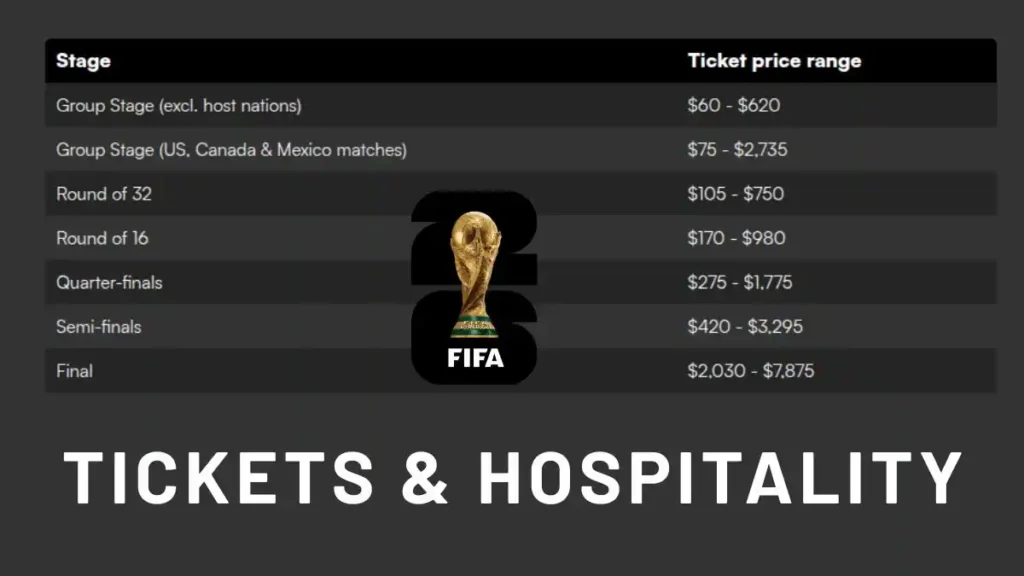
5. Ticket Prices by Match Stage (Group Stage to Final)
One of the most important facts every World Cup ticket buyer needs to understand: the stage of the tournament dramatically affects ticket prices. Here is a comprehensive breakdown by round.
Group Stage Tickets (June 11 – June 27)
Group stage matches offer by far the most accessible prices of the entire tournament. With 12 groups playing 3 matches each, there are 48 group-stage games across 39 days — the most abundant supply of tickets in the entire competition.
Official face-value price ranges (group stage):
| Category | Price Range |
|---|---|
| Supporter Entry | $60 (flat) |
| Category 4 (residents) | ~$60–$90 |
| Category 3 | ~$75–$250 (varies by match demand) |
| Category 2 | ~$150–$350 |
| Category 1 | ~$200–$700 |
Important caveat: not all group-stage matches are priced equally. FIFA’s dynamic pricing model means a group-stage match between two football powerhouses in a major US city is priced significantly higher than a group-stage match between two smaller nations at a Mexican or Canadian venue.
Some high-demand Category 1 group matches in the United States were priced as high as $4,000 in the official portal.
Round of 32 Tickets (June 28 – July 4)
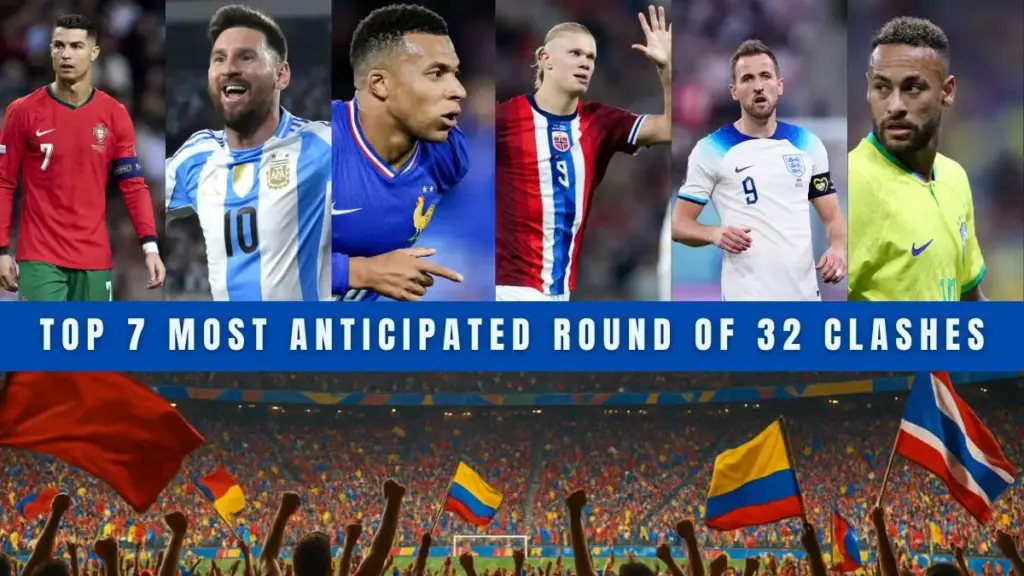
The Round of 32 is a new addition unique to the 2026 World Cup’s expanded 48-team format. 32 teams qualify from the group stage, and these knockout games are generally priced higher than group stage but lower than the Round of 16.
| Category | Estimated Price Range |
|---|---|
| Category 3 | ~$175–$350 |
| Category 2 | ~$300–$550 |
| Category 1 | ~$450–$900 |
Round of 16 Tickets (July 4 – July 8)
| Category | Estimated Price Range |
|---|---|
| Category 3 | ~$250–$450 |
| Category 2 | ~$400–$700 |
| Category 1 | ~$600–$1,200 |
Quarterfinal Tickets (July 9 – July 12)
| Category | Estimated Price Range |
|---|---|
| Category 3 | ~$350–$600 |
| Category 2 | ~$600–$1,000 |
| Category 1 | ~$900–$1,800 |
Semifinal Tickets (July 14 & 15)
Only two matches, played at MetLife Stadium (New York/New Jersey) and AT&T Stadium (Dallas). Demand is extreme.
| Category | Estimated Price Range |
|---|---|
| Category 3 | ~$500–$800 |
| Category 2 | ~$800–$1,400 |
| Category 1 | ~$1,400–$2,500 |
Third Place Playoff Ticket (July 18)
Historically, the most underrated match to attend at a World Cup — typically featuring two elite teams in a more relaxed atmosphere with the cheapest FIFA World Cup 2026 tickets than the Final.
| Category | Estimated Price Range |
|---|---|
| Category 3 | ~$300–$500 |
| Category 2 | ~$500–$900 |
| Category 1 | ~$800–$1,600 |
The Final (July 19, MetLife Stadium, New York/New Jersey)
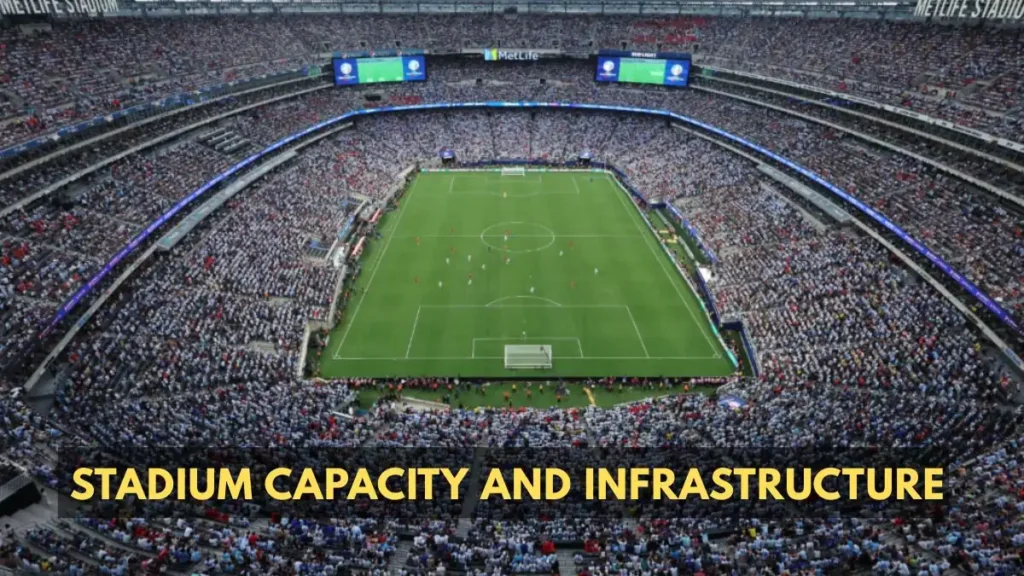
The Final is in a completely different price universe from every other match in the tournament.
| Category | Official Face Value | Resale Market |
|---|---|---|
| Supporter Entry | $60 | N/A (non-transferable) |
| Category 4 | ~$100–$150 | N/A (non-transferable) |
| Category 3 | ~$700–$900 | $5,000–$15,000+ |
| Category 2 | ~$1,100–$2,500 | $8,000–$30,000+ |
| Category 1 | ~$2,500–$6,730 | $11,000–$3,000,000 |
No, that $3 million figure is not a typo. Lower-deck Final tickets have appeared on the FIFA Official Resale Marketplace at prices approaching $3 million. FIFA does not cap asking prices on this platform. FIFA does, however, take a 15% transaction fee from both buyer and seller.
6. Cheapest Matches to Attend at the World Cup 2026
If your goal is to attend a World Cup 2026 match at the lowest possible cost, here is the strategic thinking you need.
Why Some Matches Are Cheaper Than Others
FIFA’s dynamic pricing model means the price varies based on:
- Teams playing — Matches involving powerhouses like Brazil, France, England, Argentina, or the USA command far higher prices
- Host city — US city matches are priced significantly higher than Canada or Mexico matches
- Match stage — Group stage matches are the cheapest FIFA World Cup 2026 tickets; the final is the most expensive
- Demand over time — Prices fluctuate as the tournament date approaches and as team performances shift
The Cheapest FIFA World Cup 2026 Tickets: Targeting “Unknown” Group Stage Fixtures
The most affordable World Cup matches have consistently been group-stage games between two nations that don’t have massive fanbases in North America. Examples from the 2026 group stage draw that represent lower-demand fixtures:
- Matches involving nations making their World Cup debut (there are several first-timers in 2026)
- Matches between two African, Asian, or smaller European nations
- Any match not involving the USA, Brazil, Argentina, England, France, Spain, or any of the three host nations
The Cheapest City to Attend: Mexico
This is perhaps the single most useful piece of information for a budget-conscious fan: matches in Mexico are priced significantly cheaper than equivalent matches in the United States, both at official face value and on the secondary market.
A Category 3 seat at a group-stage match in Dallas or Miami might cost $300–$500 on the secondary market. A comparable seat at a group-stage match in Guadalajara or Monterrey may still be found for $150–$350.
Mexico City’s Estadio Azteca (Estadio Banorte), while the most prestigious Mexican venue and host of the opening match, carries higher prices than Guadalajara and Monterrey due to the symbolic importance of the venue and the presence of Mexico national team matches.
Best Value Matches to Target
Based on current market data as of May 2026:
Best value in Mexico:
- Group-stage matches in Guadalajara not involving the Mexico national team
- Group-stage matches in Monterrey not involving the Mexico national team
- Round of 32 fixtures in Monterrey (if the bracket produces less high-profile matchups)
Best value in Canada:
- Group-stage matches in Toronto or Vancouver involving smaller nations
- Generally cheaper than US venues but higher than some Mexican venues
Best value in the USA:
- Group-stage matches in Kansas City or Seattle tend to be cheaper than in New York, Los Angeles, or Miami
- Matches involving smaller nations in any US city
The Third-Place Playoff: The World Cup’s Best-Kept Secret
If you want a genuine World Cup atmosphere at the most accessible price point, the Third-Place Playoff (July 18) consistently delivers one of the tournament’s most underrated matchday experiences.
Two world-class nations — usually teams that just lost their semifinal — play in a match that is high on pride and relaxed enough that both teams often commit to entertaining football. And tickets are a fraction of the final prices.
7. Ticket Prices by Host Country: USA vs Canada vs Mexico

One of the most consistent themes in the 2026 ticketing story is the price gap between host countries.
United States (11 Host Cities)
The United States hosts the largest share of the tournament — 78 matches, including all quarterfinals, semifinals, the third-place playoff, and the Final.
US host cities include New York/New Jersey (MetLife Stadium), Los Angeles (SoFi Stadium), Dallas (AT&T Stadium), Miami (Hard Rock Stadium), San Francisco (Levi’s Stadium), Atlanta (Mercedes-Benz Stadium), Boston (Gillette Stadium), Kansas City (Arrowhead Stadium), Seattle (Lumen Field), Houston (NRG Stadium), and Philadelphia (Lincoln Financial Field).
Ticket prices in US cities are the highest in the tournament, reflecting the US entertainment market’s premium pricing norms.
FIFA president Gianni Infantino defended the prices explicitly, stating: “We are in the market in which entertainment is the most developed in the world, so we have to apply market rates.” He noted that even college games in the US don’t usually offer tickets below $300.
According to FIFA, approximately 25% of US group-stage tickets were priced below $300, while the remaining 75% were priced above this threshold.
Price multipliers vs Mexico: US matches on the secondary market typically run 3x–5x the price of comparable Mexico matches.
Canada (2 Host Cities: Toronto & Vancouver)
Canada hosts 13 matches in Toronto (BMO Field / Stade BMO) and Vancouver (BC Place). Pricing sits between the US and Mexico levels, reflecting Canada’s market characteristics and the lower seating capacities of Canadian venues relative to US counterparts.
Canadian matches represent a genuine middle ground: more affordable than US matches but with potentially strong demand if Canada’s national team (which qualifies automatically as co-host) perform well.
Mexico (3 Host Cities: Mexico City, Guadalajara, Monterrey)
Mexico also hosts 13 matches. As noted throughout this guide, matches in Mexico are the most affordable in the tournament — both at official face value and on resale markets.
However, “affordable” is relative. While Mexican matches are the cheapest FIFA World Cup 2026 tickets compared to US matches, the Mexican fan base has found even these prices out of reach for many locals. CNN reported widespread discontent among Mexican fans at ticket prices that are unaffordable for the average Mexican salary.
The symbolic irony of Estadio Azteca — a stadium that belongs to Mexican football culture — being filled primarily by wealthy international visitors is a painful story that has dominated Mexican sports media in the lead-up to the tournament.
FIFA’s response: “We have established a ticket sales and secondary market model that reflects standard ticket market practices for major sporting and entertainment events across the host countries.”
8. All Mexico Matches: Ticket Prices and Availability
Here is a complete breakdown of every World Cup 2026 match being played in Mexico, with price context for each fixture.
Mexico City (Estadio Banorte / Estadio Azteca) — 5 Matches
Capacity: ~86,000 (recently expanded from 82,000 following renovations completed in 2025) Location: Coyoacán, Mexico City
Match 1: Mexico vs South Africa (June 11 — Opening Match of Entire Tournament)
- Stage: Group A, Match Day 1
- Kickoff: 3:00 PM ET
- Demand level: ⭐⭐⭐⭐⭐ (Maximum — Opening Match of the World Cup)
- Official Cat 3 face value: ~$895 (elevated for opening match)
- Secondary market: $1,170–$5,324+ for Cat 3 seats
- Note: This is the highest-demand match in all of Mexico. The entire planet will be watching. Getting affordable tickets to this specific match is extremely difficult.
Match 2: Uzbekistan vs Colombia (June 17 — Group K)
- Stage: Group K, Match Day 2
- Kickoff: 10:00 PM ET
- Demand level: ⭐⭐⭐ (Moderate — Colombia have a strong fanbase in North America)
- Price range (Cat 3): Significantly more affordable than Mexico matches; one of the better-value fixtures in Mexico City
- Note: If you want to experience the Azteca at a more accessible price, this is one of your best chances.
Match 3: Czechia vs Mexico (June 24 — Group A, decisive match)
- Stage: Group A, Match Day 3 (simultaneous with South Africa vs Korea Republic in Monterrey)
- Kickoff: 9:00 PM ET
- Demand level: ⭐⭐⭐⭐⭐ (Maximum — Mexico’s decisive group match at the Azteca)
- Secondary market: ~$1,170–$1,950+ for Cat 3 even before knockout implications are known
- Note: If Mexico’s qualification is in the balance, this match will be one of the most electric atmospheres in all of World Cup 2026.
Match 4: Round of 32 Fixture (June 30)
- Stage: Round of 32 — 1st in Group A vs best 3rd place (from Groups C/E/G/H/I)
- Kickoff: 9:00 PM ET
- Demand level: ⭐⭐⭐⭐ (High, especially if Mexico qualifies as Group A winner)
- Note: Mexico could play this match at their home stadium if they top Group A.
Guadalajara — Estadio Akron (4 Matches)
Capacity: 44,330 Location: Zapopan, Guadalajara
Match 1: Korea Republic vs Czechia (June 11 — Group A)
- Stage: Group A, Match Day 1
- Kickoff: 10:00 PM ET
- Demand level: ⭐⭐⭐ (Moderate — Korea have passionate North American diaspora support)
- Price range (Cat 3): Among the more affordable Mexican matches
Match 2: Mexico vs Korea Republic (June 18 — Group A)
- Stage: Group A, Match Day 2
- Kickoff: 9:00 PM ET
- Demand level: ⭐⭐⭐⭐⭐ (Maximum — Mexico match away from Mexico City)
- Note: The rematch of Mexico vs Korea clashes that are legendary in World Cup history. Son Heung-min vs the Azteca crowd in Guadalajara.
Match 3: Colombia vs DR Congo (June 19 — Group K)
- Stage: Group K, Match Day 2
- Kickoff: 10:00 PM ET
- Demand level: ⭐⭐⭐ (Moderate — Colombia are popular in North America)
- Price range: One of the more affordable World Cup matches in all of Mexico; worth targeting for value-seeking fans
Match 4: Uruguay vs Spain (June 26 — Group H)
- Stage: Group H, Match Day 3
- Kickoff: 8:00 PM ET
- Demand level: ⭐⭐⭐⭐ (High — Spain are tournament co-favourites at +500)
- Note: Spain playing in Guadalajara will generate enormous demand. Still potentially cheaper than equivalent Spain match in a US city.
Monterrey — Estadio BBVA (4 Matches)
Capacity: 50,113 Location: Guadalupe, Monterrey
Match 1: Tunisia vs Japan (June 19/20 — Group F)
- Stage: Group F, Match Day 2
- Demand level: ⭐⭐ (Lower — neither team has a massive North American support base)
- Price range: This is one of the genuinely cheapest FIFA World Cup 2026 tickets available. If you want to attend the World Cup at a budget price, Tunisia vs Japan in Monterrey is exactly the kind of match to target.
Match 2: South Africa vs Korea Republic (June 24 — Group A)
- Stage: Group A, Match Day 3
- Demand level: ⭐⭐⭐ (Moderate)
- Note: Simultaneous with Czechia vs Mexico — Group A will be decided across both venues at the same time.
Match 3: Additional Group Stage fixture (dates TBC for some)
- Various other group-stage matches, depending on final schedule confirmation
Match 4: Round of 32 Fixture (July 1)
- Stage: Round of 32
- Demand level: Depends entirely on which teams qualify for this slot
9. Where to Buy Official FIFA World Cup 2026 Tickets

Understanding the official ticket purchase pathway is essential before anything else. Here are all legitimate official channels.
Step 1: Create a FIFA Account
All official purchases go through tickets.fifa.com. You must:
- Visit tickets.fifa.com
- Create a FIFA account (free)
- Verify your identity
- Set up payment method (Visa card required for certain phases)
Step 2: The Sales Phases
FIFA ran the 2026 tournament through multiple structured sales phases:
Phase 1: Visa Presale Draw (September–October 2025) A lottery-based ballot exclusively for Visa cardholders. Applicants submitted interest without an upfront payment; selected applicants were given a payment window.
Phase 2: Early Ticket Draw (October 2025) Broader public access ballot. Still lottery-based. Over 500 million total requests were processed across the early phases combined.
Phase 3: Random Selection Draw (December 2025 – January 2026) The largest public-facing lottery phase, generating over 20 million requests in its first week alone. The extraordinary demand triggered FIFA’s introduction of the additional $60 Supporter Entry Tier.
Phase 4: Last-Minute Sales Phase (April 1, 2026 – End of Tournament). The current active phase as of the date of this article. Unlike the previous lottery phases, this operates on a strictly first-come, first-served basis with instant ticket confirmation. No ballot, no waiting — if a ticket appears, buy it immediately.
Phase 4 (Last-Minute Sales) — Your Current Best Option
The Last-Minute Sales Phase began on April 1, 2026. This is the final window to purchase official FIFA tickets directly. Key facts:
- First-come, first-served: no lottery
- Instant confirmation upon purchase
- Available at tickets.fifa.com
- Inventory is limited and unpredictable — tickets can appear and disappear within minutes
- Set alerts and check regularly throughout the day
- Have your payment details (Visa card) saved and ready
Purchase Limits
FIFA has set purchase limits to prevent bulk buying:
- Maximum of 10 matches per person across the entire tournament
- Maximum of 6 tickets per household per match
- You cannot purchase tickets to different matches on the same date (this is critical for planning)
- Groups of 5+ may need to look at Hospitality packages
American Airlines AAdvantage Miles Option
American Airlines, as an official FIFA 2026 partner, has offered AAdvantage members the option to use miles to purchase tickets:
- Group-stage matches start at 75,000 miles
- The Final requires 965,000 miles
- This option is realistically useful only for frequent flyers with substantial miles balances, but worth checking if that’s your situation.
Verizon Wireless Partner Access
Verizon ran a ticket giveaway as an official FIFA partner, offering free tickets to thousands of fans as well as premium on-field experiences. Monitor Verizon’s official promotions channels — additional giveaway phases may be announced as the tournament approaches.
10. FIFA Official Resale Marketplace: How It Works
The FIFA Official Resale Marketplace is the only authorised platform for fans to buy and sell verified World Cup 2026 tickets peer-to-peer. This is where you go when the Last-Minute Sales Phase shows nothing available.
Access
Available at FIFA.com/tickets — the same portal used for direct purchases. The resale marketplace tab or section is visible once you’re logged into your FIFA account.
How It Launched and Current Status
The marketplace originally launched in October 2025 and reopened on April 2, 2026. It will remain open until one hour before each match’s kickoff — meaning right up to the last possible moment, tickets can theoretically become available.
For Buyers: The Key Realities
The FIFA Official Resale Marketplace is “official” in the sense that all tickets listed are verified and authentic. However — and this is crucial — FIFA does not cap the prices sellers can list.
This means the marketplace has become, in practice, an unrestricted resale market where ticket holders can charge whatever the market will bear. On this platform:
- The Final match, Cheapest FIFA World Cup 2026 Tickets, is listed at just under $11,000
- Lower-deck Final tickets appeared at up to $3 million per seat
- Group-stage Mexico match tickets that had face values in the hundreds of dollars have been listed at $3,000–$8,000+
FIFA takes a 15% fee from both the buyer and the seller on every resale transaction.
For buyers, this means: the FIFA Resale Marketplace is legitimate and safe for avoiding fakes, but it offers no price protection. You are paying whatever the seller demands, plus FIFA’s 15% cut.
For Sellers: If You Need to Return Tickets
If you purchased official tickets and can no longer attend, list them on the FIFA Resale Marketplace or Mexico’s Mercado de Intercambio (for Mexican residents). Do not sell through unofficial channels — this violates FIFA’s terms and can result in ticket invalidation.
Availability Strategy
Tickets on the FIFA Resale Marketplace can appear sporadically and sell within minutes. The best approach:
- Log in to FIFA.com/tickets regularly throughout the day
- Set up any available alert features
- Have your payment information saved
- Act immediately when you see a listing that works for your budget
11. Mexico’s Special Resale System: Mercado de Intercambio
Mexico operates under a fundamentally different — and considerably more fan-friendly — resale system than the United States and Canada.
The Mercado de Intercambio de la FIFA
The Mercado de Intercambio de la FIFA (FIFA Exchange Marketplace) is the official platform specifically for residents of Mexico to resell, purchase, or exchange World Cup 2026 tickets.
Why is Mexico different? Because Mexican law includes specific consumer protections around event ticket resale that prevent for-profit secondary market activity for major events. This has resulted in a uniquely designed system for the Mexican market.
The Critical Difference: Face Value Only
Unlike the main FIFA Resale Marketplace (available to US, Canadian, and international fans), the Mercado de Intercambio operates on a strictly face-value-only basis.
This means: if a Mexican ticket holder lists their ticket for resale on the official platform, they can only list it at the original face value they paid. They cannot profit from the resale. Zero markup.
For buyers in Mexico, this is a significant protection. If you can access a face-value ticket on the Mercado de Intercambio, you pay the official FIFA price — not the inflated secondary market price.
Limitations
- Available only to Mexican residents
- Requires Mexican identification
- Tickets are verified digital tickets through the FWC2026 app
- Availability is limited — you need to monitor the platform frequently
International Visitors Attending Mexico Matches
If you are visiting Mexico from another country for the World Cup, you do not have access to the Mercado de Intercambio. Your options are:
- Purchase through the FIFA Last-Minute Sales Phase (tickets.fifa.com)
- Purchase through the main FIFA Official Resale Marketplace
- Purchase through third-party secondary platforms (StubHub, Viagogo, etc.) — with inflated prices and less consumer protection
12. Secondary Market Platforms: StubHub, SeatGeek, Viagogo & More
When official channels show no availability, millions of fans turn to the secondary market. Here’s what you need to know about each major platform.
StubHub
StubHub is one of the most widely recognised secondary ticket marketplaces globally. For World Cup 2026, StubHub has inventory for most matches, including Mexico-hosted fixtures.
- Pros: Large inventory; FanProtect guarantee; familiar interface; buyer protection if event is cancelled
- Cons: Prices significantly above face value; service fees add 20–30% on top of the listed price; no price caps
Recommended use: High-demand knockout matches where you’ve exhausted official channels
SeatGeek
SeatGeek aggregates tickets from multiple sources and displays a “Deal Score” to help you identify relative value.
- Pros: Deal Score feature helps compare value; clean interface; 100% verified purchases
- Cons: Premium prices for premium matches; fees can add 25%+ to listed price
Recommended use: Comparison shopping across multiple platforms
Viagogo
Viagogo is one of the largest global secondary ticket marketplaces and has significant inventory for international sporting events.
Caution: Viagogo has a complicated history with consumer complaints in multiple countries. They have faced regulatory action in Australia and the UK for misleading pricing practices (hiding fees until checkout). Always check the final price, including all fees, before committing.
Recommended use: Only if other platforms have no inventory; read terms carefully
Ticombo
Goal.com has named Ticombo as an official secondary market partner for the 2026 World Cup, offering verified listings and buyer protection.
- Pros: Official partnership status; buyer protection
- Cons: Less inventory than StubHub or Viagogo for some matches
LiveFootballTickets
LiveFootballTickets is specifically focused on football and offers a 150% refund policy — meaning if a purchased ticket is invalid or the event is cancelled, you receive 150% of the purchase price as compensation.
- Pros: Specialised football focus; strong refund policy; reputable in the European market
- Cons: Smaller inventory than global platforms; primarily European-focused inventory
Key Rule Across All Secondary Platforms
Never buy from individuals on social media, WhatsApp, or unverified websites. World Cup ticket scams are rampant. If it’s not on a verified platform with buyer protection and a guarantee, assume it’s a scam.
13. Dynamic Pricing Explained: Why Prices Keep Changing
The 2026 World Cup introduced dynamic pricing across FIFA’s official ticketing portal — a first for the tournament and a significant departure from the fixed pricing of previous editions.
What Is Dynamic Pricing?
Dynamic pricing means ticket prices are not fixed at a single rate. Instead, they fluctuate based on real-time demand signals, including:
- Which teams have qualified? Once the Group A draw placed Brazil in a match with England in Miami, those tickets jumped dramatically
- Tournament performance — If a major nation is eliminated, demand for their remaining match tickets drops; if they’re performing well, prices rise
- Proximity to match date — Prices can move in either direction as kickoff approaches; some tickets drop as unsold inventory needs clearing; others rise as scarcity increases
- City and venue — Some cities simply command higher prices
- Time of day — Demand peaks during typical browsing hours
How This Affected Mexico-Based Matches
When the bracket was revealed, and Mexico was placed in Group A with the Republic, Czechia, and South Africa, prices for all three Mexico group-stage matches moved upward. The two biggest price movers were Mexico vs South Africa (Opening Match) and Czechia vs Mexico (decisive Group A match at the Azteca).
For Korea Republic vs Czechia and South Africa vs Korea Republic — the two Group A matches that don’t feature Mexico — prices are comparatively more accessible because demand from the host-nation fanbase isn’t attached to them.
Does Dynamic Pricing Mean Prices Will Drop?
Not necessarily. Many analysts expected prices to fall as kickoff approached for lower-demand matches, as FIFA would want to avoid empty stadiums. Early signs suggest this is happening for some less-prominent fixtures but not for any match involving a major footballing nation or host country.
If you’re trying to get cheap tickets for a smaller group-stage match in Mexico or Canada, monitoring prices in the final 2–4 weeks before the match could yield better deals — but this strategy carries risk (the match may sell out before prices drop).
14. How Much Does It Really Cost to Attend the World Cup 2026?
Ticket prices are only one part of the total cost of attending the World Cup. Here’s an honest full-cost breakdown for different scenarios.
Scenario A: Budget Fan Attending One Group-Stage Match in Mexico
Target: A group-stage match in Guadalajara or Monterrey not involving Mexico (e.g., Korea Republic vs Czechia, Tunisia vs Japan, Colombia vs DR Congo)
| Expense | Estimated Cost |
|---|---|
| Ticket (Cat 3, official face value if available) | $75–$200 |
| Ticket (Cat 3, secondary market if official sold out) | $200–$800 |
| Return flights to Guadalajara or Monterrey | $400–$900 (from within North America) |
| 3 nights hotel | $150–$400 |
| Food, transport, activities | $100–$200 |
| Total estimate (official ticket) | $725–$1,700 |
| Total estimate (secondary market ticket) | $850–$2,300 |
Scenario B: Fan Attending Three Group-Stage Matches Across Mexico and USA
| Expense | Estimated Cost |
|---|---|
| 3 tickets (mix of Cat 3 and Cat 2, various markets) | $500–$2,000 |
| Flights (domestic US/Mexico travel) | $600–$1,500 |
| 7–10 nights accommodation | $500–$1,500 |
| Food, transport, fan zones, merchandise | $300–$600 |
| Total estimate | $1,900–$5,600 |
Scenario C: Premium Fan Attending the Final at MetLife Stadium
| Expense | Estimated Cost (optimistic) | Estimated Cost (typical) |
|---|---|---|
| Cat 1 Final ticket (official face value, if secured) | $6,730 | $6,730 |
| Cat 1 Final ticket (secondary market) | $15,000–$50,000 | $11,000–$100,000 |
| Flights to New York | $400–$1,500 | $500–$2,000 |
| 3–5 nights hotel in NYC/NJ (July 19 weekend) | $800–$2,000 | $1,500–$4,000 |
| Total (with official ticket) | ~$9,000+ | varies |
| Total (with resale ticket) | $17,000–$55,000+ | extreme variance |
The Budget Reality for Mexican Fans
For context on why ticket prices have caused genuine social controversy in Mexico: the average monthly salary in Mexico City is approximately $800–$1,200 USD.
A Category 3 ticket to see Mexico play at the Azteca — their home stadium — now costs a significant fraction of a monthly wage at face value, and multiples of a monthly wage on the secondary market.
This has made the 2026 World Cup effectively inaccessible to the majority of ordinary Mexican football fans.
15. Tips to Get the Cheapest World Cup 2026 Tickets
Here are the most actionable strategies for getting the best price on World Cup 2026 tickets, drawn from the collective experience of fans who have been through multiple tournaments.
Tip 1: Monitor the Last-Minute Sales Phase Daily
The Last-Minute Sales Phase at tickets.fifa.com is currently the only window to buy directly from FIFA. New inventory can appear at any time as cancellations, returned tickets, and newly released allocations come online. Check in the morning, afternoon, and evening. Have your payment ready.
Tip 2: Target Matches Not Involving Host Nations
Any match featuring Mexico, the United States, or Canada in their home venues is the most expensive ticket in the tournament. If your goal is value, target matches between two nations where neither has massive North American diaspora support. Mexico City is expensive for Mexico matches; much more accessible for Colombia vs DR Congo.
Tip 3: Choose Mexico Over US Venues
The price gap between Mexican and American venues is real and significant. If you’re flexible on which matches to attend, prioritising Mexican or Canadian venues over US venues will save you substantially.
Tip 4: Buy Group Stage, Not Knockouts
Every dollar you spend on a knockout round match could buy you two or three group-stage matches with comparable (sometimes superior) atmosphere. Group-stage games between big nations are passionate, high-stakes, and create World Cup memories that last a lifetime.
Tip 5: The Third-Place Playoff is Criminally Underrated
The July 18 Third-Place Playoff is consistently the best-value “big match” experience at any World Cup. Both teams are world-class. Both want to win. The atmosphere is festive. And tickets are a fraction of the final prices.
Tip 6: Use the Official FIFA Resale Marketplace — Not Just Third Parties
The main FIFA resale marketplace has no price caps, but it does have verified tickets and established buyer protection. More importantly, occasionally, face-value or near-face-value listings appear when fans can no longer attend and choose not to profit. Being an early, frequent checker increases your odds of finding these deals.
Tip 7: Mexico Residents — Use the Mercado de Intercambio
This cannot be emphasised enough. Mexican residents have access to a face-value-only resale system that offers genuinely protected pricing. Check the Mercado de Intercambio regularly. Face-value tickets for World Cup matches in Mexico are available there when other channels have nothing.
Tip 8: Consider the American Airlines AAdvantage Miles Option
If you’re a member of American Airlines’ AAdvantage program with a substantial miles balance, purchasing tickets with miles effectively converts your existing reward points into World Cup access.
Group-stage tickets from 75,000 miles — for a frequent flyer with a large balance, this is effectively a “free” ticket.
Tip 9: Book Accommodation Now (Not After Getting Tickets)
Unlike normal event planning, the World Cup accommodation market moves so fast that waiting until after you have a ticket to book a hotel means paying a massive premium — or finding nothing.
In host cities, hotels for World Cup match dates are booking up months in advance. Book refundable accommodation to hold your options, then adjust when ticket status becomes clear.
Tip 10: Be Flexible on Match Choice
The single most powerful saving strategy is flexibility. If you’re open to attending “a World Cup match” rather than “the Mexico opening match,” your options multiply dramatically and your likely cost drops by 50–80%.
Tip 11: Fan Zones Are Free (and Often Amazing)
If you cannot or do not want to pay current market prices for stadium tickets, the official FIFA Fan Zones in all 16 host cities offer large-screen match screenings, live entertainment, food, and the full fan experience — completely free.
The Mexico City Fan Zone in the historic Zócalo plaza, for example, is expected to draw hundreds of thousands of fans for each match. Sometimes the fan zone is more memorable than the stadium.
Tip 12: Follow Partner Brand Giveaways
Verizon, American Airlines, and other FIFA sponsors have run and continue to run ticket giveaways. Follow their social media accounts and promotional pages. Free official tickets have been given away regularly since the launch of sales in September 2025.
16. Scam Warning: How to Avoid Fake World Cup Tickets
The combination of extreme demand, digital-only tickets, and global fandom makes the FIFA World Cup 2026 one of the most targeted events for ticket fraud. Here’s what you need to know.
The Scale of the Problem
At every previous World Cup, thousands of fans arrived at stadiums with fake tickets and were turned away. For 2026, with fully digital ticketing via a mobile app, the scam landscape has evolved — but the risk remains significant.
Platforms to Absolutely Avoid
- Individual sellers on social media (Facebook, Instagram, X/Twitter, TikTok)
- WhatsApp and Telegram groups claiming to sell World Cup tickets
- Any website not on FIFA’s official list of authorised platforms
- Email offers from unknown senders claiming to have tickets
- Websites with poor design, no physical address, and no company registration
- Anyone asking for payment via bank transfer, cryptocurrency, or gift cards
How the Scams Work
Screenshot scams: Scammers sell screenshots of real digital tickets. The tickets are valid but have already been used (or will be used by the original holder). The screenshot cannot be scanned.
Cloned ticket apps: Fake apps that display convincing-looking ticket screens with QR codes that don’t work.
Advance fee fraud: “I have access to tickets through my corporate allocation — pay 50% upfront and I’ll send the ticket closer to the date.” The tickets never arrive.
Social media group scams: Fake “World Cup ticket exchange” groups where all the other members appear to endorse a particular seller — those accounts are all controlled by the scammer.
The Rule That Never Fails
FIFA World Cup 2026 uses fully digital tickets delivered exclusively via the official FWC2026 Mobile Tickets app. There are no paper tickets. There are no PDFs. If someone is offering you anything other than a transfer through the official FIFA systems, walk away.
How to Verify a Legitimate Ticket
- All official tickets are transferred via the FIFA ticketing portal and appear in the FWC2026 Mobile Tickets app
- The app generates a dynamic QR code that updates regularly — static screenshots cannot be used to enter the stadium
- If you purchase from a verified secondary platform (StubHub, SeatGeek, with buyer guarantees), the transfer is processed through proper channels
If You Think You’ve Been Scammed
Report to:
- FIFA’s official ticket support at tickets.fifa.com
- Local police in whichever country the transaction occurred
- The platform where the ad/listing appeared
- If payment was made, your bank or credit card company may offer charge-back options for fraudulent transactions
17. Digital Tickets: The FWC2026 Mobile App Explained
The 2026 FIFA World Cup is the first World Cup to go fully digital — there are zero paper tickets for any match in the tournament.
The FWC2026 Mobile Tickets App
- Available on: iOS App Store and Google Play Store
- Download name: FWC2026 (official FIFA app)
- Function: All your match tickets are stored here; you present the dynamic QR code at the stadium gate
How Ticket Delivery Works
When you purchase a ticket through the official FIFA portal, the ticket appears in your FWC2026 app account within a short time. You will need to:
- Download the app before your match
- Ensure your FIFA account credentials work in the app
- Have the app open and your ticket displayed at the stadium gate
- Ensure your phone is charged (this is critical — dead phone = no ticket access)
Seat Numbers and Assignment
As noted earlier, FIFA does not assign specific seat numbers at the time of purchase for most tickets. Your category is confirmed when you buy, but the specific row and seat number is communicated via the app closer to match day. For last-phase purchases, this information may only arrive within a week of the match.
What If Your Phone Dies?
This is a genuinely stressful scenario that FIFA has prepared for. Official FIFA ticketing points at each stadium should be able to assist. Bring portable phone chargers (power banks) as a precaution — this is non-negotiable advice for every fan attending the 2026 World Cup.
Transfer and Sharing Tickets
If you have purchased multiple tickets and need to share them with your group, you can transfer tickets to other people through the FIFA ticketing portal.
Each transferred ticket appears in the recipient’s FWC2026 app account. Transfers must go through the official system — sending a screenshot is not a valid transfer.
18. Frequently Asked Questions
Q: Are there still cheap tickets available for the 2026 World Cup?
As of May 2026, official face-value tickets at affordable prices are very limited. The Last-Minute Sales Phase (tickets.fifa.com) is the final official channel, operating first-come-first-served. Occasional affordable listings appear on the FIFA Official Resale Marketplace and (for Mexican residents) the Mercado de Intercambio. Secondary markets have inflated prices but offer the widest inventory.
Q: What is the absolute cheapest World Cup 2026 ticket?
The Cheapest FIFA World Cup 2026 tickets are $60 through the Supporter Entry Tier, allocated through national football associations. For tickets purchased in the general market, Category 3 group-stage matches in Mexico or Canada at face value are the most affordable option, starting at $75–$100 in early phases. Current secondary market prices are significantly higher.
Q: Are World Cup matches in Mexico cheaper than in the USA?
Yes. Consistently and significantly. Both at official face value and on all secondary markets, Mexico-hosted matches are the Cheapest FIFA World Cup 2026 Tickets or equivalent matches in US host cities. Mexico matches are the budget fan’s best option for this World Cup.
Q: Can I buy tickets at the stadium on match day?
No. There are no walk-up ticket sales at stadiums. All tickets must be purchased in advance through official channels (FIFA.com/tickets, the Official Resale Marketplace, or Mexico’s Mercado de Intercambio) or through verified secondary platforms. Attempting to buy from individuals outside stadiums carries an extreme risk of fraud.
Q: Do I need a Visa card to buy World Cup tickets?
Visa is the official payment partner and was required for the Visa Presale phase. For the Last-Minute Sales Phase, other payment methods may be accepted — check the FIFA ticketing portal for current accepted payment methods.
Q: Is the FIFA Official Resale Marketplace safe?
Yes — all tickets listed there are verified as authentic. However, FIFA does not cap prices, so sellers can charge whatever they want. Add FIFA’s 15% fee on both sides of the transaction. You will pay genuine market rates. But you will get a real ticket.
Q: Can I transfer my tickets to someone else?
Yes, through the FIFA ticketing portal. Official transfers are supported and the ticket moves into the recipient’s FWC2026 app account. Category 4 and host-nation-resident tickets may have transfer restrictions — check terms at purchase.
Q: What happens if the match gets cancelled or postponed?
FIFA’s official ticket terms include provisions for refunds if matches are cancelled. Check the specific terms for secondary market purchases, as refund policies vary by platform.
Q: Is it safe to attend the World Cup in Mexico?
This is a legitimate consideration that has received significant media attention. FIFA met with Mexican President Claudia Sheinbaum, and President Infantino visited Mexico City in March 2026 to discuss security preparations.
Mexican authorities have implemented enhanced security protocols across all three host cities. While media coverage has included security concerns, the Mexican government has committed substantial resources to ensuring a safe tournament environment.
Q: How do I get to the stadiums in Mexico?
All three Mexican host cities have established official transportation plans:
- Mexico City: Extensive metro network; dedicated shuttle services from central points to Estadio Banorte
- Guadalajara: Shuttle services from the city centre; limited regular transit to Estadio Akron
- Monterrey: Shuttle services from designated fan zones to Estadio BBVA. No general public parking is available at any of the venues — public and shuttle transport is strongly advised.
Q: What is the best group-stage match to attend in Mexico for value?
Based on demand, price levels, and the quality of football on offer, the best overall value match in Mexico is likely Colombia vs DR Congo (June 19, Guadalajara) or Tunisia vs Japan (June 19/20, Monterrey).
Both are group-stage matches with solid football quality but lower demand in North America, making tickets more affordable.
Q: Where can I watch World Cup matches for free in Mexico?
FIFA is running official Fan Zones in all three Mexican host cities — Mexico City, Guadalajara, and Monterrey — offering free big-screen screenings of all matches throughout the tournament. These are free-to-enter public spaces with food, entertainment, and the full World Cup atmosphere.
Mexico City’s Fan Zone at the Zócalo is expected to be one of the most spectacular free football events in the country’s history.
19. Final Verdict: Is It Worth Attending the 2026 World Cup?
Let’s be honest about the situation as of May 2026.
The FIFA World Cup 2026 is shaping up to be the priciest in history by a wide margin. With dynamic pricing, unlimited resale markups, and ticket costs set to match “US market rates,” FIFA has effectively priced out millions of fans who might have attended under past pricing systems. The social impact, especially in Mexico, has been both real and significant.
And yet.
The World Cup happens once every four years. No other event on Earth combines the cultural weight, the athletic excellence, the global community, and the pure emotional theatre of a World Cup match.
Fans who attend even a single group-stage game consistently describe it as one of the defining experiences of their lives. The atmosphere inside a stadium when 70,000 or 80,000 people from dozens of countries are all focused on the same 22 players — there is nothing else like it.
If you can attend a match in Mexico — particularly one of the group-stage matches that doesn’t involve the Mexico national team — you are looking at the most accessible window into this tournament.
Prices in Guadalajara and Monterrey for non-Mexico group-stage matches remain within the range of a serious possibility for a fan willing to be flexible and strategic.
The optimal strategy in May 2026:
- Check the FIFA Last-Minute Sales Phase at tickets.fifa.com daily
- Target group-stage matches in Guadalajara or Monterrey
- Monitor the FIFA Official Resale Marketplace for sporadic face-value or near-face-value listings
- If you are a Mexican resident, check the Mercado de Intercambio regularly
- Set your absolute maximum budget before entering the secondary market — and stick to it
- Have your FWC2026 app downloaded and ready
- If stadium tickets remain out of reach, plan for the Fan Zone experience — which is free, festive, and genuinely wonderful
The World Cup 2026 is imperfect in its ticket economics. But it is still a once-in-a-lifetime tournament, in iconic venues, with 48 of the best national teams in the world. If there is any way to be in the stadium — even once — it is worth trying.
Useful Official Links
- Buy official tickets: tickets.fifa.com
- FIFA Official Resale Marketplace: FIFA.com/tickets (resale tab)
- Mexico Mercado de Intercambio: FIFA.com/tickets (Mexico residents)
- FWC2026 Mobile Tickets App: Available on iOS App Store and Google Play
- Official FIFA World Cup 2026 website: FIFA.com/WorldCup2026
- Official Fan Zone information: FIFA.com
20. Ticket Price History: How 2026 Compares to Past World Cups
To truly understand how dramatic the 2026 pricing situation is, it helps to place it in a historical context. FIFA has hosted World Cups in a wide range of economic environments, and ticket prices have evolved dramatically since the modern era began in 1994.
FIFA World Cup Ticket Prices Since 1994
| Year | Host | Cheapest Ticket | Most Expensive Ticket (Final) | Notes |
|---|---|---|---|---|
| 1994 | USA | ~$25 | ~$400 | The Tournament that created the modern World Cup model |
| 1998 | France | ~$30 | ~$750 | First World Cup to include 32 teams |
| 2002 | Korea/Japan | ~$35 | ~$800 | First co-hosted World Cup |
| 2006 | Germany | ~$35 | ~$800 | Popular, record-setting attendance |
| 2010 | South Africa | ~$20 | ~$900 | $20 for residents; iconic vuvuzela tournament |
| 2014 | Brazil | ~$40 | ~$900 | Special pricing for Brazilian residents |
| 2018 | Russia | ~$105 | ~$1,100 | Categories 1-4 are still field-proximity-based |
| 2022 | Qatar | ~$69 | ~$1,605 | Category 3 still offered front-row options |
| 2026 | USA Canada Mexico | $60 (Entry Tier) | $6,730+ (Face Value) | Secondary market to $3 million; 4x more than 2022 |
The jump from Qatar 2022 to the United States 2026 represents the largest single-cycle price increase in World Cup history by a wide margin. Category 1 Final tickets alone are over four times the price of their 2022 equivalent, at face value.
Why Did Prices Increase So Dramatically?
Several factors converged to create the 2026 price environment:
The US market premium. FIFA explicitly stated they would price to match “US market rates” for entertainment events. In the US market, premium sporting events — the Super Bowl, NBA Finals, major boxing matches — routinely sell tickets at prices that would have been inconceivable at a World Cup hosted in Europe, South America, or Qatar.
Dynamic pricing adoption. For the first time, FIFA allowed prices to float based on demand rather than being fixed at the start of sales. This fundamentally changed the ceiling on what any ticket could ultimately cost.
Unlimited resale marketplace. By allowing FIFA’s own official resale portal to accept any asking price, FIFA effectively sanctioned scalping at the institutional level and took a cut of every transaction.
Expanded demand, limited supply. With 48 teams, more countries are involved, more fans are eager to attend, and global demand is higher, all competing for roughly the same number of stadium seats spread across 16 venues.
Inflation. Between the 2022 Qatar World Cup and the 2026 tournament, global inflation (particularly in the United States) pushed the cost of every component of a major event — security, staffing, venue operations — significantly higher.
21. The Controversy: FIFA, Ticket Prices, and Fan Backlash
Any article on World Cup 2026 ticket prices wouldn’t be complete without openly tackling the controversy that has shaped the tournament’s ticketing story.
The “Monumental Betrayal” Accusation
Fan groups from multiple countries publicly accused FIFA of a “monumental betrayal” when initial pricing details were revealed in October 2025.
The specific flashpoint was the Category 1 Final ticket price of $6,730 — a figure that made headlines globally and led to coordinated protests from supporters’ groups.
In response, FIFA accelerated the introduction of the $60 Supporter Entry Tier, which it had been considering but announced formally in December 2025 amid mounting pressure.
Infantino’s Defence
FIFA president Gianni Infantino defended the pricing in multiple interviews. His core argument: “We are in the market in which entertainment is the most developed in the world, so we have to apply market rates.”
He pointed out that 25% of US group-stage tickets were priced below $300, and that “you cannot go to watch in the US a college game, not even speaking about a top professional game of a certain level, for less than $300.”
Critics countered that comparing a football World Cup to a domestic US college game fundamentally misunderstands the global nature of the event and the income levels of most football fans worldwide.
The Mexico Dimension
The prices have landed hardest in Mexico. As CNN reported in May 2026, attending a World Cup match at Estadio Banorte (Azteca) — a stadium many Mexicans regard as a national monument — has become unaffordable for the majority of ordinary fans.
The average monthly salary in Mexico City is roughly $800–$1,200 USD. A Cat 3 ticket to Mexico vs South Africa had an official face value of $895 before the tournament began — and has been listed at multiples of that on the secondary market.
Demonstrations outside Estadio Banorte during its test match reopening included protesters not only objecting to ticket prices but raising Mexico’s broader disappearance crisis. The World Cup’s arrival in Mexico is a genuinely complex moment for the country, blending genuine football passion with painful social realities.
FIFA’s Revenue and Why It Matters
FIFA generated approximately $7.5 billion in revenue from the 2022 Qatar World Cup. Projections for 2026 were significantly higher, reflecting both the expanded format and the US market premium. FIFA distributes a portion of this revenue to national football associations globally, and justifies high ticket prices partly on the basis that the revenue funds football development worldwide.
Whether this argument justifies pricing out ordinary fans — particularly in co-host countries with lower average incomes like Mexico — is a debate that will continue long after the 2026 final whistle blows.
22. Hospitality Packages: The Premium Alternative
For fans who have budget flexibility, FIFA’s official hospitality packages offered through MATCH Hospitality represent a premium route that bypasses the ticket lottery chaos entirely.
What Are Hospitality Packages?
Hospitality packages bundle guaranteed tickets (typically Category 1 positions) with premium lounge access, full catering, concierge services, and dedicated hospitality entrances. They are sold as complete packages rather than individual tickets.
Key Advantages of Hospitality Packages
- Guaranteed tickets — No lottery, no first-come-first-served anxiety. Pay, and you’re in.
- Exact seat confirmation — Unlike regular tickets, where seats are assigned later, hospitality packages usually confirm exact seating from purchase
- Complete matchday experience — Pre-match catering, dedicated lounges, souvenirs, and formal hospitality service
- Simplified group access — Groups of 5+ who cannot buy regular tickets under FIFA’s household limits can often access hospitality packages
Cost Reality
Hospitality packages cost much more than regular tickets at face value. For the group stage, they range from about $800 to $2,500 per person per match, while for the Final, prices can soar to $15,000–$30,000 or more per person.
Who Should Consider Hospitality
- Corporate buyers hosting clients
- Groups of 6+ where regular ticket limits are a problem
- Fans are willing to pay a premium for a zero-logistics matchday experience
- Very high-demand matches (Mexico opening match, Final), where regular tickets are virtually unobtainable at reasonable prices
Hospitality packages are available through MATCH Hospitality at matchhospitality.com and through official FIFA hospitality partners.
23. Planning Your World Cup 2026 Trip to Mexico: Essential Logistics
Getting a ticket is only the beginning. Here’s what every fan needs to know about the practical logistics of attending the World Cup in Mexico.
Visa and Entry Requirements
Citizens of most countries can enter Mexico for up to 180 days as tourists without a visa. However, requirements vary significantly by nationality. Check requirements for your specific country at the Mexican Ministry of Foreign Affairs website well in advance of travel.
FIFA and the Mexican government have worked to ensure streamlined entry procedures for World Cup visitors, including fast-track lanes at major airports for fans with confirmed match tickets.
Getting to Mexico
By air: All three host cities have major international airports:
- Mexico City: Aeropuerto Internacional Felipe Ángeles (AIFA) and Aeropuerto Internacional Benito Juárez (AICM)
- Guadalajara: Aeropuerto Internacional de Guadalajara
- Monterrey: Aeropuerto Internacional del Norte
Cheapest international flights to Mexico for World Cup dates: Book your flights as early as you can. Travel to and from all three cities during the World Cup is much pricier than usual, with fares climbing steadily between January and April 2026.
Budget airlines like Volaris, VivaAerobus, and Interjet (for domestic Mexican routes) offer the most affordable options for getting between cities.
Accommodation
Hotels in Mexico City, Guadalajara, and Monterrey for World Cup match dates are heavily in demand. As of May 2026:
- Mexico City: Most central hotels within a reasonable distance of Estadio Banorte are priced at $120–$400+ per night for World Cup dates
- Guadalajara: More affordable, with options from $80–$250 per night
- Monterrey: Similar to Guadalajara; $80–$220 per night for reasonable proximity to Estadio BBVA
Budget tip: Consider staying slightly outside the immediate match-day hotel clusters. In Mexico City, the Condesa, Roma, and Polanco neighbourhoods offer excellent value relative to hotels marketed specifically for World Cup proximity.
In Guadalajara, the Centro Histórico area is accessible and well-priced. In Monterrey, the San Pedro Garza García business district offers quality accommodation.
Airbnb and apartment rentals have become an attractive alternative in all three cities, offering more space for groups and kitchen facilities that reduce food costs.
Currency and Payment
Mexico’s currency is the Mexican Peso (MXN). As of May 2026, approximately 17–18 MXN per 1 USD. ATMs (cajeros automáticos) are widely available in all three host cities. Notify your bank before travelling.
Major credit cards are accepted at hotels, larger restaurants, and shops. However, for match-day food vendors, small restaurants, and street food — which represent some of the best and most affordable eating in all three cities — cash is still strongly preferred. Carry pesos.
Safety Considerations
All three Mexican host cities have received enhanced security deployments for the World Cup period. The match venues themselves will have FIFA-level international security protocols.
Standard travel safety common sense applies: keep valuables secure, use official taxis or Uber/Didi rather than street-flagged taxis, stay in well-reviewed accommodation, and follow guidance from your country’s foreign travel advisory.
Food and Culture
One of the genuine advantages of attending the World Cup in Mexico, versus the United States, is the extraordinary food culture. All three host cities offer world-class Mexican cuisine at prices dramatically lower than anything you’d find in a US World Cup city.
In Guadalajara, you’ll find birria tacos, tortas ahogadas, and pozole. Monterrey is all about carne asada, cabrito, and machaca. And in Mexico City, there are tacos al pastor, tlayudas, and an endless variety of regional dishes from all over Mexico.
Budget meals of genuine quality can be found for $3–$8 USD at taquerías and mercados throughout all three cities. This is one area where attending the World Cup in Mexico has a clear and significant advantage over the US venues.
The Mexican Fan Experience
Even if you’re not supporting Mexico, attending a match in Mexico is a uniquely special football experience. Mexican football culture — El Tri’s grito, the passion of the crowd, the pre-match atmosphere around iconic venues — is something that can’t be replicated.
The famous “¡Eh, Puto!” chant has been the subject of FIFA disciplinary proceedings in previous tournaments, but the overall atmosphere and passion of Mexican football crowds is extraordinary.
Attending any match in Mexico means experiencing one of the world’s great football cultures up close.