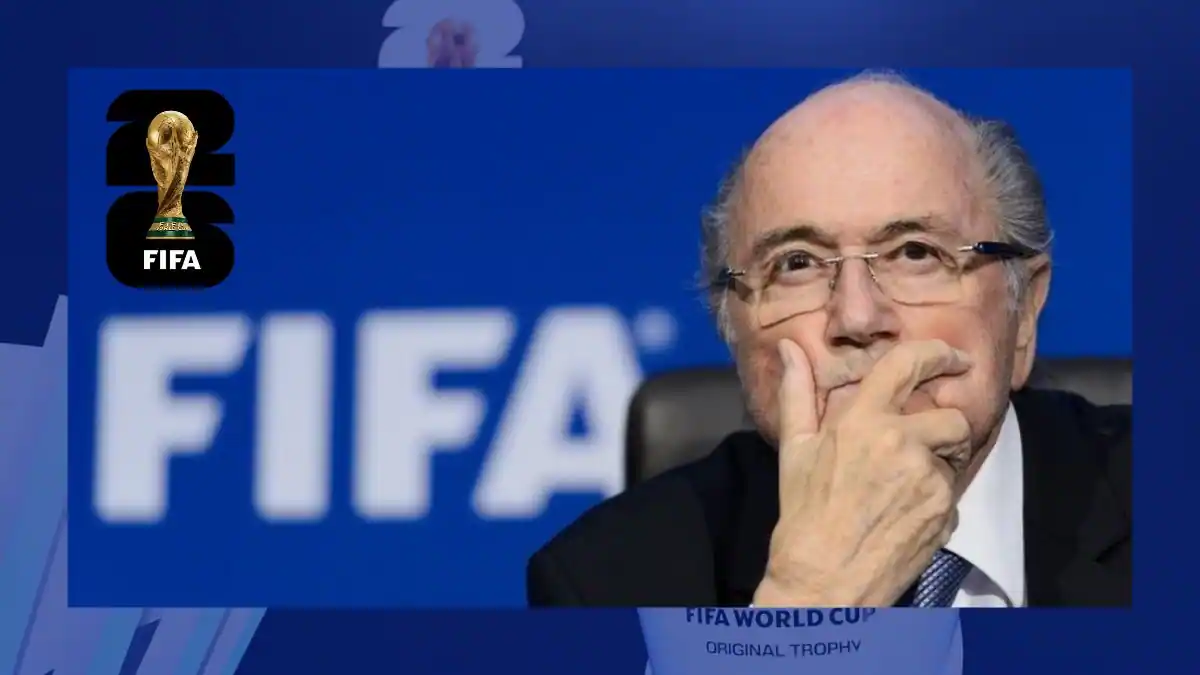
In a move that has sent shockwaves through the footballing world just months before the 2026 FIFA World Cup, former president Sepp Blatter has publicly endorsed a call for fans to “stay away” from the upcoming tournament.
The 89-year-old, who led FIFA for 17 years, has rarely been quiet since his departure, but his latest comments mark a significant escalation in his ongoing feud with current leadership and the direction of the global game.
The Spark: Why is Sepp Blatter Calling for a Boycott FIFA World Cup?
The controversy ignited when Mark Pieth, a renowned Swiss anti-corruption lawyer and former head of FIFA’s reform committee, advised fans to avoid traveling to the United States for the 2026 tournament. Blatter quickly took to social media to support Pieth, stating, “I think Mark Pieth is right to question this World Cup.”
But what exactly is driving this “stay away” narrative? The reasons are a complex cocktail of politics, safety, and logistics:
- Security & Civil Unrest: Critics have pointed to recent domestic turmoil in the U.S., including controversial incidents involving immigration enforcement in cities like Minneapolis, as a primary safety concern for international visitors.
- Travel Restrictions: Recent visa bans affecting fans from qualified nations—specifically Senegal, Ivory Coast, Iran, and Haiti—have led to accusations that the host nation is not providing the “open access” required for a global event.
- The “Absurd” Expansion: Blatter has long criticized the expansion of the World Cup to 48 teams, arguing it dilutes the quality of the competition and makes the event “unmanageably large.”
- Political Friction: The close relationship between current FIFA President Gianni Infantino and the U.S. administration has drawn fire from those who believe the sport is being used as a political tool.
Blatter vs. Infantino: A Battle for Football’s Soul

This isn’t just about the 2026 tournament. Blatter’s backing of the boycott is widely seen as a critique of his successor, Gianni Infantino. Blatter has recently been vocal about several of FIFA’s “next steps” that he deems disastrous:
1. The 2030 “Six-Country” Plan
Blatter labeled the decision to host the 2030 World Cup across three continents (South America, Europe, and Africa) as “absurd,” arguing it tears the tournament’s identity apart.
2. The 2034 Saudi Arabia Decision
The former chief claims football has been “lost” to Saudi Arabia, criticizing the uncontested bidding process that paved the way for the 2034 FIFA World Cup tournament to be held in the Middle East.
What Will Be Next?
As the June 11 kickoff in Mexico City approaches, the football world is watching closely to see how these calls for a boycott will manifest. Here is what to watch for in the coming months:
1. Impact on Ticket Sales and Travel
Despite the boycott calls, FIFA recently reported record-breaking ticket demand. However, the true test will be the actual attendance from African and Middle Eastern nations facing visa hurdles. Will we see empty sections in major U.S. stadiums?
2. Formal Protests
Fan groups in Europe, particularly in Germany and France, have already begun discussing coordinated protests. We may see “stay away” campaigns translate into “blackout” protests, where fan zones remain empty in solidarity with excluded supporters.
3. FIFA’s Crisis Management
Gianni Infantino has downplayed Blatter’s comments, insisting that “people want to celebrate football together.” Expect FIFA to launch a massive PR campaign in the spring of 2026 to emphasize the “unity” of the North American bid.
4. The Legal Backlash
Mark Pieth and other legal experts are hinting at challenges regarding FIFA’s own Human Rights Statutes. If fans are systematically barred from entry due to their nationality, FIFA could face internal legal pressure to move matches or provide neutral-site alternatives—though this remains unlikely at this late stage.
The Bottom Line: Sepp Blatter’s “stay away” endorsement is more than a warning to fans; it is a calculated strike at the legacy of his successor. While it is unlikely to stop the 2026 World Cup from moving forward, it has successfully cast a shadow over what was supposed to be a “celebration of unity.”
What do you think? Is Blatter right to warn fans, or is this just “sour grapes” from a former leader? Let us know in the comments!