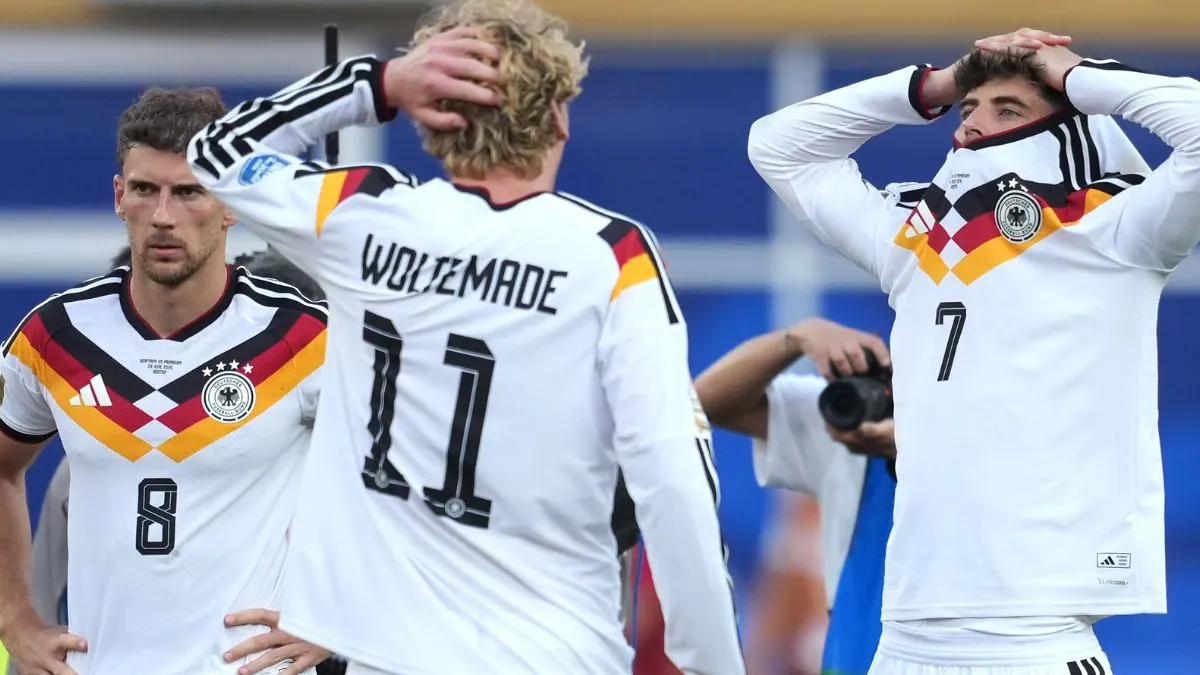
Germany’s 2026 World Cup campaign ended in shocking fashion on June 29 as they were knocked out in the Round of 32 by Paraguay after a 1-1 draw that went to penalties. Paraguay won the shootout 4-3 at Boston Stadium in Foxborough, Massachusetts, handing Germany their first-ever penalty shootout defeat in World Cup history.
What was expected to be a comfortable win for the four-time champions turned into one of the biggest upsets of the tournament so far.
Here’s a breakdown of exactly why Germany fell.
Why Germany Lost to Paraguay in the Round of 32 of the 2026 World Cup
1. Paraguay’s Defensive Masterclass
Paraguay defended with discipline, physicality, and organization for 120 minutes. Under Gustavo Alfaro, they sat in a compact low block and made it extremely difficult for Germany to create clear chances.
Central defenders Gustavo Gómez and José Canale were outstanding. They dealt well with crosses and aerial duels while staying compact. Germany dominated possession but found themselves hitting a wall every time they tried to break through the final third.
This was not a game Germany could win through open play. They needed moments of individual brilliance or set-piece quality — and they didn’t get enough of either.
2. Germany’s Lack of Clinical Edge and Creativity
Despite controlling large parts of the game, Germany lacked the cutting edge required to kill off the match. They created chances but failed to convert them consistently.
The equalizer from Kai Havertz in the 54th minute gave them momentum, but they couldn’t build on it. Several promising attacks broke down due to poor decision-making in the final third or over-elaboration.
Even in extra time, Germany looked frustrated rather than dominant. A potential winning goal from Jonathan Tah was disallowed after a VAR review for a foul on the goalkeeper, adding to the sense of misfortune.
3. Catastrophic Penalty Shootout Performance
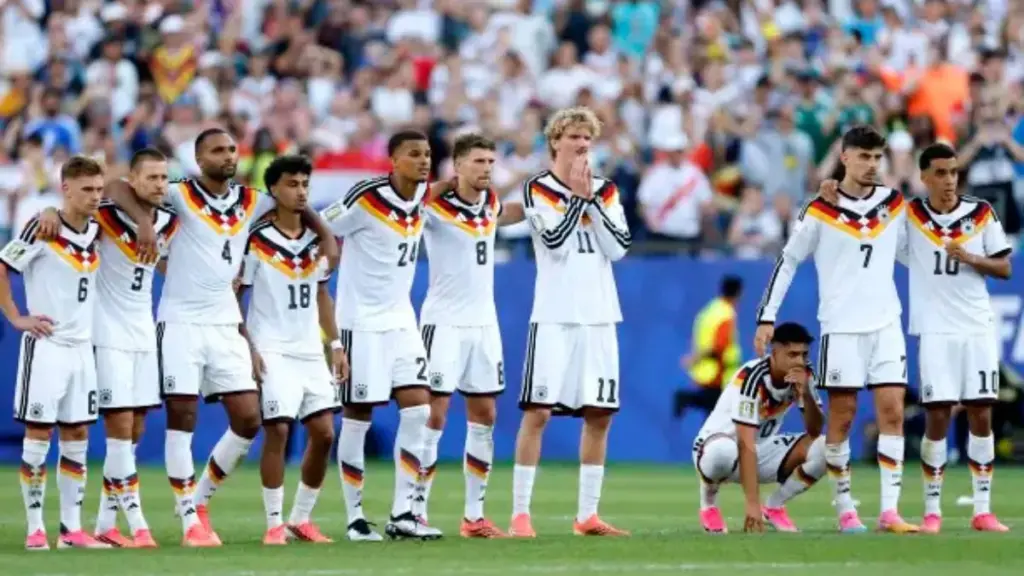
This was ultimately where Germany lost the tie. In the shootout, they missed three of their six penalties. Reports indicate that Kai Havertz, Nick Woltemade, and Jonathan Tah all failed to convert.
Meanwhile, Paraguay’s goalkeeper Orlando Gill produced two crucial saves that swung the momentum. When it went to sudden death, José Canale calmly slotted home the winning penalty.
Germany had never lost a World Cup penalty shootout before this match. The psychological weight of that record, combined with poor execution under pressure, proved fatal.
4. Tactical and Mental Factors
Julian Nagelsmann had described Paraguay as an “uncomfortable opponent” before the match, and his side never truly solved the puzzle. Germany tried to play through the lines but were often forced into hopeful crosses or long balls that Paraguay dealt with comfortably.
There was also a noticeable lack of urgency and composure in key moments. For a team with Germany’s pedigree, the inability to impose themselves against a well-organized but limited Paraguay side raised serious questions about mentality and tactical flexibility in knockout football.
The Bigger Picture
This result continues a worrying trend for German football. After early exits in 2018 and 2022, another Round of 32 exit in 2026 will intensify scrutiny of Nagelsmann and the DFB.
Paraguay, by contrast, produced the perfect underdog performance — organized defending, clinical counter-attacking (Julio Enciso’s header gave them the lead), and heroic goalkeeping. They will now face a Round of 16 clash with genuine belief.
What is the actual reason behind Germany’s loss to Paraguay?
Germany didn’t lose because they were the worse team on the night in terms of possession or territory. They lost because they couldn’t break down a stubborn defense, missed crucial penalties, and once again failed to deliver when it mattered most in a knockout match.
Paraguay fully deserved their victory. They were the braver, more clinical side when it counted.
For German fans, this is another painful early exit that will spark serious debate about the direction of the national team. For Paraguay, it is a historic night — their first Round of 16 appearance since 2010 and one of the great upsets of the 2026 World Cup.