
The 2026 FIFA World Cup is now taking shape as the biggest edition in the tournament’s history. For the first time ever, the finals will feature 48 teams, and the competition will be hosted across the United States, Mexico, and Canada from June 11 to July 19, 2026. After the official qualification, all the 2026 FIFA World Cup Teams List have been confirmed by the Confederation for the tournament.
For the 23rd edition, including the three hosts, 45 direct qualifiers from each confederation, and teams that secured their places through the inter-confederation play-offs.
What makes this World Cup even more interesting is how wide the field has become. Nations that have never played on this stage before are now in, while some traditional powers have had to fight through tense qualifying campaigns just to get here.
The final field brings together established giants, returning contenders, and a few fresh faces that will make the 2026 tournament feel very different from the ones that came before it.
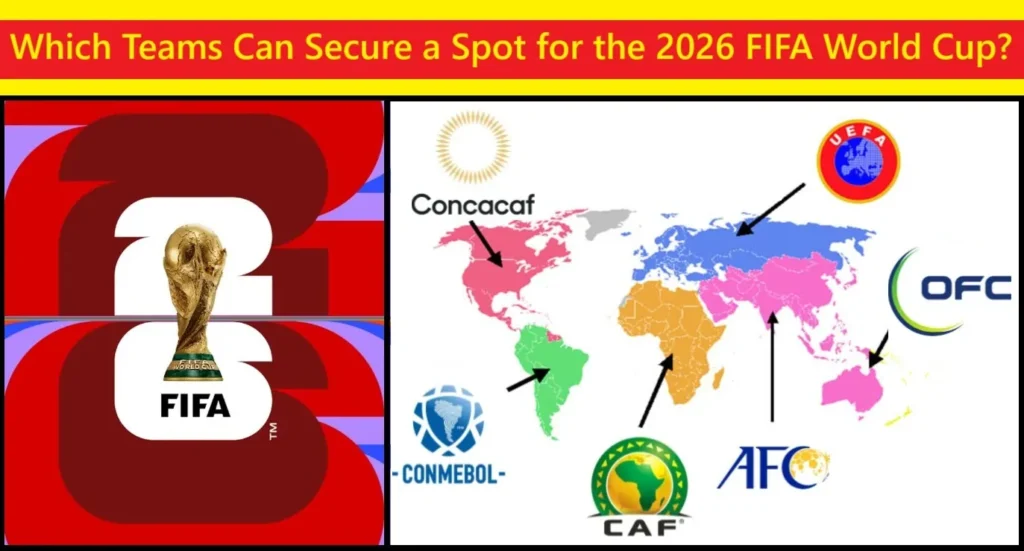
2026 FIFA World Cup Teams List by Confederation
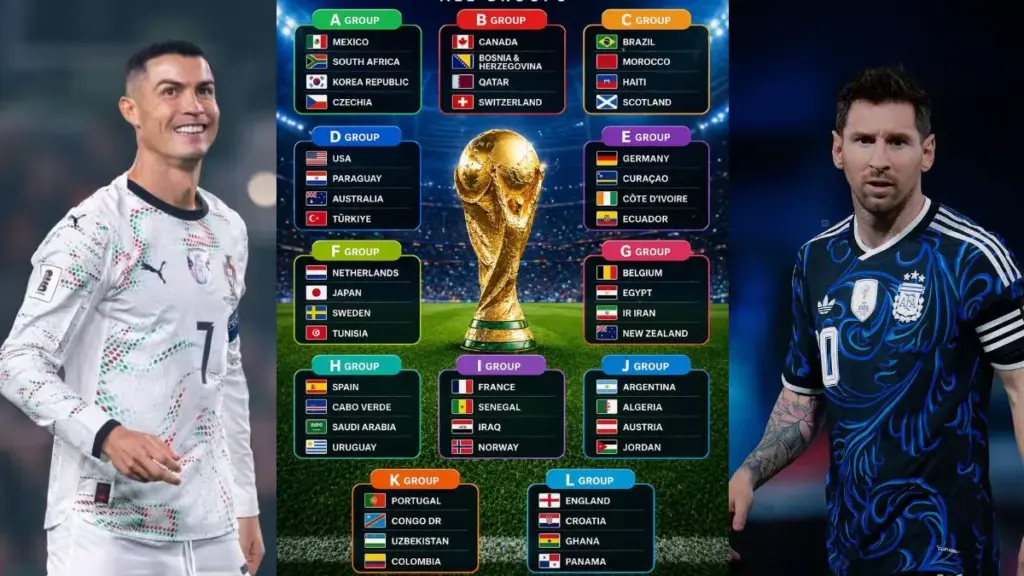
The 2026 FIFA World Cup Teams List for the expanded will see a record eight Arab nations competing, along with several countries making their debut.
Qualified Host Nations
The three host nations qualified automatically and will all be part of the opening tournament lineup: the United States, Mexico, and Canada.
The U.S. will host its first World Cup since 1994, Mexico will appear in another home World Cup, and Canada will take part in a men’s World Cup for only the third time. All three as host nations taking part in the tournament.
| Host Nation | Previous Appearances | Best Performance | Key Venue |
|---|---|---|---|
| Canada | 2 (1986, 2022) | Group Stage | Toronto Stadium |
| Mexico | 17 | Quarter-finals (1970, 1986) | Mexico City Stadium |
| United States | 11 | Third Place (1930) | New York New Jersey Stadium |
AFC (Asia)
Asia’s qualified teams are Japan, Iran, Uzbekistan, South Korea, Jordan, Australia, Qatar, and Saudi Arabia.
Eight nations among the confirmed World Cup teams, and the group includes both long-time World Cup names and first-time qualifiers like Uzbekistan and Jordan.
| Team | Qualification Path | Notes |
|---|---|---|
| Japan | 3rd Round Group Winner | First AFC team to qualify (March 20) |
| South Korea | 3rd Round Group Winner | 11th consecutive World Cup appearance |
| Iran | 3rd Round Group Winner | Qualified for a fourth straight tournament |
| Australia | 3rd Round Runner-up | Secured spot on June 10 with a win over Saudi Arabia |
| Jordan | 3rd Round Runner-up | World Cup Debut |
| Uzbekistan | 3rd Round Runner-up | World Cup Debut; first Central Asian nation to qualify |
| Qatar | 4th Round Group Winner | First successful qualifying campaign (previously qualified as hosts) |
| Saudi Arabia | 4th Round Group Winner | Topped their playoff group to secure a direct berth |
| Iraq | Intercontinental Play-off | Defeated Bolivia 2–0 in the final to return after 40 years |
CAF (Africa)
Africa’s nine qualifiers are Morocco, Tunisia, Egypt, Algeria, Ghana, Cape Verde, South Africa, Ivory Coast, and Senegal.
This is one of the most balanced African World Cup lineups in recent years, with a mix of experienced teams and breakout nations such as Cape Verde making history with a first-ever qualification.
| Team | Qualification Method | Notable Achievement |
|---|---|---|
| Morocco | Group E Winner | First African team to qualify; 2022 semi-finalists |
| Egypt | Group A Winner | Led by Mohamed Salah, returning after missing 2022 |
| Algeria | Group G Winner | Dominant qualifying run with a perfect record in many stages |
| Tunisia | Group H Winner | Qualified without conceding a single goal in 10 matches |
| Ivory Coast | Group F Winner | Reigning African champions; first World Cup since 2014 |
| Senegal | Group B Winner | Topped their group ahead of DR Congo in the first round |
| Ghana | Group I Winner | Secured their spot on the final matchday |
| South Africa | Group C Winner | First successful qualification since 2002 |
| Cape Verde | Group D Winner | World Cup Debut; second-smallest nation by population ever |
| DR Congo | Play-off Winner | Returning for the first time since 1974 (as Zaire) |
CONCACAF
Along with the three automatic host nations, CONCACAF’s additional qualified teams are Panama, Haiti, and Curaçao.
That gives the region six teams in the tournament overall, with the hosts joined by three more sides that came through the qualifying route. Curaçao’s qualification stands out because it is a first appearance at the World Cup.
| Team | Status | Notable Fact |
|---|---|---|
| Canada | Co-host | Hosting matches in Vancouver and Toronto |
| Mexico | Co-host | First nation to host matches in three separate World Cups |
| United States | Co-host | Hosting the largest share of matches, including the final |
| Panama | Group A Winner | Returning for their second World Cup appearance |
| Curaçao | Group B Winner | World Cup Debut; smallest nation ever to qualify by population |
| Haiti | Group C Winner | Historic return to the world stage for the first time since 1974 |
CONMEBOL (South America)
South America’s six qualifiers are Argentina, Brazil, Ecuador, Uruguay, Colombia, and Paraguay. All six places, and the lineup includes defending champions Argentina as well as Brazil, the most decorated nation in the region.
Uruguay, Colombia, and Paraguay also return to the global stage after hard-fought qualifying campaigns.
| Team | Qualification Status | Notable Fact |
|---|---|---|
| Argentina | Direct Qualifier (1st) | Defending world champions; first South American team to qualify |
| Ecuador | Direct Qualifier (2nd) | Qualified comfortably despite a three-point deduction |
| Colombia | Direct Qualifier (3rd) | Return to the World Cup after missing 2022 |
| Uruguay | Direct Qualifier (4th) | Qualified for their fifth consecutive World Cup |
| Brazil | Direct Qualifier (5th) | Maintained their record of appearing in every World Cup |
| Paraguay | Direct Qualifier (6th) | Secured their first World Cup appearance since 2010 |
OFC (Oceania)
Oceania’s lone direct qualifier is New Zealand. New Zealand as the qualified OFC representative, continuing their role as the region’s strongest men’s national team and one of the most familiar names from Oceania at World Cup level.
| Team | Status | Notable Fact |
|---|---|---|
| New Zealand | Direct Qualifier | Secured their spot by defeating New Caledonia 3–0 in the OFC Final on March 24, 2025. |
UEFA (Europe)
Europe has the largest group of qualified teams: England, France, Croatia, Portugal, Norway, Germany, Netherlands, Belgium, Austria, Switzerland, Spain, Scotland, Sweden, Turkey, Czech Republic, and Bosnia and Herzegovina.
All 16 UEFA teams in the final field, which reflects both Europe’s depth and the scale of competition in the continent’s qualifying process.
| Team | Qualification Path | Notable Fact |
|---|---|---|
| Germany | Group A Winner | First European team to qualify; looking to rebound from 2022 |
| Switzerland | Group B Winner | 6th consecutive appearance after an unbeaten qualifying run |
| Scotland | Group C Winner | First World Cup appearance since 1998 |
| France | Group D Winner | 2022 runners-up; finished top of their group undefeated |
| Spain | Group E Winner | Won their group ahead of Türkiye |
| Portugal | Group F Winner | Secured qualification with an emphatic 9–1 win over Armenia |
| Netherlands | Group G Winner | Ronald Koeman’s side enjoyed an unbeaten qualifying campaign |
| Austria | Group H Winner | Returning for the first time since 1998 |
| Norway | Group I Winner | Ended a 28-year drought led by Erling Haaland |
| Belgium | Group J Winner | 4th consecutive World Cup; topped Group J in style |
| England | Group K Winner | Qualified with a perfect record and zero goals conceded |
| Croatia | Group L Winner | 2022 third-place finishers; qualified comfortably |
| Bosnia and Herzegovina | Play-off Winner (Path A) | Qualified by knocking out Italy on penalties |
| Sweden | Play-off Winner (Path B) | Secured return after missing 2022 with a win over Poland |
| Türkiye | Play-off Winner (Path C) | First World Cup qualification since finishing third in 2002 |
| Czechia | Play-off Winner (Path D) | Returning for the first time since 2006 after a shootout win |
Inter-Confederation Play-Off Qualifiers
The final two spots at the 2026 FIFA World Cup went to DR Congo and Iraq, both of whom qualified through the inter-confederation play-offs.
| Pathway | Match | Result | Final Qualifier |
|---|---|---|---|
| Path A | DR Congo vs. Jamaica | 1–0 (a.e.t.) | DR Congo |
| Path B | Iraq vs. Bolivia | 2–1 | Iraq |
Total Number of Teams Qualified
The final count is now complete: 48 teams will play at the 2026 FIFA World Cup. That includes the three hosts, the direct qualifiers from each confederation, and the two teams that emerged from the inter-confederation play-offs.
Key Tournament Highlights
- Debutants: Cape Verde, Curaçao, Jordan, and Uzbekistan are participating for the first time.
- Returns: Iraq (since 1986), DR Congo, and Haiti (since 1974) make historic returns.
- European Play-offs: Bosnia and Herzegovina, Czechia, Sweden, and Türkiye secured the final spots.
- Notable Absence: Italy missed qualification for a third consecutive time.
Biggest Storylines in the 2026 FIFA World Cup Teams List
One of the biggest stories is the number of first-time or return qualifiers. The qualification list shows that Uzbekistan, Jordan, Cape Verde, Curaçao, DR Congo, and Iraq are among the standout names for different reasons, with some reaching the World Cup for the first time and others returning after long gaps. That mix gives the 2026 tournament a fresh and unpredictable feel.
Another major storyline is the return of several long-established teams that missed out on recent editions or needed a strong qualifying finish to get back.
Norway, Scotland, Turkey, Bosnia and Herzegovina, Austria, and New Zealand all add extra variety to the field, while major powers such as Argentina, Brazil, Germany, France, England, Spain, and Portugal ensure the tournament still has its biggest global brands.
Why the 2026 World Cup Feels Different
The expanded format changes everything. 2026 FIFA World Cup Teams List included 45 qualified teams, more countries from Africa, Asia, CONCACAF, and Oceania have a real chance to compete on the biggest stage.
That means a broader mix of styles, more underdog stories, and more nations entering the tournament with realistic hopes of advancing beyond the group phase.
That clear just by looking at how many different confederations are represented in the final field.
For U.S. fans, this also means a more international and more competitive tournament on home soil. The United States is not just hosting matches; it is helping stage the most ambitious World Cup ever, with a field that now stretches far beyond the usual handful of favorites.
That should make the 2026 event feel more global, more open, and more memorable from the very first kickoff.
Final Thoughts
The full 2026 FIFA World Cup Teams List is now locked in, and it is one of the most interesting lineups football has ever produced.
There are proven champions, emerging nations, regional powerhouses, and long-awaited returnees all in one tournament.
With the United States, Mexico, and Canada preparing to host the biggest World Cup in history, the final list of qualified teams already tells us one thing: this summer’s event will be massive, unpredictable, and packed with storylines.