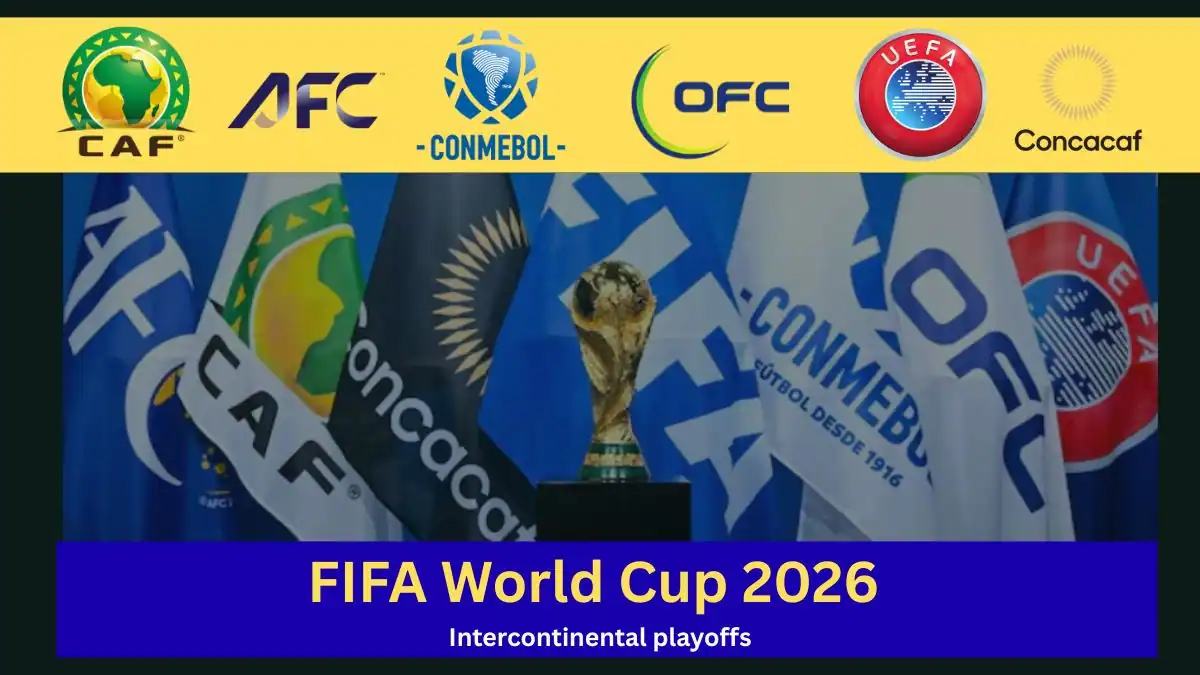
The road to the 2026 FIFA World Cup reaches its most dramatic conclusion with the 2026 FIFA World Cup intercontinental playoffs – a high-stakes tournament that will determine the final two teams to join football’s greatest celebration. This unprecedented format brings together six nations from around the globe for what promises to be one of the most intense qualification battles in World Cup history.
The 2026 FIFA World Cup intercontinental playoffs represent FIFA’s innovative approach to filling the last two qualifying spots for the expanded 48-team World Cup. Unlike previous tournaments where playoff spots were limited to specific confederations, the 2026 format creates a truly global showdown where continental boundaries dissolve and only the strongest survive.
This six-team tournament serves as the ultimate test of international football prowess, bringing together representatives from five different confederations in a winner-takes-all format. The stakes couldn’t be higher – with just two World Cup berths available, every match becomes a make-or-break moment for nations that have fought through grueling continental qualification campaigns.
The playoff structure maximises both competitive excitement and fairness through a carefully designed bracket system. The tournament operates on a two-tier format that rewards higher-ranked teams while maintaining competitive balance.
FIFA rankings determine the tournament seeding, creating two distinct pathways to qualification. The top two-ranked teams among the six participants receive favourable seeding and bypass the opening round, earning direct advancement to the playoff finals.
The remaining four lower-ranked teams must battle through preliminary matches, with only the winners advancing to face the seeded teams. This creates two parallel brackets, each culminating in a final match where victory means World Cup qualification and defeat means four years of heartbreak.
2026 FIFA World Cup Intercontinental Playoffs Match Format and Rules
Every game follows a single-elimination format – there are no second chances, no aggregate scores, and no room for error:
- Seeded (based on the FIFA Men’s Power Ranking of 19 November 2025)
- Team 1 -> final 1
- Team 2 -> final 2
- Unseeded
- Team 3
- Team 4
- Team 5
- Team 6
First Round (Pathway 1): Four unseeded teams compete in two knockout games, with winners advancing to face the top seeds
- Semi-final
- Play-off Team 1 vs Play-off Team 2
- Final
- Team seeded first vs Winner Match 1
Final Round (Pathway 2): The two first-round winners face the two seeded teams in separate finals, with both winners securing World Cup qualification
- Semi-final
- Play-off Team 3 vs Play-off Team 4
- Final
- Team seeded second vs Winner Match 2
Tiebreaker Procedures: If matches remain tied after 90 minutes, teams play 30 minutes of extra time, with each side allowed a sixth substitution. If still deadlocked, penalty shootouts determine the winner
2026 FIFA World Cup Qualification Pathways by Confederation
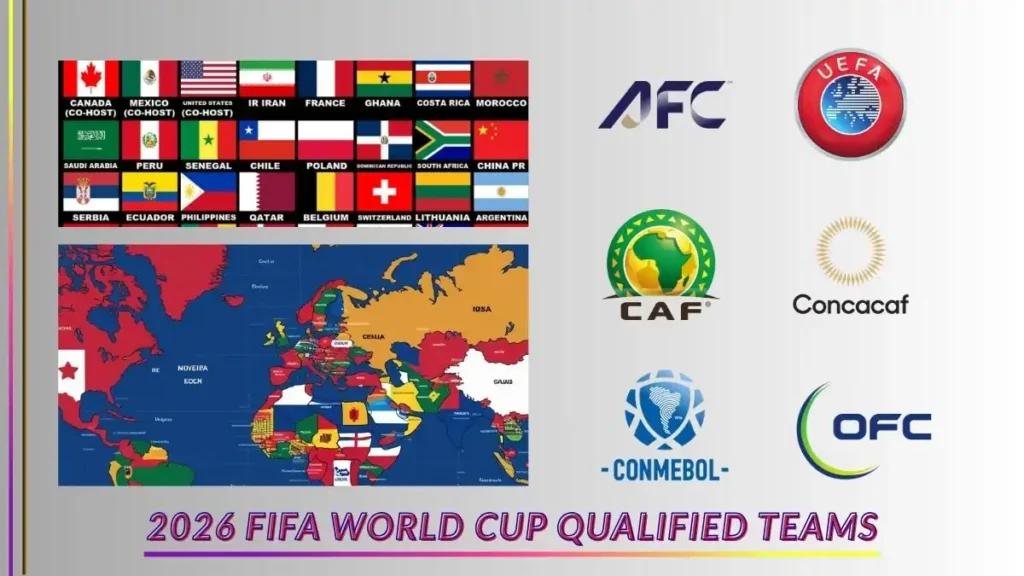
Each confederation contributes teams through different qualification scenarios, creating diverse pathways that reflect regional football structures.
AFC (Asian Football Confederation)
Asia’s representative emerges from the continent’s fifth round playoff winner. This typically involves teams that narrowly missed direct qualification through the Asian qualifying groups, with the AFC qualification featuring multiple competitive rounds.
- Fifth round winner – Iraq
CAF (Confederation of African Football)
Africa’s representative comes from the winner of the second-round playoff. This team emerges from among the four best group runners-up in the African qualification, who compete in a separate playoff tournament to determine CAF’s intercontinental representative.
- Second round winner – DR Congo
CONCACAF (North, Central America, and Caribbean)
As the host confederation, CONCACAF receives two spots in the intercontinental playoffs. The region’s representatives are the two highest-ranked third round group runners-up who missed direct qualification.
This provides additional opportunities for North American teams beyond the automatic host nation berths.
- Third round best two group runners-up – Jamaica and Suriname
CONMEBOL (South American Football Confederation)
South America’s representative is the seventh-place team in CONMEBOL’s competitive round-robin qualification format. Given South America’s football strength, this team often possesses significant international experience and represents a formidable challenge.
- Points Table Seventh-place team – Bolivia
OFC (Oceania Football Confederation)
Oceania’s representative is typically the third-round runner-up – the team that loses to New Zealand in OFC’s final qualification round. This represents a historic opportunity for Pacific Island nations, as New Zealand has already qualified directly as OFC champions.
- Third round runners-up – New Caledonia
Tournament Timeline and Logistics
The 2026 FIFA World Cup intercontinental playoffs occur during a precisely timed window that balances competitive integrity with tournament preparation needs.CONCACAF
Critical Dates and Scheduling
- Tournament Dates: March 23-31, 2026
- Location: North America (specific venues to be announced)
- FIFA Window: Aligned with international match calendar
- Pre-World Cup Timing: Less than three months before the tournament begins
Venue Considerations
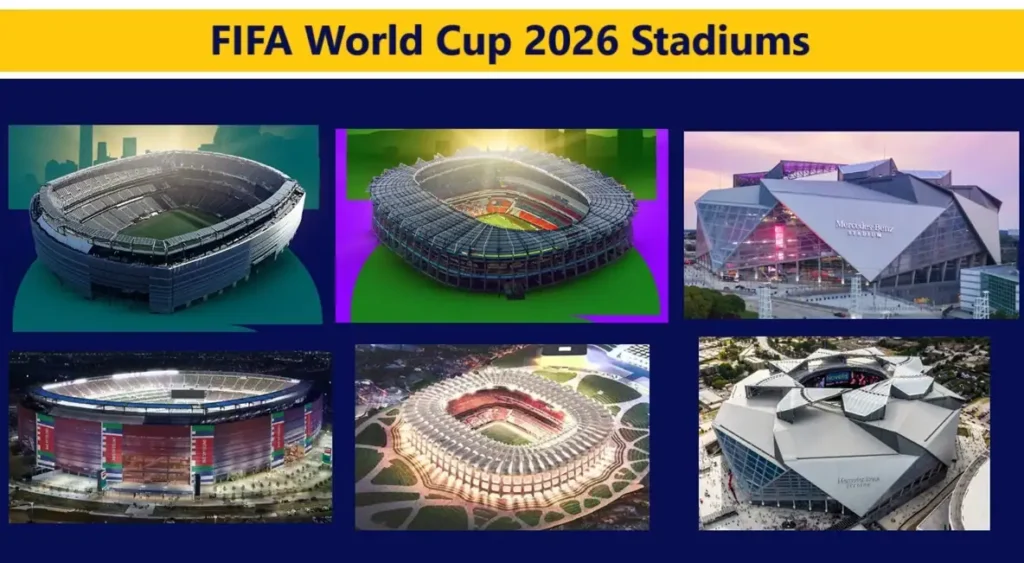
The tournament will be hosted in North America as a preparatory event for the World Cup. Based on expert analysis and fan discussions, potential hosting scenarios include –
- Stadium Specifications: Likely to use MLS stadiums with 20,000-30,000 capacity for optimal atmosphere.
- Geographic strategy: Games could be divided by regions to reduce travel for teams.
- Weather Advantage: Scheduling in March guarantees ideal playing conditions at various North American venues.
Leading Candidate Cities
- Los Angeles: LA Galaxy and LAFC stadiums offer proximity and quality facilities
- New York Area: Red Bull Arena provides ideal capacity and infrastructure
- South Florida: Inter Miami and Orlando stadiums offer reduced travel for CONCACAF, CONMEBOL, and CAF teams
FIFA World Cup Qualification

As of November 2025, 42 teams have already secured World Cup spots, while playoff positions remain to be determined.
Already Qualified Teams
These 42 teams represent four of the six FIFA confederations –
CONCACAF (North, Central America & Caribbean)
Host Nations (Automatic)
- United States – automatic as co-host
- Mexico – automatic as co-host
- Canada – automatic as co-host
- Panama
- Haiti
- Curaçao
AFC (Asia) – 8 Teams
- Japan – first team to qualify via Asian group stage
- IR Iran
- Korea Republic (South Korea)
- Uzbekistan
- Jordan
- Australia
- Qatar
- Saudi Arabia
CAF (Africa) – 9 Team
- Algeria
- Cape Verde
- Ivory Coast
- Egypt
- Ghana
- Morocco
- Senegal
- South Africa
- Tunisia
CONMEBOL (South America) – 6 Teams
- Argentina
- Brazil
- Ecuador
- Uruguay
- Paraguay
- Paraguay
OFC (Oceania) – 1 team
- New Zealand won the Oceania final on 24 March 2025 to claim the confederation’s first-ever direct slot
UEFA (Europe) – 12 Teams
- England
- France
- Croatia
- Portugal
- Norway
- Germany
- Netherlands
- Belgium
- Austria
- Switzerland
- Spain
- Scotland
Strategic Tournament Dynamics
The 2026 FIFA World Cup intercontinental playoffs format creates unique challenges that differ significantly from traditional qualification campaigns.
High-Pressure Environment
Teams face immense pressure knowing that a single poor performance eliminates World Cup dreams. The tournament’s compressed timeline means there’s no opportunity to recover from mistakes or build momentum over multiple matches.
Tactical Considerations
The single-elimination format benefits teams with strong defensive skills that can make the most of limited scoring chances. Being proficient in set-pieces is key, as these critical moments often decide the outcomes of closely contested knockout games.
Squad Management
Teams have to finalize their squads without knowing their exact opponents, making it crucial to select versatile players who can adapt to various tactical strategies. Injury issues become even more significant, as there’s no time for recovery between the playoffs and the World Cup.
Historical Significance and Global Impact

The 2026 FIFA World Cup intercontinental playoffs represent a significant evolution in World Cup qualification philosophy.
Format Innovation
This marks a departure from traditional two-legged playoff ties between specific continental representatives. The new format creates a mini-tournament atmosphere that generates greater media attention and fan engagement.
Expansion Benefits
The format reflects FIFA’s strategy of globalizing football competition while maintaining competitive balance across confederations. For the first time, all six confederations have guaranteed World Cup representation, with OFC receiving its first-ever direct berth.
Commercial and Media Value
The concentrated tournament format generates significant broadcast interest and sponsorship opportunities. Unlike scattered playoff matches across different continents, the unified tournament creates appointment television for global audiences.
When will the 2026 FIFA World Cup intercontinental playoffs start?
As continental qualifications near completion, the intercontinental playoffs’ participant list will become clearer. The tournament promises to deliver compelling drama for football supporters worldwide, with MLS-sized venues creating intimate, pressure-packed atmospheres.
For teams involved, March 2026 will represent the culmination of years of preparation, hope, and determination. For football fans worldwide, it will offer a week of pure knockout drama where dreams are realized and hearts are broken, all in pursuit of football’s ultimate prize.
The 2026 FIFA World Cup intercontinental playoffs represent more than qualification matches – they embody football’s global reach and competitive unpredictability. Six nations will converge in North America with World Cup dreams, knowing only two will continue their journey to join the world’s greatest football celebration.