The FIFA World Cup Trophy stands as the most coveted prize in global sports, representing the pinnacle of achievement for national football teams worldwide. This iconic golden trophy has captured the imagination of billions of fans and inspired countless footballers to pursue their dreams of international glory. Here’s your complete guide to understanding everything about this legendary sporting symbol.
From 1930 to 1970, the FIFA World Cup winners proudly received the original trophy, known as the Jules Rimet Trophy, initially called “Victory” before being renamed in 1946 in honour of FIFA President Jules Rimet, who had initiated the tournament.
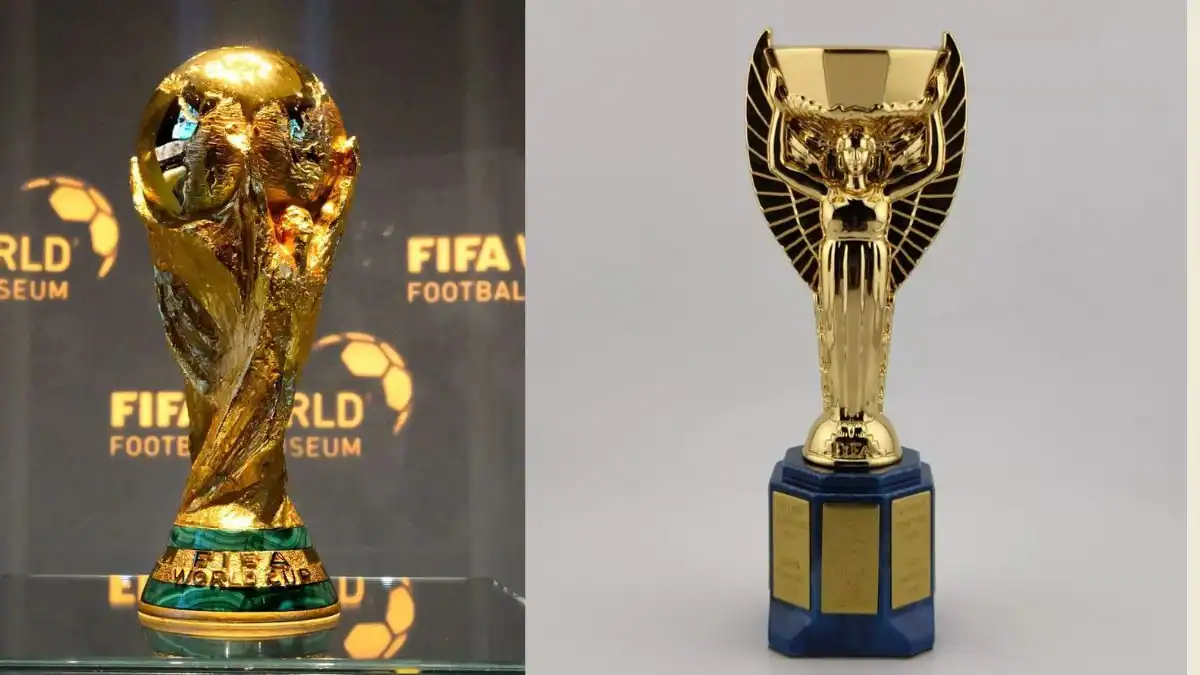
Crafted from gold-plated sterling silver with a lapis lazuli base, its design featured the Greek goddess Nike, symbolizing victory. Brazil claimed the trophy permanently after winning their third World Cup title in 1970. The original trophy was subsequently stolen in 1983 and has never been recovered, believed to have been melted down.
A new trophy, simply called the FIFA World Cup Trophy, was introduced in 1974 to replace the Jules Rimet Trophy. Designed by Italian sculptor Silvio Gazzaniga and produced by the Bertoni company, it is made of 18-karat gold with malachite bands at its base. It stands approximately 36 to 36.8 cm tall and weighs about 6.175 kg.
The design depicts two human figures lifting the Earth, representing the global nature of the tournament. The original trophy is housed in FIFA’s museum in Zürich, while winning nations receive a gold-plated bronze replica.
The Current FIFA World Cup Trophy: A Masterpiece in Gold

Design and Creation
The current FIFA World Cup Trophy was introduced in the 1974 FIFA World Cup, replacing the original Jules Rimet Trophy. Italian sculptor Silvio Gazzaniga designed this masterpiece, which depicts two human figures holding up the Earth, symbolizing the global nature of football and the world coming together through sport..
Gazzaniga’s design was selected from 53 submissions from seven different countries, making it a truly international competition to create football’s most important prize.
The trophy represents “the stirring moment of victory” with its dynamic design showing athletes at their peak achievement.
Physical Specifications
The FIFA World Cup Trophy boasts impressive specifications that reflect its prestigious status:
| Specification | Details |
|---|---|
| Height | 36.8 cm (14.5 inches) |
| Weight | 6.175 kg (13.61 pounds) |
| Material | 18-carat gold (75% pure gold) |
| Gold Content | 30,875 carats of 18-karat gold |
| Pure Gold Weight | 4,927 grams |
| Base Material | Two layers of malachite (semi-precious green stone) |
| Base Diameter | 13 cm |
The trophy is hollow inside, rather than solid gold. If it were solid, it would weigh approximately 70-80 kg and be impossible for players to lift during celebrations.
The Trophy’s Incredible Value

Material Worth vs Cultural Value
While the gold content alone is valued at approximately $250,000 based on current gold prices, the trophy’s true worth extends far beyond its material composition. Experts estimate the complete trophy value at $20 million, making it the most expensive trophy in world sports.
This valuation considers several factors:
- Historical significance and cultural impact
- Artistic craftsmanship and unique design
- Global recognition and prestige
- The irreplaceable nature of the trophy
The production cost in 1974 was estimated at $50,000, which would be roughly $250,000 today when adjusted for gold price inflation.
The Original Jules Rimet Trophy: A Lost Legend

Historical Background
Before the current trophy, the Jules Rimet Trophy served as the World Cup prize from 1930 to 1970. Originally called “Victory,” it was renamed in 1946 to honour FIFA President Jules Rimet, who championed the creation of the World Cup tournament.
Jules Rimet Trophy vs Current FIFA Trophy

Design and Specifications
The Jules Rimet Trophy featured distinctly different characteristics:
| Feature | Jules Rimet Trophy | Current FIFA Trophy |
|---|---|---|
| Material | Gold-plated sterling silver | 18-carat solid gold |
| Base | Lapis lazuli | Malachite |
| Height | 35 cm | 36.8 cm |
| Weight | 3.8 kg | 6.175 kg |
| Design | Nike, Greek goddess of victory | Two figures holding Earth |
The Trophy’s Adventures and Ultimate Loss
The Jules Rimet Trophy experienced several dramatic incidents:
World War II Protection: During WWII, Italian sports official Dr Ottorino Barassi smuggled the trophy from a Rome bank and hid it under his bed to prevent Nazi confiscation.
2026 FIFA World Cup Trophy

The 2026 FIFA World Cup Trophy keeps its iconic design from 1974, created by Silvio Gazzaniga and made by GDE Bertoni. It features two human figures lifting the Earth, crafted from 18-karat gold with a malachite base, standing about 36.8 cm tall and weighing 6.175 kg.
For the 2026 tournament, FIFA notably integrated an actual photographic image of this trophy into the official brand and emblem – marking the first time the real trophy has been featured in World Cup branding — set in front of the “26” in the logo to anchor the tournament’s identity.
For the first time in history, 48 qualified teams are participating in the FIFA World Cup Trophy, along with a potential payout of USD 125 million foreseen for the winners.
FIFA World Cup 2026 Prize Money Distribution
| Tournament Finish | Performance Prize Money (USD) | Total Payout (With $12.5M Base) |
|---|---|---|
| Champions | $51 million | $63.5 million |
| Runners-up | $34 million | $46.5 million |
| 3rd Place | $30 million | $42.5 million |
| 4th Place | $28 million | $40.5 million |
| Quarterfinalists (5th–8th) | $20 million | $32.5 million |
| Round of 16 (9th–16th) | $16 million | $28.5 million |
| Round of 32 (17th–32nd) | $12 million | $24.5 million |
| Group Stage (33rd–48th) | $10 million | $22.5 million |
| Total | $896 Million | $440 Million |
Security and Access: Who Can Touch the Trophy?
Exclusive Handling Rights
FIFA maintains extremely strict security protocols around the World Cup Trophy. Only a select few individuals are permitted to touch the trophy with their bare hands:
- Tournament-winning players and coaches
- FIFA officials
- Heads of state and government leaders
- Select VIPs during official ceremonies
World Cup Trophy Security Measures
The trophy travels the world under 24-hour water-tight security. When being transported or displayed:
- Handlers must wear protective gloves
- The trophy is kept in a bulletproof display case
- Its exact storage location at FIFA headquarters in Zurich remains classified
- It’s displayed at the FIFA World Football Museum in Switzerland when not touring
Trophy Ownership and Replicas

FIFA’s Permanent Ownership
Unlike the Jules Rimet Trophy, the current FIFA World Cup Trophy permanently belongs to FIFA and cannot be kept by winning teams. This rule change ensures the trophy’s security and prevents future losses.
What Winners Actually Keep
World Cup-winning teams are awarded the “FIFA World Cup Winners’ Trophy,” a gold-plated bronze replica designed to closely resemble the original. The main differences include:
- Made of bronze with gold plating rather than solid gold
- A new replica is created for each tournament
- Can be kept temporarily by the winning team’s football association
- FIFA can demand its immediate return at any time
- Permanent ownership only if a team wins three tournaments
Trophy Engravings and Historical Record
The base of the FIFA World Cup Trophy serves as a permanent historical record of tournament winners. Names of winning countries and years are engraved in circular patterns around the malachite base.
The trophy can accommodate the names of 17 winning countries and years in total. As of 2022, following Argentina’s victory, the engraving includes winners from 1974 to 2022.
Global Impact and Cultural Significance
Economic Influence
The World Cup Trophy represents the centerpiece of an event generating massive economic impact:
- The 2022 Qatar World Cup generated an estimated $17 billion profit
- Host countries typically see significant tourism boosts and job creation
- The tournament attracts over 3.5 billion viewers globally
Cultural Symbol
Beyond its material value, the trophy represents:
- National pride and unity – Argentina’s 2022 victory saw 5 million people flood Buenos Aires streets
- Global connectivity – the tournament brings together nations from every continent
- Athletic excellence – considered the ultimate achievement in football
- Historical legacy – connects current players with decades of football history
Manufacturing and Craftsmanship
The original trophy was manufactured by the GDE Bertoni company in Milan, Italy. The intricate production involves:
- Molding and die grinding to achieve precise dimensions
- Chiseling for detailed surface work
- Polishing to achieve the signature golden shine
- Ultrasonic cleaning for perfection
- Gilding, washing, and varnishing for the final touches
Each replica trophy follows this same meticulous process to ensure authenticity.
Who made the Original FIFA World Cup trophy?

Silvio Gazzaniga, the trophy’s designer, also created other prestigious awards, including the original UEFA Cup and UEFA Super Cup trophies. His World Cup design has been praised for capturing “the stirring moment of victory” through its dynamic sculptural form.
The FIFA World Cup trophy represents more than just a prize – it embodies the dreams, aspirations, and achievements of footballers and fans worldwide.
From its creation by Italian artist Silvio Gazzaniga to its role in crowning world champions, the Soccer World Cup Trophy remains the ultimate symbol of footballing excellence and global unity through sport.