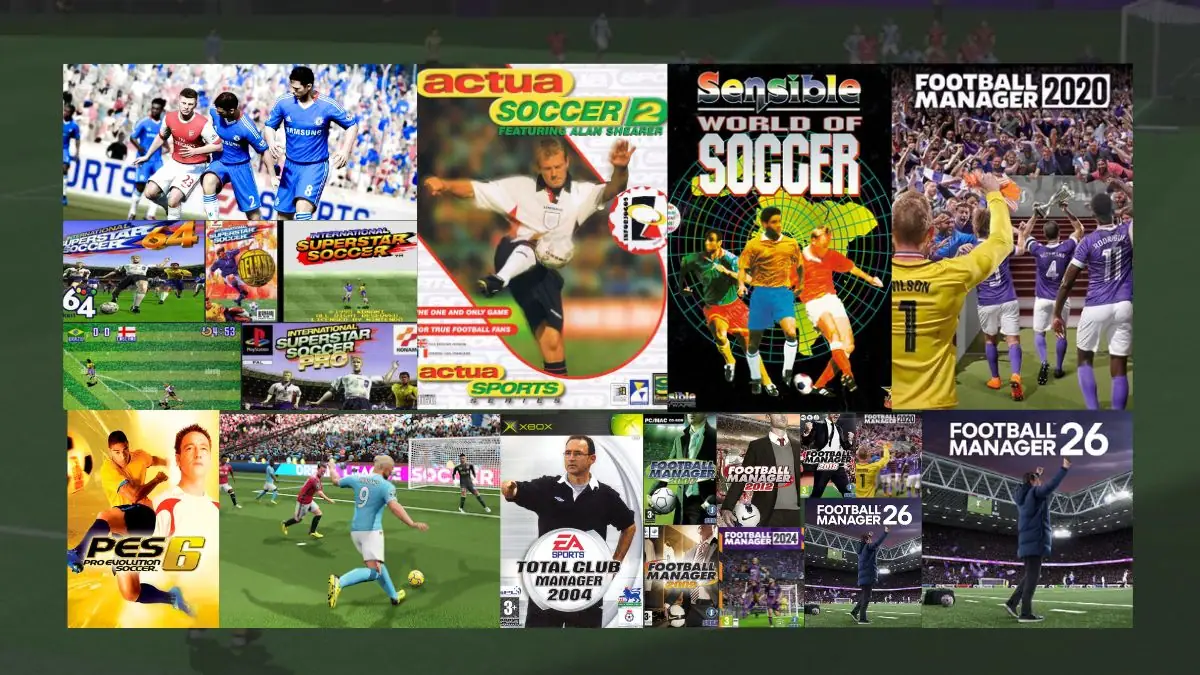
Soccer video games have evolved from simple pixelated sprites to photorealistic simulations that capture every nuance of the beautiful game. Over four decades, developers have pushed technological boundaries, creating experiences that bring the world’s most popular sport into millions of homes worldwide.
From arcade classics that defined early gaming to modern simulations that blur the line between virtual and reality, soccer games have consistently delivered unforgettable moments of joy, frustration, and triumph. This definitive ranking celebrates the titles that not only achieved commercial success but fundamentally shaped how we experience football through gaming.
After analyzing critical reception, historical impact, gameplay innovation, and lasting legacy, here are the top 10 soccer video games of all time.
List of the Top 10 Soccer Video Games

These ten games represent the pinnacle of soccer video gaming across four decades. From arcade beginnings to photorealistic simulations, from management depth to pure arcade fun, each title captured something special about the world’s most popular sport.
While modern games like FIFA Video game history, EA Sports FC and eFootball continue the legacy, they’re constantly measured against classics like PES 6, SWOS, and FIFA 12. These timeless titles proved that great football games aren’t just about graphics or licenses—they’re about capturing the passion, drama, and joy that make football the beautiful game.
Whether you’re a nostalgic veteran remembering golden eras or a newcomer curious about gaming history, these ten titles represent essential experiences. They changed the industry, influenced millions of players, and proved that soccer games could be art, addiction, and pure entertainment all at once.
The greatest football game might already exist in PES 6, or perhaps it’s yet to be made. Either way, the pursuit of digital football perfection continues, driven by the legacy these legendary titles established.
10. Rocket League (2015)
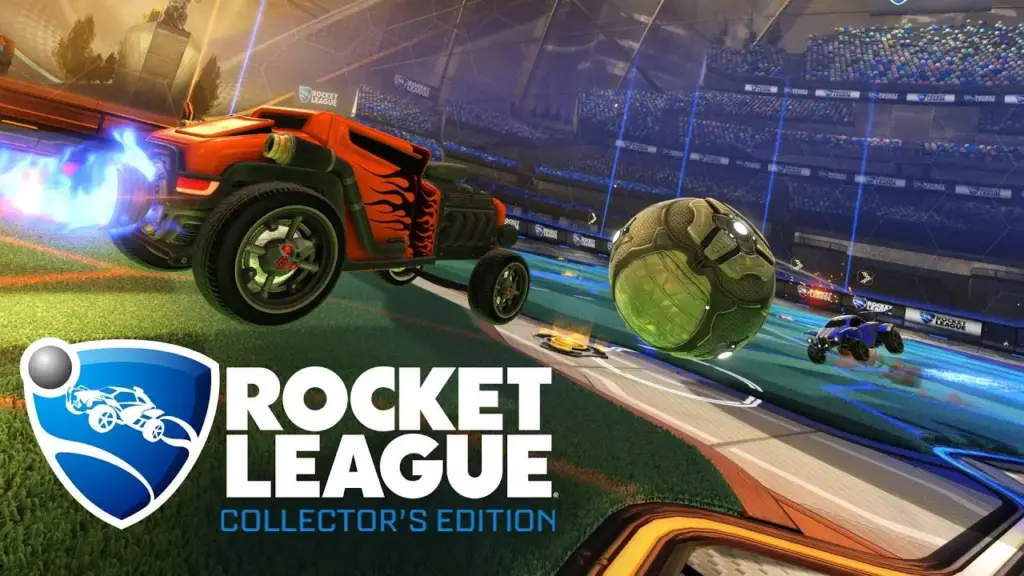
- Developer: Psyonix
- Platforms: PlayStation 4, Xbox One, PC, Nintendo Switch, and more
- Why It’s Legendary: The most innovative take on soccer gaming
What Makes It Special
Rocket League might seem like an unconventional choice for a soccer games list, but its impact on the genre cannot be ignored. This rocket-powered car soccer hybrid took a simple concept and executed it to perfection, creating one of the most addictive competitive gaming experiences ever made.
Instead of human players, you control rocket-powered vehicles performing aerial acrobatics to knock an oversized ball into goals. The core concept is pure soccer: teamwork, positioning, passing, and finishing. The execution is anything but traditional.
Gameplay Excellence
The genius of Rocket League lies in its accessibility paired with an extraordinarily high skill ceiling. New players can score goals in their first match, while professionals spend thousands of hours mastering aerial control, ceiling shots, and advanced mechanics.
The physics engine is near-perfect, making every touch feel meaningful and every save satisfying. Matches are quick (5 minutes standard), intense, and perfectly balanced for competitive play. Cross-platform multiplayer ensures you always find opponents, while custom game modes add endless variety.
Legacy and Impact
Rocket League proved that soccer gaming doesn’t need to be realistic to capture the sport’s essence. It became a genuine esports phenomenon with professional leagues, multi-million dollar prize pools, and a dedicated global community that remains active nearly a decade after release.
For anyone who loves competitive gaming or wants to experience soccer from a completely fresh perspective, Rocket League is essential.
9. Actua Soccer (1995)
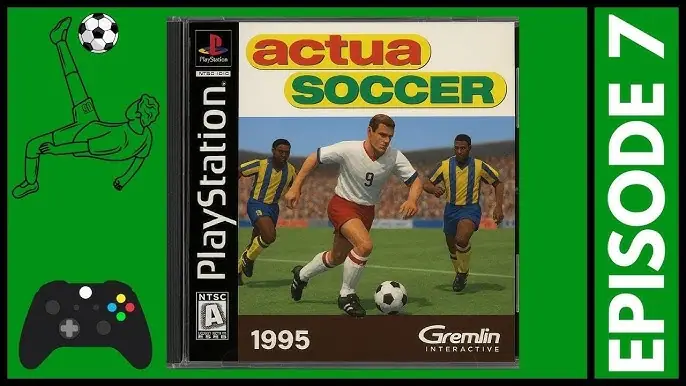
- Developer: Gremlin Interactive
- Platforms: PlayStation, Sega Saturn, PC
- Why It’s Legendary: First true 3D football game on home consoles
Revolutionary Technology
Before Actua Soccer, football games were limited to 2D sprites and top-down perspectives. Gremlin Interactive’s Sheffield-based team changed everything by creating the first fully 3D football game for home consoles, marking a watershed moment in sports gaming history.
Motion Capture Innovation
Actua Soccer was genuinely ahead of its time, featuring motion capture technology that was revolutionary for 1995. Three Sheffield Wednesday players—Chris Woods, Graham Hyde, and Andy Sinton—were brought in to capture realistic movements, animations, and player behavior.
The result was a football game that looked and felt unlike anything players had experienced before. Movements were fluid, passes had weight, and for the first time, digital football felt truly three-dimensional.
Features and Gameplay
Beyond graphics, Actua Soccer offered deep strategic gameplay with various teams and leagues to choose from, including national sides and club teams from multiple countries. Players could create custom teams, customize kits, and experience multiple game modes.
The commentary by legendary broadcaster Barry Davies added authenticity that elevated the immersion. While the game hasn’t aged perfectly, its historical significance and influence on every 3D football game that followed cannot be overstated.
8. FIFA International Soccer (1993)
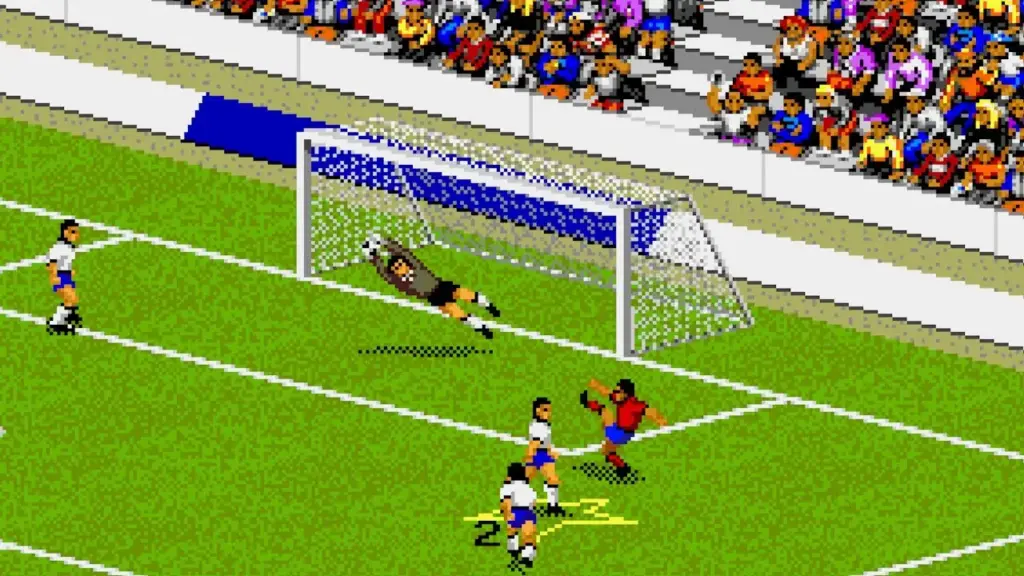
- Developer: EA Canada Extended Play Productions
- Platforms: Sega Mega Drive, Super Nintendo, PC, and more
- Why It’s Legendary: Birth of the most successful sports gaming franchise
The Beginning of a Dynasty
FIFA International Soccer wasn’t the most technically impressive game of its era, but it captured something essential: the excitement and drama of real football translated into accessible, challenging gameplay.
EA Sports’ first venture into football gaming featured an iconic isometric broadcasting angle that positioned the camera as if you were watching from the best seat in the stadium. While every player looked like a 16-bit bodybuilder with varying skin tones and fictional names, the gameplay was engaging and competitive.
What Set It Apart
The game succeeded where others failed by balancing accessibility with challenge. Younger players could pick it up immediately, while competitive gamers found depth in the mechanics. The difficulty level presented more challenge than simpler alternatives, keeping players engaged for hours.
Cultural Phenomenon
FIFA International Soccer became the UK’s best-selling home video game of 1993, selling over 500,000 copies in its first four weeks alone. It introduced millions of children to football fandom, becoming a gateway to the beautiful game for an entire generation.
This laid the foundation for EA’s FIFA franchise, which would go on to become one of the most lucrative and influential sports gaming series in history. Every modern FIFA title traces its lineage back to this groundbreaking 1993 release.
7. Virtua Striker (1994)
- Developer: Sega AM2
- Platforms: Arcade
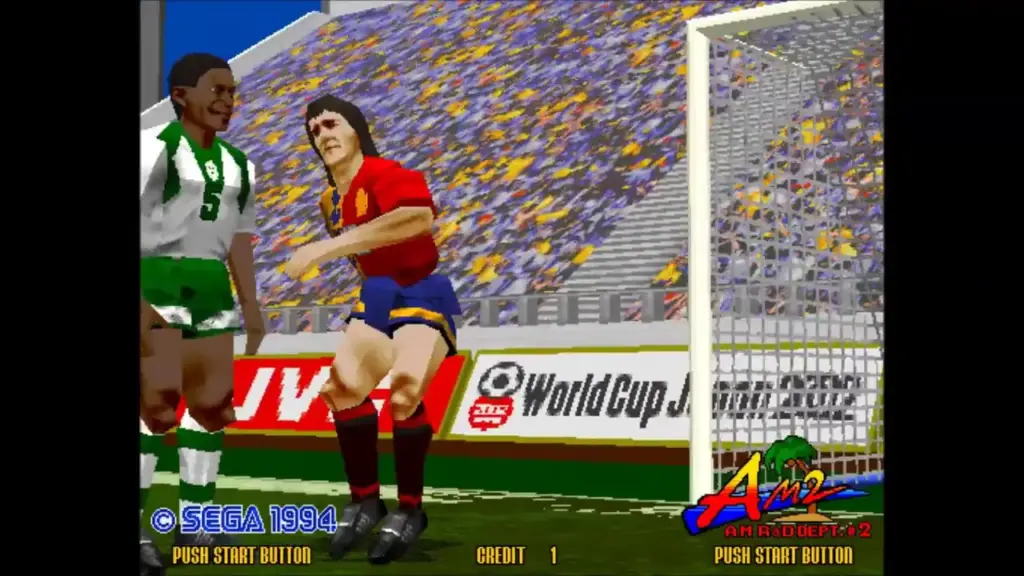
- Why It’s Legendary: First football video game with 3D player models
Arcade Brilliance
Developed by Sega’s legendary AM2 team (creators of Daytona USA and Virtua Fighter), Virtua Striker was a groundbreaking achievement that brought 3D graphics to football gaming for the first time ever.
Released exclusively in arcades, Virtua Striker prioritized fast-paced, exciting action over realistic simulation. The game featured international teams like Brazil, Italy, Germany, and England battling in intense 3D matches that looked stunning for 1994.
Gameplay That Still Holds Up
Despite being nearly 30 years old, Virtua Striker’s gameplay remains remarkably solid. The 3D graphics, while primitive by modern standards, were revolutionary at the time. Texture mapping created detailed player models and environments that genuinely impressed arcade-goers.
The controls were simple yet effective: a joystick and three buttons controlled everything from passes to shots to special moves. This accessibility made it perfect for quick arcade sessions while still offering enough depth to keep players feeding coins for hours.
Historical Significance
Virtua Striker proved that 3D football could work and feel authentic. Every 3D football game that followed, from FIFA to PES, owes something to Virtua Striker’s pioneering technology and design philosophy.
The series continued until 2006, maintaining popularity throughout its run, but the original 1994 release remains the most historically significant for changing football gaming forever.
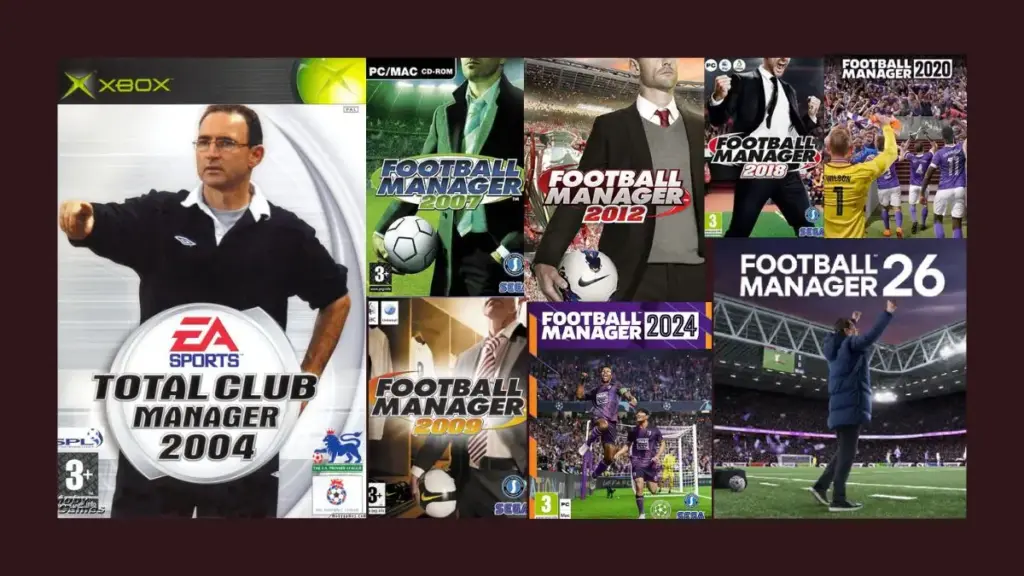
6. Football Manager Series (2004-Present)
- Developer: Sports Interactive
- Platforms: PC, Mac, Mobile, Consoles
- Why It’s Legendary: The definitive football management simulation
Where Soccer Gets Serious
Football Manager isn’t about playing matches—it’s about managing every aspect of running a football club. From tactics and training to transfers and team talks, this series offers unparalleled depth and complexity that makes it addictive for millions of players worldwide.
Incredible Tactical Depth
The tactical systems in Football Manager are extraordinary. You can create custom formations, devise intricate set-piece routines, adjust pressing triggers, and micromanage every aspect of your team’s playing style. Some players become genuine tactical revolutionaries; others expose themselves as complete frauds.
The database is staggering, containing hundreds of thousands of real players from leagues across the globe. Detailed attributes cover everything from first touch to leadership to adaptability to cold weather. You can scout players, negotiate contracts, manage team dynamics, and even handle press conferences.
Dynamic Squad Management
The squad dynamics modeling means upsetting too many players risks your job. Pitch condition at tiny non-league grounds matters. Training schedules, staff hiring, youth development—there’s essentially nothing you can’t control.
Want to take a lower league team from obscurity to glory? You can. The journey from managing a Sunday league club to competing in the Champions League final is entirely possible with skill, patience, and smart decision-making.
Cultural Impact
Football Manager has become more than a game—it’s a lifestyle. Players spend thousands of hours across multiple saves, developing genuine emotional connections to virtual players and clubs. The “one more match” syndrome is real, and many players have lost entire weekends (or months) to Football Manager.
For anyone who enjoys the strategic, managerial side of football more than playing matches, Football Manager is non-negotiable.
5. FIFA 12 (2011)
- Developer: EA Canada
- Platforms: PlayStation 3, Xbox 360, PC, and more
- Why It’s Legendary: The game that perfected modern FIFA
Revolutionary Impact Engine
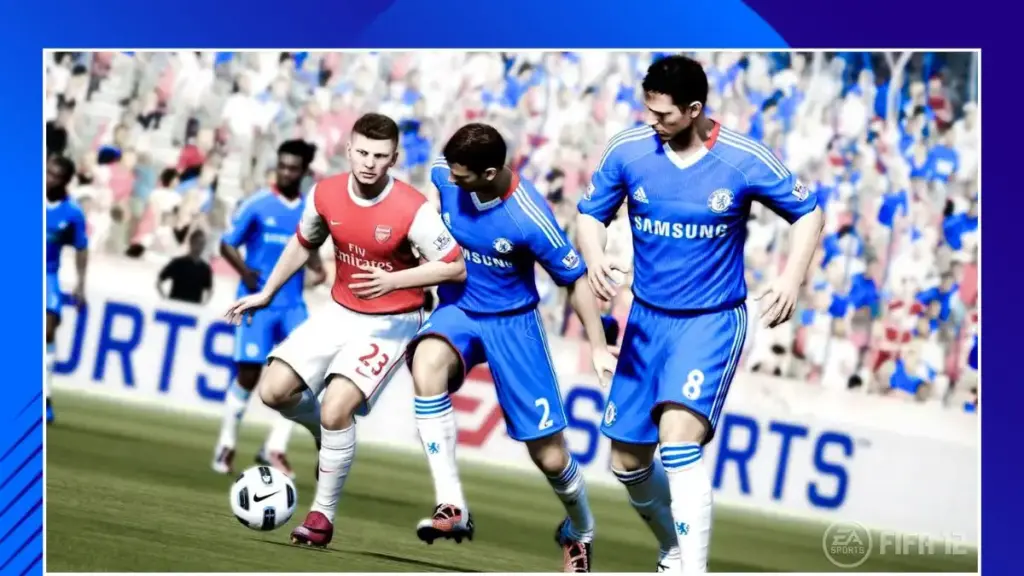
FIFA 12 introduced the franchise’s game-changing Impact Engine, delivering unprecedented realism through enhanced collisions, player interactions, and advanced movements. This wasn’t just incremental improvement—it was a fundamental reimagining of how football games could feel.
The Impact Engine created authentic physicality where player size, strength, and momentum mattered. Larger players dominated aerial battles and physical contests. Collisions looked and felt realistic, creating emergent gameplay moments that couldn’t be scripted.
Gameplay Excellence
Beyond the Impact Engine, FIFA 12 refined every aspect of the series. Dribbling felt responsive and precise. Passing had weight and required skill. Defending was tactical rather than automatic. The AI made intelligent runs and positioned themselves realistically.
The combination of these elements created arguably the most balanced and satisfying FIFA gameplay experience ever. Matches felt fair, competitive, and engaging whether playing against AI or human opponents.
Features and Modes
FIFA 12 offered comprehensive game modes including Career Mode, Ultimate Team, and online seasons. The soundtrack was eclectic and memorable, perfectly capturing the energy and diversity of global football culture.
Legacy
Many FIFA veterans still consider FIFA 12 the peak of the franchise before it became overly focused on Ultimate Team monetization. The gameplay was pure, the mechanics were refined, and the experience felt crafted for football fans rather than shareholders.
FIFA 12 strengthened EA’s dominance over Pro Evolution Soccer and set standards that the franchise has been trying to match ever since. For many, it represents the perfect balance between simulation realism and arcade fun.
4. International Superstar Soccer (1994) / ISS Pro Evolution (1999-2001)
- Developer: Konami
- Platforms: Super Nintendo, PlayStation
- Why It’s Legendary: The bridge between classic and modern football gaming
The Predecessor to PES
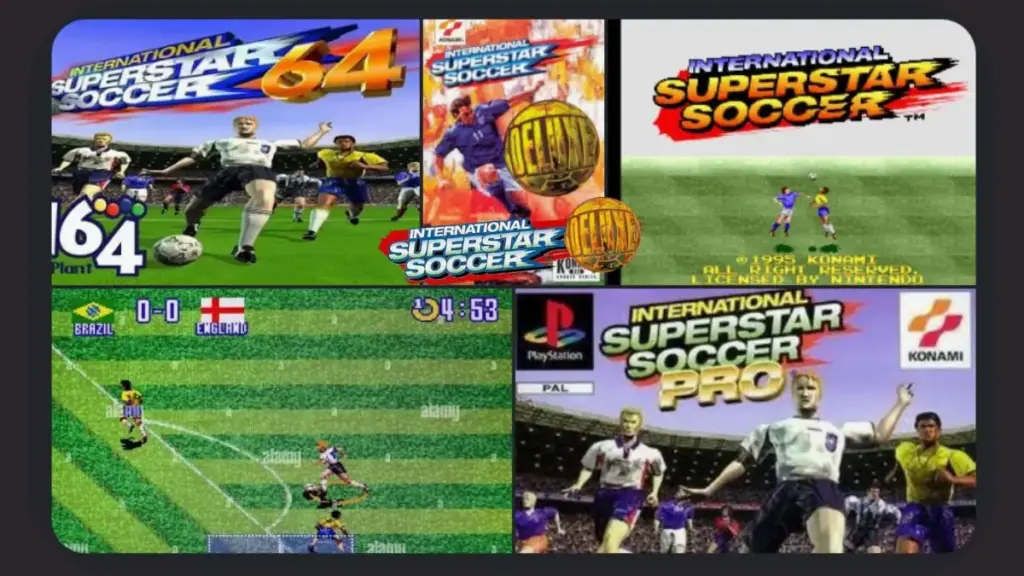
Before Pro Evolution Soccer became legendary, Konami created International Superstar Soccer for the Super Nintendo. This SNES classic represented a bridge between classic side-on football games and modern 3D simulations.
Stunning Innovation
ISS offered an incredible array of moves when various buttons were combined—feints, shoulder charges, volleys, and tricks that gave players unprecedented control. Visually, it was leagues beyond contemporary competitors like Match Day, featuring detailed player sprites and smooth animations.
The original ISS combined glossy presentation with clever gameplay mechanics, retaining an arcade sensibility during that brief period before sports titles became obsessed with pure simulation.
ISS Pro Evolution Era
When Konami transitioned to PlayStation, the series evolved into ISS Pro and ISS Pro Evolution, introducing 3D graphics while maintaining the tight, responsive gameplay that made the original special.
These PlayStation entries became cult classics in their own right, building the foundation for what would become Pro Evolution Soccer. The gameplay was fast, fun, and competitive—everything a football game should be.
Historical Bridge
ISS and its evolutions are crucial to football gaming history because they proved that games could be both technically impressive and incredibly fun to play. They demonstrated that realistic player movements, strategic depth, and arcade excitement weren’t mutually exclusive.
Every PES game owes its existence to the groundwork laid by ISS, making this series essential to understanding how modern football gaming evolved.
3. Sensible World of Soccer (1994)
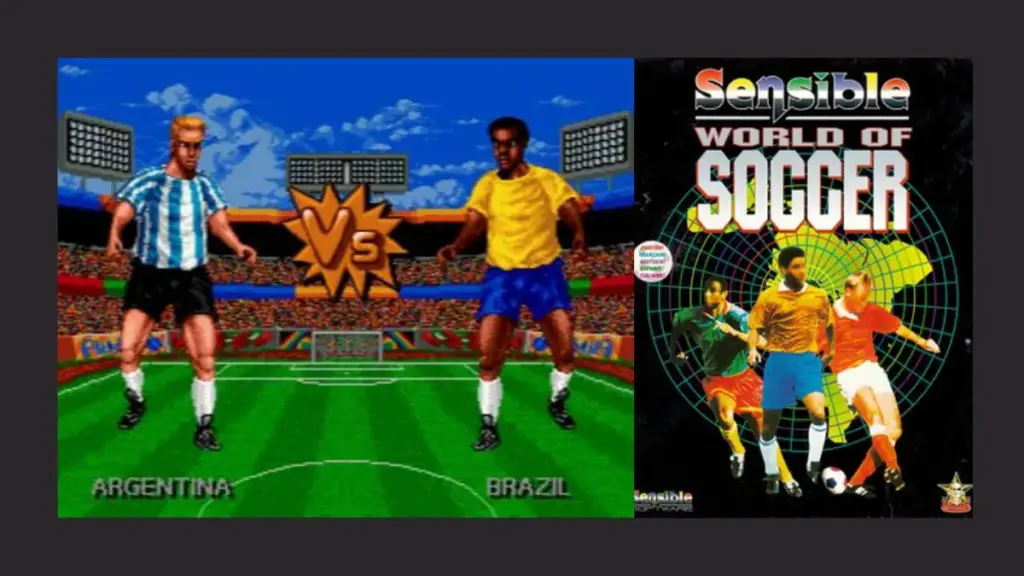
- Developer: Sensible Software
- Platforms: Amiga, PC, and more
- Why It’s Legendary: The game that changed football gaming forever
A Behemoth of Its Era
Sensible World of Soccer (SWOS) was a genuine phenomenon. The title featured over 1,500 clubs and 27,000 players from around the world—an absolutely staggering amount of content for 1994. This wasn’t just a football game; it was a comprehensive simulation of global football.
Revolutionary Career Mode
The career mode allowed players to guide a club through 20 complete seasons, managing transfers, tactics, and team development. You could start in the lower leagues and work your way to European glory, experiencing the full journey of building a football dynasty.
Every player had individual skills covering speed, tackling, heading, finishing, shooting, passing, and ball control. Player prices were calculated relative to their abilities, creating a realistic transfer market. Better clubs would offer you jobs based on your success, adding career progression and ambition.
Aftertouch Physics
What truly made SWOS timeless was its masterful ball physics. The aftertouch feature became legendary—unleashing a shot and applying late swerve to catch the goalkeeper off guard was incredibly satisfying. Modern mobile free-kick games still utilize this feature, proving its enduring brilliance.
Simple Yet Deep
Graphically, SWOS was simplistic with its top-down view, but it was bright, colorful, and perfectly suited to the gameplay. The arcade-style approach combined with comprehensive depth created an addictive experience that appealed to casual and hardcore players alike.
Historical Recognition
In 2007, The New York Times reported that SWOS was shortlisted as one of the ten most important video games of all time by Stanford University. It was the first game to encompass the world’s most popular sport into a single, comprehensive package.
To this day, a virtual World Cup is played annually on SWOS by dedicated fans who refuse to let this masterpiece fade into obscurity.
2. Pro Evolution Soccer 5 (2005)
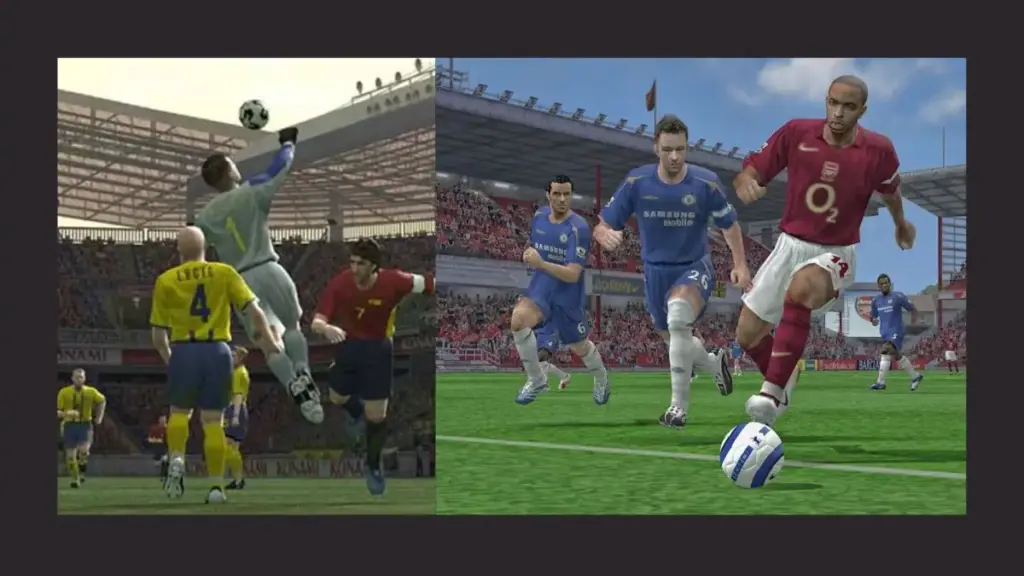
- Developer: Konami
- Platforms: PlayStation 2, Xbox, PC
- Why It’s Legendary: PES at its absolute peak
The Pinnacle of Konami’s Golden Era
Pro Evolution Soccer’s golden years from 2002-2006 saw Konami unleash multiple titles showcasing elite soccer game design, and PES 5 might represent the series’ absolute high point. This was Konami firing on all cylinders, creating a football experience so good it made FIFA look second-rate.
Master League Evolution
PES 5’s Master League evolved into a sophisticated four-division structure with a Champions League-style tournament included. For the first time, the game featured official player names alongside the classic unlicensed team names that PES fans had come to love (or tolerate).
Gameplay Perfection
The gameplay in PES 5 was incredibly smooth and deeply satisfying. Ball physics felt realistic, player movements were fluid, and every match had weight and drama. The game struck a perfect balance between simulation realism and arcade playability.
Passing required thought and precision. Shooting rewarded proper positioning and timing. Defending demanded skill and anticipation. Every element worked together to create football that felt authentic and challenging without being frustrating.
Tactical Depth
PES 5 offered genuine tactical variety. Different formations, playing styles, and strategies produced noticeably different results. You couldn’t just spam the same tactics repeatedly—opponents adapted, forcing you to think and adjust like a real manager.
The AI was intelligent and unpredictable, making single-player matches engaging and challenging. Players made realistic runs, positioned themselves intelligently, and reacted to situations dynamically rather than following rigid scripts.
Community and Legacy
Despite lacking official licenses for many teams (leading to gems like “West Midlands Village” for Aston Villa), PES 5 was the definitive football game for true fans in the mid-2000s. The community created option files to add real team names, kits, and logos, turning the licensing disadvantage into an opportunity for customization.
Many players still regard PES 5 as the best football game ever created, pointing to its perfect balance of realism, playability, and pure football joy. It represented Konami at their creative and technical peak before the series struggled during the PlayStation 3 era.
1. Pro Evolution Soccer 6 (2006)
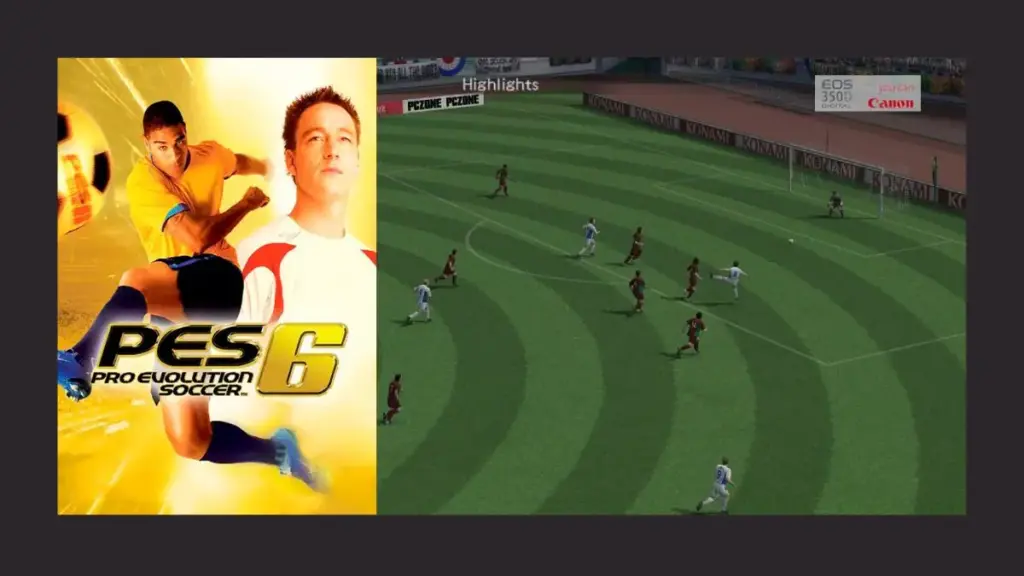
- Developer: Konami
- Platforms: PlayStation 2, Xbox 360, PC, PSP, Nintendo DS
- Why It’s Legendary: The greatest football video game ever made
The People’s Champion
Pro Evolution Soccer 6 isn’t just the best football game ever made—it’s one of the greatest sports games in video game history. Nearly 20 years after its release, PES 6 maintains an active online community, regular tournaments, and passionate devotees who refuse to accept that anything has surpassed it.
Perfect Timing, Perfect Execution
PES 6 arrived at the crossroads of two football generations. Luis Figo rubbed shoulders with Cristiano Ronaldo. Michael Owen’s peak had passed while Wayne Rooney emerged. A 19-year-old Lionel Messi shared the pitch with Ronaldinho at Barcelona. All these legends were accessible and beautifully recreated in PES 6.
Konami captured 2006 football perfectly—the squads, the playing styles, the global football landscape—at what many consider the sport’s modern golden era.
Gameplay That Stands the Test of Time
The gameplay in PES 6 achieved something extraordinary: perfect balance. It was fast-paced without feeling arcadey. It was realistic without being sluggish. Every match felt like a genuine contest where skill, tactics, and execution determined the winner.
Passing and Movement: Players moved intelligently off the ball, making runs into space and positioning themselves for passes. The passing system rewarded precision while allowing for creativity.
Shooting Mechanics: PES 6 became legendary for its shooting, particularly thanks to Inter Milan’s Adriano. His 99-shot power was justified by real-life form but completely broke the game in the best possible way. Thunderbolt strikes from distance became the stuff of controller-throwing legend.
Defending: Tackling felt meaningful, with timing and positioning crucial. Manual defending was challenging but rewarding, creating satisfaction when you perfectly read an opponent’s attack.
Physicality: Player size and strength mattered. Battles for the ball felt physical and realistic. The game captured football’s contact sport nature without becoming overly aggressive.
Presentation and Atmosphere
For a PlayStation 2 title, PES 6 created extraordinary atmosphere. Walking out at San Siro as Inter Milan, you’d see Zlatan Ibrahimovic, Patrick Vieira, and Adriano in the tunnel pre-match. The crowd reactions were ahead of their time—accurate supporter chants, flags, banners, horns, and even colored flares.
The celebrations had personality and variety, creating euphoric moments when you scored against your friend with a last-minute winner. The commentary, while limited by today’s standards, was enthusiastic and added to the excitement.
Attention to Detail
Konami’s attention to detail separated PES 6 from competitors:
- Customizable pitch conditions, weather, and stadium settings
- Referee selection before matches
- Stadium attendance options
- Supporter stance customization
- Two-legged fixtures with away goals rules
- International Challenge Mode allowing players to guide nations through qualifiers
These weren’t revolutionary features individually, but together they created a comprehensive football experience that felt complete and polished.
Master League Magic
The Master League mode offered deep career management where you built a team from nothing to European dominance. Scouting players, negotiating transfers, developing youth prospects, and managing team chemistry created addictive long-term gameplay.
The satisfaction of taking a lower-tier team and transforming them into champions through smart recruitment and tactical evolution was immensely rewarding.
The Modding Community
What truly elevated PES 6 from great to legendary was the passionate modding community. Despite lacking official licenses for many teams, fans created option files adding real names, kits, stadiums, and even modern player updates.
Nearly 20 years later, the community remains active. Updated rosters bring current players into the game. Custom patches add new features. Online servers like pes6.es keep multiplayer alive when official support ended long ago.
Why It Remains #1
PES 6 treats football as a strategic chess match rather than a flashy one-man show. While graphics aren’t impressive by modern standards (it’s essentially a polished PS2 title in HD on Xbox 360), the gameplay oozes pure love for the beautiful game.
No microtransactions. No Ultimate Team card packs. No artificial hype cycles. Just exceptional football gaming focused entirely on the sport itself.
Players who revisit PES 6 today are consistently surprised by how much joy it still brings. The gameplay hasn’t aged because it was never about graphics or presentation—it was about capturing football’s essence perfectly.
The Ultimate Legacy
When experts, fans, and critics compile lists of the greatest football games, PES 6 consistently appears at or near the top. It’s been called “the people’s football game” because it represented the last time a major football title felt made purely for fans rather than shareholders.
FIFA eventually caught up with licenses, modes, and commercial success, but many argue they’ve never captured the pure football magic that Konami achieved with PES 6. It was lightning in a bottle—the perfect combination of timing, talent, technology, and passion.
For anyone who loves football and video games, PES 6 is essential. Whether you experience it through original hardware, emulation, or modern PCs, you owe it to yourself to understand why this remains the gold standard against which all football games are measured.
Honorable Mentions
Several legendary titles nearly made this top 10:
- FIFA 99 – Introduced The Rockafeller Skank and created iconic FIFA soundtracks
- FIFA 10 – Solid gameplay and 360-degree dribbling innovation
- Championship Manager 2001/02 – The ultimate football management experience before Football Manager
- FIFA Street (2012) – Perfected five-a-side panna football on PS3
- PES 2017 – The last time PES genuinely rivaled FIFA
- Kick Off 2 – Revolutionary gameplay that influenced Sensible Soccer
- New Star Soccer – Mobile gaming’s best football RPG hybrid