France and Germany are exploring a joint bid to host the FIFA World Cup in either 2038 or 2042, according to multiple reports. The potential partnership comes as FIFA continues discussions about expanding the tournament to 64 teams, a move that would make co-hosting more practical and attractive.
French newspaper Le Parisien first reported the development, stating that officials from both countries are in early talks about a combined bid. With the 2030 and 2034 tournaments already allocated, the two European powerhouses are positioning themselves for the next available editions.
Key Details from the Reports of World Cup 2038 or 2042 Joint Bid
France has been advised in a recent report to consider bidding for the 2038 FIFA World Cup, with a possible joint bid alongside Germany suggested to improve chances and reduce environmental impact.
Germany is separately exploring a bid for 2038 or (more likely) 2042. There is no confirmed formal joint bid or agreement yet.
A 118-page report by the French association Territoires d’événements sportifs (TES) — commissioned in late 2024 and delivered around June 23, 2026, to Sports Minister Marina Ferrari — recommends that France pursue hosting rights for several major events:
- Women’s Euro 2033
- Men’s Euro 2036
- Men’s World Cup 2038
- Possibly a FIFA Club World Cup edition in 2033 or 2037
The report highlights France’s strong infrastructure and ability to host a large (48-team) tournament largely on its own, which could also drive modernization of stadiums (similar to the legacy of Euro 2016). It notes a relative shortage of strong candidates given FIFA’s growing demands.
To maximize success and limit the carbon footprint of a bigger tournament, the report specifically suggests partnering with another European country such as Germany.
Germany’s Separate Interest
The German Football Association (DFB) has been discussing a potential bid for 2038 or 2042. In early June 2026, DFB President Bernd Neuendorf presented preliminary ideas to the German Football League (DFL) leadership.
Plans involve around 14 stadiums with a minimum capacity of 40,000 (including Euro 2024 venues plus others like Bremen, Kaiserslautern, Mönchengladbach, and Hanover). No final decision has been made, and discussions remain open.
Due to FIFA’s continental rotation principles (a confederation typically sits out after hosting), Europe is widely expected to be more eligible for 2042 than 2038, following the multi-nation 2030 tournament (mainly Spain, Portugal, and Morocco, plus opening matches in South America).
Why a Joint Bid Makes Sense
The idea of a France-Germany collaboration has gained momentum for several reasons:
- Infrastructure: Both nations already possess a large number of high-quality stadiums. Germany alone has more than a dozen venues with capacities above 40,000, while France has modern facilities from previous major tournaments.
- Experience: France successfully hosted the 1998 World Cup, and Germany delivered a highly regarded tournament in 2006. A joint bid would combine that proven expertise.
- 64-Team Expansion: FIFA President Gianni Infantino has confirmed that expanding the World Cup to 64 teams is under serious consideration. A larger tournament would require more venues and greater logistical capacity, making multi-nation hosting more viable.
A 64-team World Cup would feature 16 groups of four and significantly more matches than the current 48-team format. Sharing the load between two neighbouring countries with excellent transport links could ease the burden on any single host.
64-Team Expansion Context
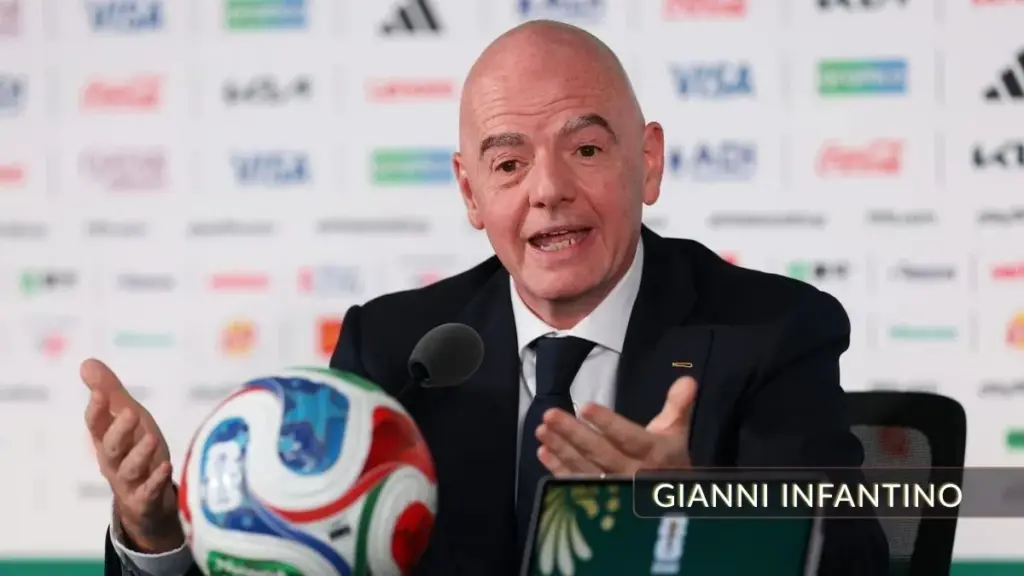
FIFA is considering expanding the World Cup beyond the upcoming 48-team format set for 2026, possibly to 64 teams as early as 2030. President Gianni Infantino has said the idea will be discussed in committees after the 2026 tournament.
Proposed by CONMEBOL, the expansion would bring bigger logistical challenges, with more matches, stadiums, and travel. While it’s not the main reason behind the France/Germany talks, it does help explain the focus on larger, multi-nation, or highly prepared hosts.
Timing and Context
The 2030 World Cup is already set for Spain, Portugal and Morocco (with centenary matches in Uruguay, Argentina and Paraguay). The 2034 edition is expected to go to another confederation under FIFA’s rotation principles. This leaves 2038 and 2042 as the next realistic opportunities for a major European bid.
Officials from the French Football Federation (FFF) and the German Football Association (DFB) have not yet made formal announcements, but sources indicate that preliminary discussions are underway. Political support in both countries appears favourable, given the economic and soft-power benefits of hosting the world’s biggest sporting event.
Current Status
- No formal joint France-Germany bid has been announced or agreed.
- The French report is advisory and does not constitute an official candidacy.
- Germany is in exploratory talks, with political support (e.g., from the CDU for a 2042 focus).
- Other potential interest exists (e.g., the United States has floated a 2038 bid, citing capacity for a possible 64-team event).
These developments come as the 2026 FIFA World Cup (hosted by the US, Canada, and Mexico) concludes and attention turns to future hosting cycles after 2030 and the already-awarded 2034 tournament in Saudi Arabia. Official bidding processes for 2038 have not yet opened.
Potential Benefits and Challenges
A France-Germany World Cup would offer several advantages:
- Strong commercial appeal across two of Europe’s largest economies
- High-quality fan experience with excellent stadiums and infrastructure
- Symbolic value as two historic football nations coming together
However, challenges remain. FIFA’s bidding process is highly competitive, and other regions — including potential bids from Asia, Africa or the Americas — will also be in the running. Coordination between two governments and federations would also require careful planning on issues such as revenue sharing, security and transport.
What Happens Next?
No formal bid has been submitted yet. FIFA is expected to open the bidding process for 2038 and 2042 in the coming years. Until then, France and Germany will continue exploratory talks while monitoring the progress of the 64-team expansion discussions.
If the two nations do decide to move forward together, it would mark one of the most significant joint European bids in World Cup history — and a potential return of the tournament to the continent after the multi-nation 2030 edition.
Football fans across Europe will be watching closely as these early discussions develop.