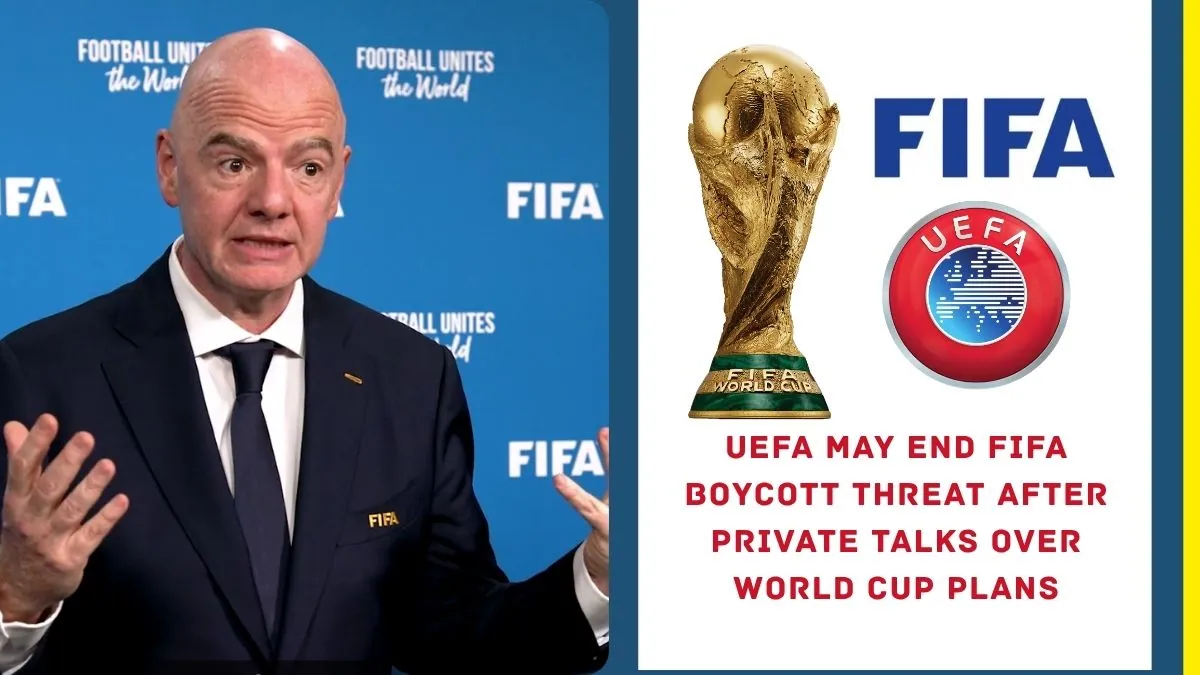
UEFA is preparing to officially retract its threat to boycott FIFA competitions after private discussions that confirmed the controversial plan to sell stakes in the FIFA World Cup will not be pursued again. The governing body of European football is expected to formalize this decision at a meeting of its executive committee and member association presidents in Monaco on Thursday.
The move would mark a significant de-escalation in one of the most serious governance crises in modern football, while still leaving FIFA president Gianni Infantino under intense pressure.
Background to the FIFA Boycott Threat
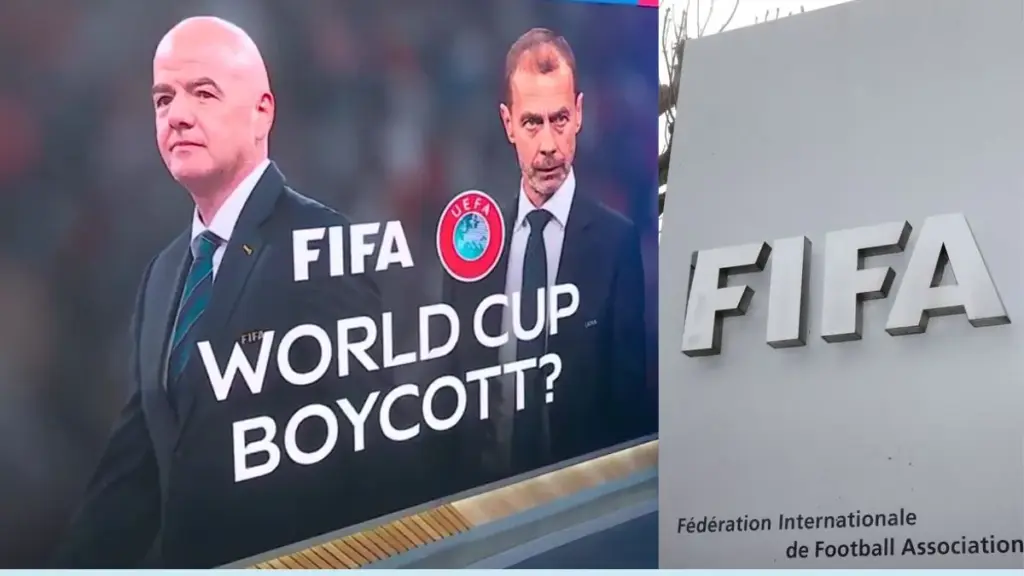
In late July, details emerged of FIFA’s plan to create a new commercial subsidiary known as FIFA Forward Enterprise (FFE). The proposal envisaged selling a minority stake — reported at around 20% — to private investors, with the entity valued in the region of $20 billion. FIFA argued the move would generate substantial funds for development programmes across its 211 member associations.
The reaction was swift and fierce. UEFA, backed by its 55 member associations, rejected the idea outright, describing the World Cup as “not for sale” and an asset that should never be opened to private ownership. CONCACAF and the Asian Football Confederation (AFC) joined the opposition.
UEFA announced that its members would not participate in any FIFA competitions until the proposal was fully withdrawn and binding assurances were given that similar plans would never return.
FIFA abandoned the FFE project days later and issued an apology for the way it had been handled. However, UEFA maintained that the second condition — a clear guarantee against any future attempt — had not been met, leaving the boycott threat in place.
Private Talks Deliver Assurances
Despite public tension, UEFA and FIFA engaged in private discussions over several weeks. According to multiple reports, those talks produced the concrete guarantees UEFA required: that no equivalent privatisation scheme involving the World Cup or other major FIFA competitions would be attempted again.
Sources familiar with the situation say UEFA officials will inform the Monaco meeting that both original conditions for lifting the boycott have now been satisfied. One source described the decision as pragmatic rather than a retreat: “It is not a UEFA defeat, rather the reality of avoiding hurting young players [over a] once-in-a-lifetime opportunity. The actions and insistence on change will continue and will win out in the end.”
Immediate Impact: Under-20 Women’s World Cup Saved
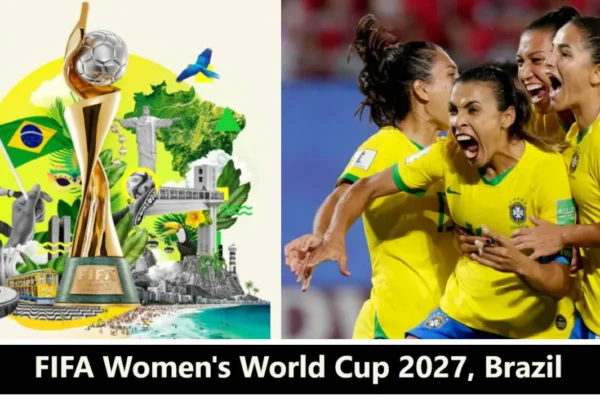
The most immediate practical consequence concerns the FIFA Under-20 Women’s World Cup, which is scheduled to begin on 5 September in Poland. Six European teams — England, France, Italy, Portugal, Spain and hosts Poland — are due to take part. Lifting the boycott threat clears the way for those squads to travel and compete without disruption.
FIFA has welcomed the development, stating it looks forward to welcoming all qualified teams to the tournament and emphasising football’s power to unite.
Pressure on Infantino Continues
While the competitive boycott appears set to end, UEFA’s broader campaign against Infantino’s leadership is expected to intensify. European officials have made clear they still hold the FIFA president responsible for the original proposal and the manner in which it was developed with limited consultation.
UEFA president Aleksander Čeferin and other senior figures have previously called for accountability, and discussions in Monaco are expected to include updates on efforts to challenge Infantino’s position ahead of the next FIFA presidential election. European Leagues president Claudius Schäfer has publicly stated that Infantino has “no future at FIFA,” arguing that deeper structural reform of the organisation is required.
What Happens Next
Thursday’s meeting in Monaco, held ahead of the Champions League draw, is expected to confirm the formal withdrawal of the boycott threat. Once that step is taken, European national teams will resume full participation in the FIFA calendar.
The episode has exposed deep divisions between FIFA’s leadership and several major confederations. Although the immediate crisis over tournament participation is likely to ease, questions about governance, transparency and the concentration of power at the top of world football remain unresolved.
For now, the focus shifts from boycott politics back to the pitch — starting with the young players preparing for the Under-20 Women’s World Cup. Behind the scenes, however, the campaign for lasting change at FIFA is far from over.