
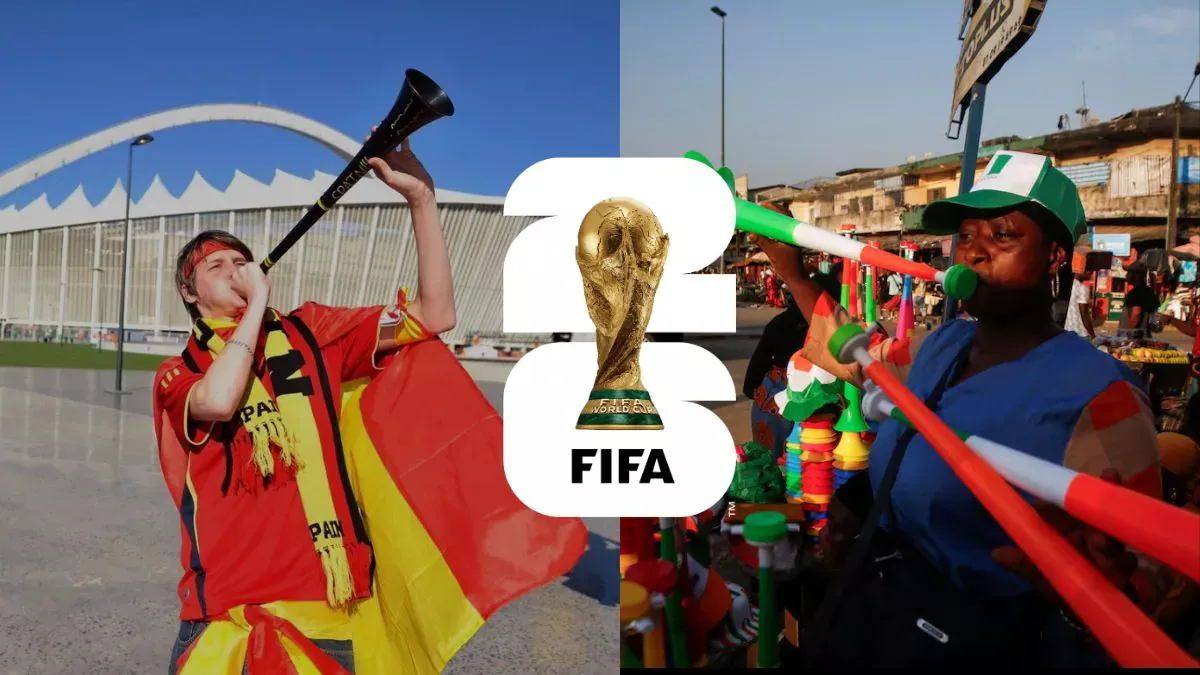
Just days before the 2026 FIFA World Cup kicks off, FIFA bans vuvuzelas from all 16 stadiums across the United States, Canada, and Mexico. The plastic horns, which became a global symbol during the 2010 World Cup in South Africa, have been added to the list of prohibited items under the tournament’s new Stadium Code of Conduct.
Fans attempting to bring vuvuzelas, air horns, or whistles into any World Cup venue will have them confiscated at the gates. The ban also covers other excessive noise-making devices, with security teams enforcing strict checks from the opening match on June 11.
Why FIFA bans vuvuzelas from 2026 World Cup Stadiums
Here, you need to know facts about why FIFA bans vuvuzelas and other items at the 2026 World Cup venue.
FIFA says the decision is part of a broader effort to improve the matchday experience for players, broadcasters, and fans. The constant drone of vuvuzelas during South Africa 2010 drew heavy criticism from players, coaches, and TV commentators, who struggled to communicate and hear each other.
The governing body has classified vuvuzelas under “excessive noise instruments,” alongside air horns and bullhorns. The move comes alongside new on-pitch rules aimed at reducing time-wasting, with FIFA wanting a cleaner, more professional atmosphere inside stadiums.
The truth behind the ban is rooted in a major update to FIFA’s 35-page Stadium Code of Conduct, which enforces strict new guidelines regarding safety, broadcast quality, and crowd control.
Other items now banned or restricted include:
- Whistles and air horns (Excessive Noise Disruption)
- Laser pointers
- Musical instruments larger than 12 cm (without prior approval)
- Certain types of flags and banners in some cases
- Communication Obstacles
Mixed Reactions from Vuvuzela Fans after being restricted from all World Cup Stadiums
The ban has sparked strong reactions, especially among South African and African football supporters who see the vuvuzela as a proud part of their football culture. Many fans expressed disappointment after being restricted from all World Cup Stadiums, calling it the end of an era and questioning whether FIFA is trying to “Europeanise” the World Cup atmosphere.
Others, however, welcomed the decision. Many viewers who watched the 2010 tournament on television remember the overwhelming noise that made commentary difficult and matches less enjoyable to follow from home.
What Can Fans Bring Instead?
While vuvuzelas are out, FIFA has confirmed that traditional chanting, singing, and drumming will still be allowed. Supporters are encouraged to create atmosphere through voices and approved instruments rather than plastic horns.
Security will be strict at all venues, and fans are advised to check the official prohibited items list on FIFA’s website before traveling to matches.
The 2026 World Cup is now just six days away, and this latest rule has added another talking point ahead of what promises to be the biggest tournament in football history.
What do you think about the vuvuzela ban? Should FIFA have allowed them or was it the right call? Share your thoughts in the comments below!