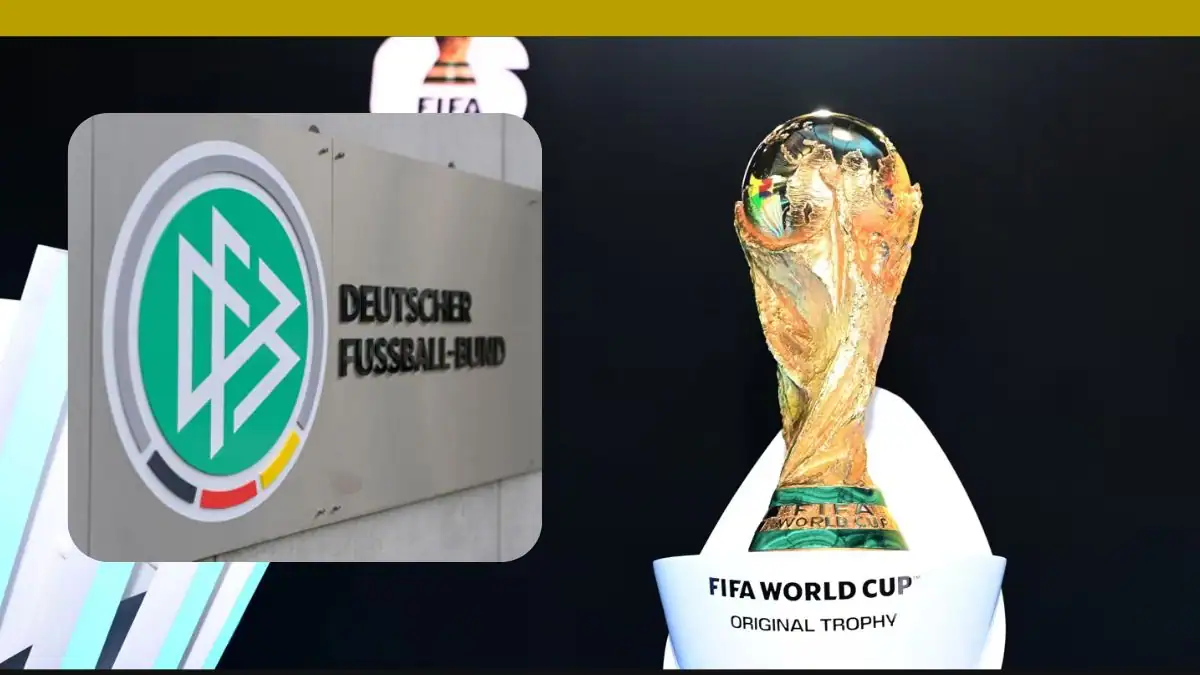
In a decisive move amid growing international tensions, the German Football Association (DFB) has firmly rejected calls for a boycott of the upcoming 2026 FIFA World Cup, co-hosted by the United States, Canada, and Mexico.
The announcement comes just days after internal voices, including DFB vice-president Oke Göttlich, urged the federation to consider pulling out as a protest against U.S. President Donald Trump’s policies and statements.
In recent months, several boycott stories have emerged from African countries, highlighting growing discontent with global football governance. Former FIFA president Sepp Blatter, along with major European nations such as France and Germany, also became part of these boycotts, signaling a wider international protest movement.
This wave of boycotts has raised serious concerns about unity within world football and the credibility of upcoming tournaments. Meanwhile, in a separate development, 16,800 World Cup tickets were canceled due to Trump’s controversial policies, further intensifying debates around politics interfering with sports.
Together, these incidents reflect how football, often seen as a unifying global sport, is increasingly being shaped by political decisions and international disputes.
The 2026 FIFA World Cup is set to kick off on June 11, 2026, and the DFB emphasized the “unifying power of sport” and its commitment to participation, signaling that Die Mannschaft will compete as planned.
2026 FIFA World Cup Boycott Background: Calls for Boycott Emerge

The controversy ignited last week when Oke Göttlich, who also serves as president of Bundesliga club St. Pauli, publicly advocated for a “serious consideration” of boycotting the World Cup.
Citing Trump’s recent actions—potentially including immigration policies, international relations stances, or other divisive measures—Göttlich argued that Germany’s participation could send the wrong message.
This echoed similar sentiments in the Netherlands, where a petition garnered thousands of signatures urging the Dutch FA to withdraw, prompting an official response affirming their intent to compete.
Göttlich’s proposal gained traction during a German Football League (DFL) meeting, where DFB President Bernd Neuendorf was directly questioned on the matter. However, the federation quickly convened its executive committee to deliberate, ultimately dismissing the idea.
DFB’s Official Stance
In a statement released on January 30, 2026, the DFB clarified: “We believe in the unifying power of sport and the global impact that a FIFA World Cup can have. Our goal is to strengthen this positive force—not to prevent it.”
The federation explicitly stated that a boycott “is not currently under consideration,” while noting ongoing consultations with representatives from politics, security, business, and sports to ensure smooth preparations for the event.
DFB President Neuendorf reiterated this position, highlighting the tournament’s potential to bridge divides during challenging times. “The World Cup has the power to unite people,” he said, aligning with broader sentiments that sports should transcend political disputes.
Broader Context and Reactions
The 2026 World Cup, expanded to 48 teams, marks the first time the event spans three nations, with the U.S. hosting the majority of matches, including key games in cities like Houston.
Trump’s re-election in 2024 and subsequent policies have sparked global debates, including concerns over security, visas for teams and fans, and the event’s overall atmosphere.
Internationally, reactions have been mixed. Some fans and activists support the boycott calls, viewing participation as implicit endorsement of controversial U.S. policies. Others, including FIFA officials, have downplayed the idea, stressing the apolitical nature of the sport.
Notably, Trump himself has commented on related issues, such as suggesting Russia’s potential participation as an “incentive” to end the Ukraine conflict, adding fuel to the geopolitical fire.
In Germany, social media and fan forums are abuzz, with some expressing disappointment over the DFB’s decision. However, the federation’s focus remains on sporting excellence— Germany, four-time World Cup winners, are among the favorites to lift the trophy.
What’s Next for Germany and the World Cup?
With the boycott off the table, the DFB shifts gears to tournament prep. Germany is drawn in Group A, opening against Canada on June 12 in Toronto. The team, under coach Julian Nagelsmann, will aim to build on their strong Euro 2024 showing.
FIFA has yet to comment directly on the boycott discussions, but the organization continues to promote the event as a celebration of global unity. As the countdown to June 11 continues, this episode underscores the intersection of sports and politics, but for now, Germany is all in.