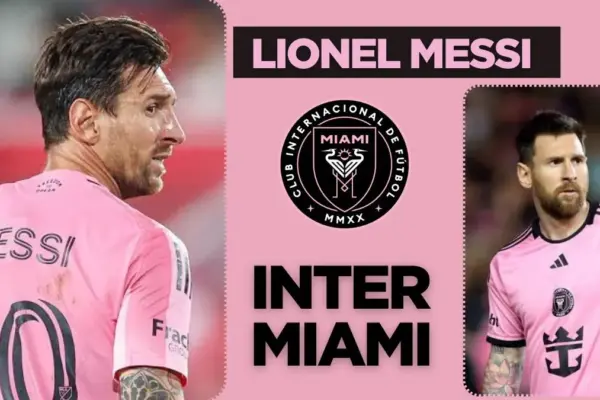
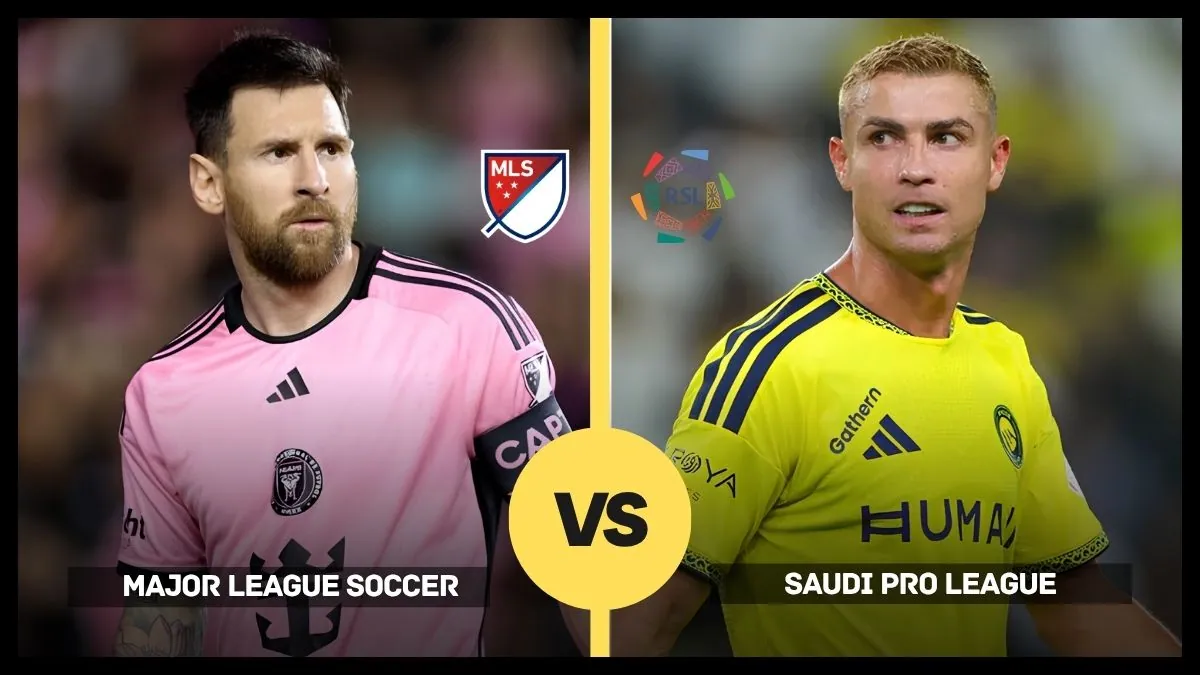
The debate surrounding MLS vs Saudi Pro League has ignited one of the most intense discussions in modern Soccer. As both competitions attract world-class legends, prime-age international stars, and unprecedented global viewership, players and analysts often debate which competition is tougher on the pitch.
Assessing the challenge of a football league means looking beyond just the big-name players. True sporting challenge comes from competitive parity, roster rules, physical travel demands, tactical intensity, and environmental conditions.
In 2026, both leagues rank among the top 10 globally and are some of the most searched leagues worldwide. Explore how MLS and the Saudi Pro League compare, with a detailed look at roster depth, travel fatigue, climate extremes, and parity between the two competitions.
Head-to-Head Comparison: MLS vs Saudi Pro League
| Comparison Metric | Major League Soccer (MLS) | Saudi Pro League (SPL) | Harder Challenge Edge |
| Competitive Parity | Strict salary cap & Designated Player (DP) rules; extreme unpredictability | Top-heavy; sovereign fund (PIF) concentration in the “Big Four” | MLS (Higher parity) |
| Top-End Star Quality | High-profile veterans & select prime stars (Messi, Son, Griezmann) | Concentrated elite individual star power across top clubs | Saudi Pro League |
| Travel & Logistics | Transcontinental flights across 4 time zones; 3,000+ mile away trips | Compact domestic travel; short domestic flight routes | MLS (Severe travel strain) |
| Athleticism & Pace | High-pressing, transitional, physically relentless style | Technical, possession-heavy, slower-paced build-ups | MLS (Physical intensity) |
| Playing Conditions | Mix of extreme heat, freezing cold, altitude, and artificial turf | Intense desert heat; match fixtures predominantly played at night | Draw (Different extremes) |
| Roster Depth Balance | High domestic baseline; balanced depth through league mechanisms | Steep quality drop-off between foreign stars and local players | MLS (Balanced squads) |
Competitive Balance and Depth
This is where the clearest difference appears.
MLS operates under a salary-cap system that promotes parity. Data analyses (including those examining Club World Cup performances and league-wide quality metrics) consistently show MLS has one of the lowest spreads in team quality among major leagues. Most matches are competitive, and there are fewer guaranteed “easy” games.
The Saudi Pro League, by contrast, is highly unequal. A small group of Public Investment Fund (PIF)-backed clubs — led by Al-Hilal — sit well above the rest. Rankings of individual clubs often place Al-Hilal in the range of mid-table European sides, while many other Saudi teams rank far lower.
This creates a league with a high ceiling at the top but a much lower floor. Winning the title may require beating the strongest sides, but maintaining consistency against the bottom half is generally less demanding than in MLS.
League Rankings (2026 MLS vs Saudi Pro League)
Different ranking systems produce varying results, but several recent performance-based models place MLS ahead of the Saudi Pro League in overall league strength:
- Some global rating systems rank MLS inside or near the world’s top 10–20 and the Saudi Pro League significantly lower (around 30–40th).
- Opta-style power rankings that average team strength across an entire league also tend to favor MLS due to greater depth.
- Older or different methodologies (such as certain IFFHS rankings) have occasionally ranked the Saudi league higher, often weighting top-club results or other factors more heavily.
The consistent theme across multiple analyses is that MLS has better competitive depth, while Saudi strength is concentrated in a handful of clubs.
Top Clubs – MLS vs Saudi Pro League
Major League Soccer (MLS) – Top Clubs
- Inter Miami CF: The most globally recognized MLS franchise, powered by Lionel Messi, Luis Suárez, Sergio Busquets, and Jordi Alba.
- Los Angeles FC (LAFC): Perennial title contenders known for high-tempo attacking football and marquee signings like Olivier Giroud and Denis Bouanga.
- Columbus Crew: One of the most tactically sophisticated teams in North America, consistently competing for MLS Cups and Leagues Cup honors.
- LA Galaxy: The most decorated club in MLS history (5-time champions), featuring stars like Riqui Puig and Marco Reus.
- Seattle Sounders: Known for organizational consistency, CONCACAF Champions Cup pedigree, and one of the most passionate fanbases in the league.
Saudi Pro League (SPL) – Top Clubs
- Al-Hilal: The most successful and dominant club in Asian football history, featuring a world-class core with Aleksandar Mitrović, Rúben Neves, Sergej Milinković-Savić, and Neymar.
- Al-Nassr: The global face of the league’s modern era, led by Cristiano Ronaldo, Sadio Mané, Aymeric Laporte, and Marcelo Brozović.
- Al-Ittihad: Jeddah’s historic powerhouse, spearheaded by Karim Benzema, N’Golo Kanté, Fabinho, Moussa Diaby, and Youssef En-Nesyri.
- Al-Ahli: An elite attacking side featuring Riyad Mahrez, Roberto Firmino, Franck Kessié, and Gabri Veiga.
- Al-Qadsiah: The rapidly rising force backed by Aramco, boasting marquee international signings including Nacho Fernández and Pierre-Emerick Aubameyang.
Tactical Styles: Physical Pressing vs. Technical Individualism
The stylistic identity of both leagues shapes the nature of the challenge on the pitch:
- MLS (Transition and Athletic Engine): North American soccer is characterized by aggressive counter-pressing, dynamic transitions, and relentless box-to-box running. Younger designated players and South American imports bring relentless energy, requiring players to maintain elite cardiovascular endurance over 90 minutes.
- Saudi Pro League (Technical Quality and Space Management): The SPL is played at a more deliberate, tactical tempo. Matches often hinge on individual brilliance in tight spaces. Defending against top-level foreign forwards requires disciplined positioning and elite individual 1v1 defensive ability rather than pure high-pressing stamina.
Star Power vs Squad Depth

The Saudi Pro League initially surged with big-money signings (Cristiano Ronaldo, João Félix, Karim Benzema, Sadio Mané, Rúben Neves and others). However, several high-profile players have already departed early, and the league continues to rely heavily on a small number of elite or former-elite names.
MLS has also recruited major stars (most notably Lionel Messi, Rodrigo De Paul at Inter Miami, along with Antoine Griezmann, Robert Lewandowski, Son Heung-min, Thomas Müller, and other established internationals). Critically, the supporting casts and mid-tier squads in MLS are generally stronger and more balanced.
National-team call-ups and the broader distribution of quality players further support the view that MLS fields more competitive lineups across the board.
Style of Challenge
- Saudi Pro League: High peaks against the top clubs, physical and technical demands against elite imports, but more variation in match difficulty. Travel and climate add their own challenges.
- MLS: Greater week-to-week consistency. Travel across a vast country, different playing surfaces and climates, and the need to perform against well-organized, competitive sides almost every matchday. The salary-cap structure forces clubs to build balanced squads rather than relying on a few superstars.
Players and analysts who have experienced both environments often note that the “grind” of MLS — fewer free points and higher average opposition quality — makes it feel more consistently demanding.
The Final Verdict: Which League Is More Challenging?

Determining which competition is more challenging depends on how “challenge” is measured between MLS vs Saudi Pro League:
- For Overall Physical and League Endurance: MLS is more challenging. The combination of strict parity, cross-country travel, varied playing surfaces, and high-intensity pressing makes every single fixture an unpredictable physical and tactical grind.
- For Top-End Quality at the Summit: The Saudi Pro League is more challenging. Facing the concentrated quality of the Big Four requires navigating world-class individual attacking talent that rivals upper-tier European clubs.
For a player seeking week-in, week-out unpredictability where no fixture is easy, Major League Soccer represents the more grueling overall tournament. For a player competing purely against world-class individual star power at the top of the table, the Saudi Pro League presents the higher ceiling.
Is MLS harder to play in than the Saudi Pro League?
MLS is physically harder due to extensive multi-time-zone travel, extreme climate swings, artificial turf surfaces, and parity rules that make every match competitive. However, the top clubs in the Saudi Pro League feature higher individual star talent.
Why does MLS have more competitive parity than the Saudi Pro League?
MLS uses a strict salary cap, roster spending rules, and the Designated Player rule to prevent financial monopolization. The Saudi Pro League concentrates massive state investment primarily into four marquee clubs, creating a wider gap between top and bottom teams.
How does travel impact players in MLS compared to Saudi Arabia?
MLS clubs routinely travel thousands of miles across four time zones for domestic matches, leading to heavy fatigue. Saudi Pro League travel is geographically compact, resulting in shorter flights and faster physical recovery times.
Which league features a higher tactical tempo?
MLS matches are played at a faster, transition-heavy, high-pressing tempo, while Saudi Pro League fixtures are generally played at a more measured, technical pace due to regional climate conditions.