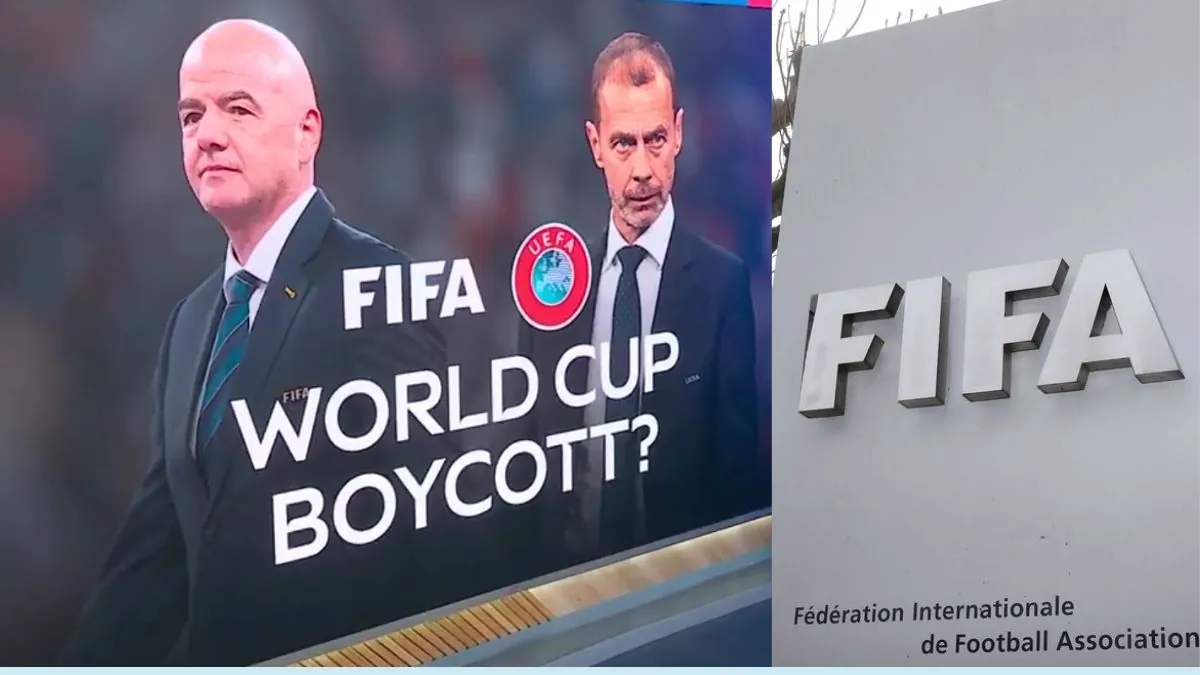
UEFA World Cup boycott discussions have intensified after FIFA unveiled its controversial $20 billion FIFA Forward Enterprise proposal. European football’s governing body is preparing an emergency meeting with its 55 member associations to discuss opposition to FIFA’s commercial restructuring, with a potential World Cup boycott among the options being considered.
The dispute centers on FIFA’s newly announced FIFA Forward Enterprise (FFE), a proposed commercial subsidiary valued at approximately $20 billion that would consolidate the organization’s commercial and event operations, including the men’s and women’s World Cups and the Club World Cup.
Why UEFA World Cup Boycott and Oppose FIFA Forward Enterprise?
UEFA is considering a historic World Cup boycott to stop FIFA from selling equity stakes in the tournament to private investors via its new “FIFA Forward Enterprise” (FFE). The European football governing body argues that commercializing the sport’s premier competitions “crosses a line that football’s governing institutions should never cross”.
- FIFA wants to create FIFA Forward Enterprise.
- Valuation around $20 billion.
- Up to 20% minority stake sold to investors.
- FIFA says governance remains under its control.
- UEFA says football is “not FIFA’s to sell.”
FIFA’s Ambitious $20 Billion Plan
FIFA President Gianni Infantino confirmed the initiative on July 28, 2026, describing it as a way to “unleash the commercial potential and opportunity that FIFA has” and to “democratize” funding for the global game.
Under the proposal, FIFA would create FFE as a wholly owned subsidiary and sell minority, non-controlling stakes (reportedly up to around 20–21%) to carefully selected long-term private investors. This is expected to raise up to $4.2 billion later this year.
Key elements include:
- Advisers: JPMorgan is working with FIFA on the structure.
- Potential investors: Thrive Eternal, a fund launched by Joshua Kushner (brother of Jared Kushner, son-in-law of U.S. President Donald Trump), has been linked as a possible lead or key investor.
- Control: FIFA insists it would retain sole control over football governance, the international match calendar, competitions, and all regulatory and sporting decisions. Investors would hold non-controlling interests, with all net benefits reinvested into the game worldwide.
- Funding boost: Member associations would see development funding rise significantly — from the current $8 million each in the 2027–30 cycle to $20 million each (and further increases in later cycles), with total extra distribution projected at over $10 billion across the 211 members.
FIFA frames the move as a response to the record commercial success of the 2026 FIFA World Cup in the United States, Canada, and Mexico, which generated revenues reported in the $12–15 billion range.
The plan requires approval by a majority of FIFA’s member associations, though no firm voting timeline has been set (an online congress is scheduled for November 23, 2026, for other business).
UEFA’s Fierce Backlash: “Selling the Soul of Football”
UEFA reacted with unusual force, releasing a strongly worded statement that accused FIFA of crossing a fundamental line:
This crosses a line that football’s governing institutions should never cross… The soul and governance of football are not assets to trade — especially with zero transparency as to who gains financially. None of us are the owners of football. It is not FIFA’s to sell.
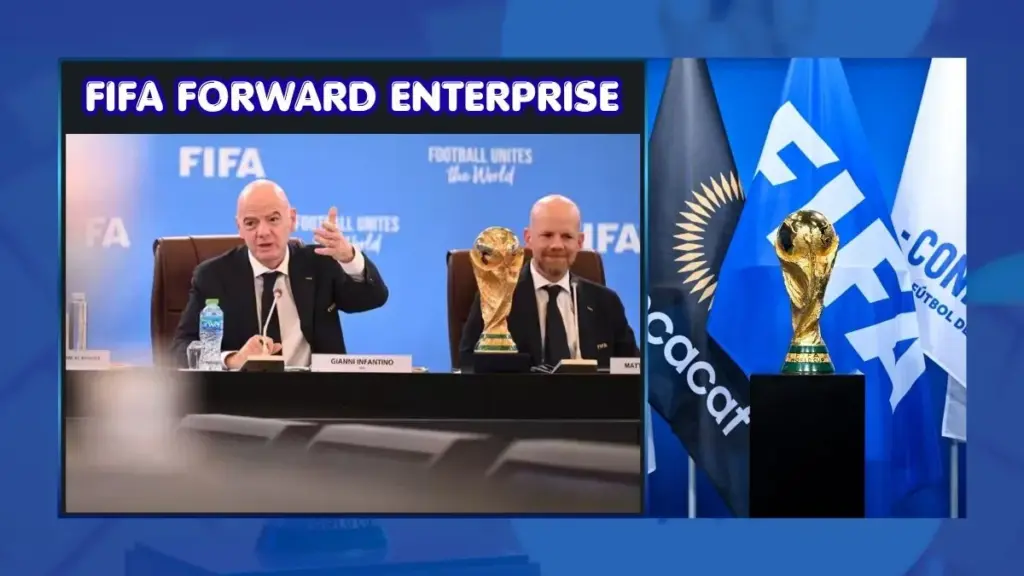
European officials were said to be caught off guard by the announcement. UEFA is now scrambling to hold a virtual emergency meeting with its 55 national associations before the week’s end to plan a coordinated response.
Sources indicate that a potential boycott of FIFA events — including future World Cups and the expanded Club World Cup — is firmly on the table as a deterrent.
The row comes against a backdrop of already strained relations. UEFA President Aleksander Čeferin boycotted the 2026 World Cup final amid multiple disputes, including FIFA’s handling of a red-card incident involving U.S. striker Folarin Balogun. Critics also point to Infantino’s close ties with the Trump administration.
UK Prime Minister Andy Burnham added political weight to the criticism, stating that “Football does not belong to investors. It belongs to the people who fill the stands… The World Cup is not a product. It is the greatest competition in world sport, and it was never anyone’s to sell.”
Elite European clubs have also voiced private concerns, and other confederations, including CONCACAF, have expressed unease over the lack of prior consultation and due process.
Broader Implications and Historical Parallels
This is not Infantino’s first attempt to bring private capital into FIFA structures. A 2018 deal in principle with SoftBank for roughly $25 billion to fund an expanded Club World Cup and other projects collapsed largely due to European opposition.
UEFA and major clubs appear similarly united this time, though Infantino may still secure majority support from the many smaller member associations that stand to gain the most from the increased development funding.
Opponents fear that even minority private investment could create pressure for more frequent tournaments, prioritization of the most lucrative markets, or other commercial decisions that override sporting and calendar considerations.
FIFA counters that governance remains firmly under its control and that the structure protects the sport while delivering unprecedented resources for grassroots and national association development.
As UEFA prepares its emergency talks and FIFA seeks broader member backing, football faces one of its most significant governance confrontations in years.
Whether the boycott threat remains rhetorical or becomes a real possibility will likely shape the next phase of this high-stakes power struggle between Europe and the global governing body.
The coming days and weeks will reveal whether FIFA can push the $20 billion plan through or whether UEFA’s resistance forces a rethink of how the commercial future of the World Cup is structured.
What Happens Next?
FIFA’s proposal still requires support from a majority of its 211 member associations before moving forward. UEFA is expected to coordinate its response with national federations in the coming days, meaning the dispute could become one of the biggest governance battles in modern football.
What is FIFA Forward Enterprise?
FIFA Forward Enterprise (FFE) is a proposed commercial subsidiary that would manage FIFA’s commercial rights and tournaments while selling a minority stake to outside investors to raise about $4.2 billion.
Why is UEFA against FIFA’s plan?
UEFA argues the proposal lacks transparency and believes football’s governance should not be commercialized through private investment.
Will UEFA boycott the FIFA World Cup?
No decision has been made. UEFA is discussing its response, including the possibility of a boycott, but no formal action has been approved.