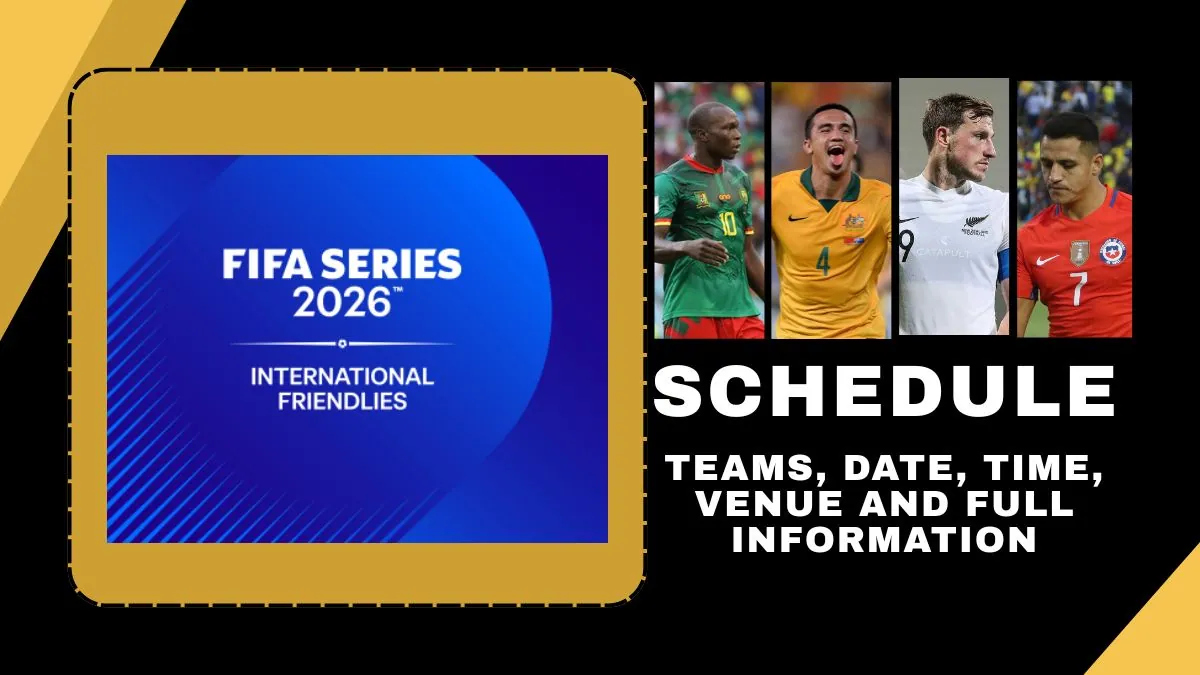
The 2026 FIFA Series marks a revolutionary step in international football, bringing together 48 national teams from all six continental confederations for an expanded edition of FIFA’s invitational friendly tournament. FIFA Series 2026 Schedule during the March and April 2026 international match window, this initiative represents FIFA’s commitment to creating meaningful competitive opportunities for nations that rarely face opponents from other continents.
With 12 groups hosted across 11 countries on three continents, the FIFA Series 2026 promises to deliver cross-confederation matchups that will test teams, entertain fans, and accelerate global football development.
Nearly a quarter of FIFA’s 211 Member Associations will participate, making this one of the most inclusive international football events outside of the FIFA World Cup.
What is the FIFA Series?
Tournament Background
The FIFA Series was approved by the FIFA Council in December 2022 as part of FIFA’s Strategic Objectives for the Global Game: 2023-2027. Following a successful pilot edition in March 2024, the tournament has been significantly expanded for 2026.
Key Objectives:
- Facilitate meaningful international friendly matches between teams from different confederations
- Support football development both on and off the pitch
- Provide competitive opportunities for emerging football nations
- Increase global visibility for participating national teams
- Enhance organizational capacity through tournament hosting experience
Tournament Structure
Format Overview:
- 48 Teams Total: 36 men’s teams + 12 women’s teams
- 12 Groups: 9 men’s groups + 3 women’s groups
- 4 Teams per Group: Cross-confederation composition
- All Six Confederations: UEFA, CONMEBOL, AFC, CAF, CONCACAF, OFC
- 11 Host Nations: Rwanda hosts 2 groups, others host 1 each
Match Format and Rules
While all matches are classified as official international friendlies, participating Member Associations have agreed on varied competition formats:
Two Format Options:
- Semi-Finals and Final: Winner determined through knockout-style matches
- Pre-Arranged Fixtures: Round-robin style with predetermined matchups
Special Rules:
- No Extra Time: Drawn matches proceed directly to penalty shootouts
- Decisive Results: Every match produces a winner
- Group Winners: One team emerges as the group champion regardless of format
- FIFA Rankings Impact: Results will affect the April 2026 FIFA World Rankings
FIFA Series 2026 Schedule and Tournament Dates
Tournament Period
Official Window: March 23 – April 6, 2026
Main Match Days: March 27, 30 and April 2, 2026
The tournament takes place during FIFA’s designated international match window, ensuring clubs release players without complications and maintaining the integrity of the international football calendar.
Match Schedule Overview
FIFA released the complete match schedule on February 24, 2026, providing full visibility on dates, kick-off times, and venues for all 48 participating teams. The schedule accommodates:
- Multiple time zones across host countries
- Global broadcast requirements
- Adequate rest periods between matches
- Competitive integrity for all groups
Key Timeline:
- January 19, 2026: Host nations and groups confirmed
- February 24, 2026: Complete match schedule released
- March 23-April 6, 2026: Tournament takes place
- April 1, 2026: Updated FIFA World Rankings released post-tournament
Men’s Groups: Complete Breakdown

Group 1: Australia (Host)
Host City: TBD, Australia
Confederation Mix: AFC, CAF, CONCACAF
Teams:
- 🇦🇺 Australia (Host) – FIFA Rank: 26th
- Confederation: AFC (Asia)
- World Cup Status: Qualified for 2026 World Cup
- Notable Players: Mat Ryan, Jackson Irvine, Riley McGree
- 🇨🇲 Cameroon – FIFA Rank: ~50th
- Confederation: CAF (Africa)
- Notable Achievement: Five-time Africa Cup of Nations winners
- Key Players: André Onana, Vincent Aboubakar
- 🇨🇳 China PR – FIFA Rank: 87th
- Confederation: AFC (Asia)
- Recent Form: Rebuilding under new technical direction
- Development Focus: Youth integration and tactical modernization
- 🇨🇼 Curaçao – FIFA Rank: 86th
- Confederation: CONCACAF (North/Central America)
- World Cup Status: Qualified for 2026 World Cup (debut)
- Historic Achievement: Smallest nation ever to qualify for World Cup
Group Analysis: Australia enters as clear favorites but faces competitive opposition from Cameroon, an African powerhouse with World Cup pedigree. China PR and Curaçao provide contrasting styles, making this group tactically diverse. For Curaçao, this represents crucial preparation before their historic World Cup debut.
Group 2: Azerbaijan (Host)
Host City: Baku, Azerbaijan
Confederation Mix: UEFA, AFC, CAF, CONCACAF
Teams:
- 🇦🇿 Azerbaijan (Host) – FIFA Rank: 117th
- Confederation: UEFA (Europe)
- Home Advantage: Playing at modern Baku Olympic Stadium
- Development Priority: Building competitive experience
- 🇴🇲 Oman – FIFA Rank: 75th
- Confederation: AFC (Asia)
- Regional Strength: Competitive in Gulf football
- Recent Success: AFC Asian Cup quarter-finalists
- 🇸🇱 Sierra Leone – FIFA Rank: 121st
- Confederation: CAF (Africa)
- Development Focus: Rebuilding national program
- Rising Talent: European-based players returning
- 🇱🇨 St Lucia – FIFA Rank: 172nd
- Confederation: CONCACAF (Caribbean)
- Opportunity: Rare international exposure
- Growth Potential: Learning experience against stronger opposition
Group Analysis: This group exemplifies FIFA’s development mission, bringing together teams ranked between 75th and 172nd. Oman stands as the most established team, while Azerbaijan has home advantage. Sierra Leone and St Lucia gain invaluable international experience against unfamiliar opponents.
Group 3: Indonesia (Host)
Host City: Jakarta, Indonesia
Stadium: Gelora Bung Karno Main Stadium
Confederation Mix: UEFA, AFC, OFC, CONCACAF
Teams:
- 🇧🇬 Bulgaria – FIFA Rank: 84th
- Confederation: UEFA (Europe)
- Historical Pedigree: 1994 World Cup semi-finalists
- Current State: Rebuilding after golden generation
- 🇮🇩 Indonesia (Host) – FIFA Rank: 122nd
- Confederation: AFC (Asia)
- New Coach: John Herdman (former Canada coach)
- Stadium: 77,000-capacity Gelora Bung Karno
- Fan Support: Passionate home crowd expected
- 🇸🇧 Solomon Islands – FIFA Rank: 144th
- Confederation: OFC (Oceania)
- Regional Status: Oceania Nations Cup contenders
- Playing Style: Physical, direct football
- 🇰🇳 St Kitts and Nevis – FIFA Rank: 139th
- Confederation: CONCACAF (Caribbean)
- Football Influence: British-style tactical approach
- Development: Growing Caribbean football nation
Match Schedule:
- March 27, 8:00 PM Jakarta Time: Indonesia vs St Kitts and Nevis (Semi-Final 1)
- March 27, TBD: Bulgaria vs Solomon Islands (Semi-Final 2)
- March 30: Final (winner SF1 vs winner SF2)
- March 30: Third-Place Match (loser SF1 vs loser SF2)
Group Analysis: Indonesia’s home advantage under new coach John Herdman makes them slight favorites. Bulgaria brings European technical quality, while Solomon Islands and St Kitts and Nevis represent the development aspect of the FIFA Series. The semi-final format adds knockout drama to this group.
Group 4: Kazakhstan (Host)
Host City: Almaty or Astana, Kazakhstan
Confederation Mix: UEFA, AFC, CAF
Teams:
- 🇰🇲 Comoros – FIFA Rank: 108th
- Confederation: CAF (Africa)
- Recent Success: 2021 Africa Cup of Nations debut
- Rising Profile: Competitive East African nation
- 🇰🇿 Kazakhstan (Host) – FIFA Rank: 109th
- Confederation: UEFA (Europe)
- Home Advantage: High-altitude matches possible
- Development: Investing heavily in football infrastructure
- 🇰🇼 Kuwait – FIFA Rank: 134th
- Confederation: AFC (Asia)
- Historical Success: 1980 Asian Cup winners
- Current Rebuild: Developing young talent
- 🇳🇦 Namibia – FIFA Rank: 115th
- Confederation: CAF (Africa)
- Regional Role: COSAFA Cup regulars
- Playing Style: Organized defensive approach
Group Analysis: Remarkably balanced group with all teams ranked between 108th and 134th. Kazakhstan and Comoros start as slight favorites, but Kuwait’s technical ability and Namibia’s organization make this group highly unpredictable. Perfect for competitive development.
Group 5: New Zealand (Host)
Host City: Auckland, New Zealand
Confederation Mix: OFC, CAF, CONMEBOL, UEFA
Teams:
- 🇨🇻 Cape Verde – FIFA Rank: 56th
- Confederation: CAF (Africa)
- World Cup Status: Qualified for 2026 World Cup (debut)
- Key Strength: Well-organized defensive unit
- Notable Players: Ryan Mendes, Jamiro Monteiro
- 🇨🇱 Chile – FIFA Rank: 45th
- Confederation: CONMEBOL (South America)
- Historical Pedigree: 2-time Copa América champions (2015, 2016)
- Golden Generation: Final chance for Alexis Sánchez era
- Playing Style: Technical, possession-based football
- 🇫🇮 Finland – FIFA Rank: 63rd
- Confederation: UEFA (Europe)
- Notable Achievement: Euro 2020 participants
- Key Player: Teemu Pukki (legendary striker)
- Tactical Approach: Disciplined, counter-attacking
- 🇳🇿 New Zealand (Host) – FIFA Rank: 94th
- Confederation: OFC (Oceania)
- World Cup Status: Qualified for 2026 World Cup
- Home Advantage: Strong support in Auckland
- All Whites Legacy: Seeking improvement before World Cup
Match Schedule:
- March 27: Cape Verde vs Finland / Chile vs New Zealand
- March 30: Second round of matches
Group Analysis: This represents the most competitive FIFA Series group, featuring three World Cup-quality teams. Chile enters as favorites with their Copa América pedigree, but Cape Verde’s World Cup qualification and Finland’s Euro experience make this group fascinating.
New Zealand uses home advantage for crucial World Cup preparation. All four teams have legitimate winning chances.
Group 6: Puerto Rico (Host)
Host City: San Juan, Puerto Rico
Confederation Mix: CONCACAF, OFC
Teams:
- 🇦🇸 American Samoa – FIFA Rank: 199th
- Confederation: OFC (Oceania)
- Notable History: 31-0 loss to Australia (2001) – working to rebuild reputation
- Development Focus: Massive improvement from lowest FIFA ranking
- 🇬🇺 Guam – FIFA Rank: 201st
- Confederation: AFC (Asia)
- Island Nation: Limited international exposure
- Growth Trajectory: Building football infrastructure
- 🇵🇷 Puerto Rico (Host) – FIFA Rank: 169th
- Confederation: CONCACAF (Caribbean/North America)
- Home Advantage: Caribbean support
- Development Priority: Growing the game locally
- 🇻🇮 US Virgin Islands – FIFA Rank: 207th (lowest-ranked team in tournament)
- Confederation: CONCACAF (Caribbean)
- Historic Opportunity: Rare international competition
- Development Stage: Early in national team journey
Group Analysis: This group epitomizes FIFA’s inclusive development mission, bringing together four of the world’s lowest-ranked teams (169th-207th).
While competitive quality differs from other groups, these matches provide invaluable experience for nations rarely featured in international competitions.
Puerto Rico’s home advantage makes them favorites, but every match offers learning opportunities.
Group 7: Rwanda (Host) – Group A
Host City: Kigali, Rwanda
Stadium: Amahoro Stadium
Confederation Mix: UEFA, CONCACAF, CAF
Teams:
- 🇪🇪 Estonia – FIFA Rank: 124th
- Confederation: UEFA (Europe)
- Baltic Nation: Compact, organized playing style
- Recent Progress: Competitive in Nations League
- 🇬🇩 Grenada – FIFA Rank: 171st
- Confederation: CONCACAF (Caribbean)
- Island Nation: Limited international exposure
- Development Focus: Youth program growth
- 🇰🇪 Kenya – FIFA Rank: 110th
- Confederation: CAF (Africa)
- Regional Status: East African powerhouse
- Playing Style: Athletic, fast-paced football
- 🇷🇼 Rwanda (Host) – FIFA Rank: 130th
- Confederation: CAF (Africa)
- Home Advantage: Strong local support
- Infrastructure: Modern stadiums showcasing development
- Strategic Importance: Positioning as African sports hub
Group Analysis: Rwanda’s historic role as the only nation hosting two groups highlights their growing football infrastructure.
Kenya provides local East African rivalry, while Estonia brings European technical quality.
Grenada gains crucial development experience. Rwanda’s home advantage makes them competitive for group honors.
Group 8: Rwanda (Host) – Group B
Host City: Kigali, Rwanda
Stadium: Amahoro Stadium
Confederation Mix: CONCACAF, UEFA, CAF
Teams:
- 🇦🇼 Aruba – FIFA Rank: 203rd
- Confederation: CONCACAF (Caribbean)
- Island Nation: One of world’s smallest footballing nations
- Opportunity: Rare international platform
- 🇱🇮 Liechtenstein – FIFA Rank: 199th
- Confederation: UEFA (Europe)
- Micro-State: Population under 40,000
- Notable: Occasional giant-killings in European qualifiers
- 🇲🇴 Macau – FIFA Rank: 184th
- Confederation: AFC (Asia)
- Special Status: Separate FIFA membership despite China connection
- Development: Building competitive foundations
- 🇹🇿 Tanzania – FIFA Rank: 116th
- Confederation: CAF (Africa)
- Strongest Team: Clear favorites in this group
- Regional Status: East African Championship contenders
- Playing Style: Physical, direct approach
Group Analysis: Tanzania enters as overwhelming favorites against three micro-nations ranked 184th or lower. However, this group fulfills FIFA’s mission to provide competitive opportunities for all Member Associations.
Liechtenstein, Aruba, and Macau gain exposure they rarely experience in confederation competitions.
Group 9: Uzbekistan (Host)
Host City: Tashkent, Uzbekistan
Confederation Mix: AFC, CAF, CONCACAF, CONMEBOL
Teams:
- 🇬🇦 Gabon – FIFA Rank: 88th
- Confederation: CAF (Africa)
- Star Power: Pierre-Emerick Aubameyang (when available)
- Regional Status: AFCON regulars
- Playing Style: Counter-attacking with pace
- 🇹🇹 Trinidad and Tobago – FIFA Rank: 99th
- Confederation: CONCACAF (Caribbean)
- Historical Achievement: 2006 World Cup participants
- Notable: Dwight Yorke and Shaka Hislop legacy
- Current Status: Rebuilding after golden generation
- 🇺🇿 Uzbekistan (Host) – FIFA Rank: 54th
- Confederation: AFC (Asia)
- World Cup Status: Qualified for 2026 World Cup (debut)
- Home Advantage: Passionate support in Tashkent
- Asian Power: Consistent AFC Championship contenders
- Key Preparation: World Cup tune-up matches
- 🇻🇪 Venezuela – FIFA Rank: 62nd
- Confederation: CONMEBOL (South America)
- South American Quality: Improving steadily in CONMEBOL
- Notable Players: Salomón Rondón (legendary striker)
- Playing Style: Technical South American football
Group Analysis: Highly competitive group featuring three teams ranked 54th-88th. Uzbekistan uses home advantage for crucial World Cup preparation against quality opposition.
Venezuela brings South American technical quality, while Gabon and Trinidad and Tobago offer experienced, physical challenges. This group could produce the tournament’s most entertaining matches.
Broadcasting and Global Access
Television Coverage
All FIFA Series 2026 matches will be broadcast globally through FIFA’s international broadcast partners. This represents a significant commitment to visibility for participating nations, especially smaller federations that rarely receive global television coverage.
Broadcast Features:
- Live coverage of all matches
- Multi-language commentary
- Highlights packages for all confederations
- FIFA+ streaming platform coverage
- Regional broadcast partners in each confederation
Streaming Options
FIFA+ Platform:
- Free global streaming for all matches
- On-demand replays available
- Multiple camera angles for select matches
- Interactive statistics and match data
- Mobile apps for iOS and Android
Regional Platforms:
- Confederation-specific streaming services
- Local broadcaster partnerships
- Social media highlights and clips
- Real-time updates on FIFA.com
Fan Access and Engagement
The global broadcast commitment ensures:
- Emerging nations gain unprecedented visibility
- Diaspora communities can watch their national teams
- Scouts and talent evaluators access quality footage
- Fans worldwide experience cross-confederation matchups
- Development nations showcase their progress
Strategic Importance and Development Impact
For Participating Nations
Technical Development:
- Exposure to different playing styles and tactical approaches
- Testing against unfamiliar opponents
- Preparation for confederation competitions
- Player development through international experience
Organizational Capacity:
- Host nations gain tournament delivery experience
- Operational planning expertise development
- Referee development opportunities
- Media operations and communications practice
Commercial Opportunities:
- Global television exposure for smaller federations
- Sponsorship attraction through visibility
- Tourism promotion for host nations
- Brand building for national teams
Cultural Exchange:
- Cross-confederation relationships building
- Shared football experiences across continents
- Understanding different football cultures
- Global unity through sport
World Cup Preparation
Five men’s teams using the FIFA Series as World Cup 2026 group Stage preparation:
- 🇦🇺 Australia: Testing tactics and squad depth
- 🇨🇻 Cape Verde: Experiencing tournament pressure before debut
- 🇨🇼 Curaçao: Gaining crucial competitive matches before the World Cup
- 🇳🇿 New Zealand: Fine-tuning approach at home
- 🇺🇿 Uzbekistan: Preparing for historic first World Cup appearance
Strategic Benefits:
- Competitive matches against quality opposition
- Testing formations and player combinations
- Building team chemistry and cohesion
- Identifying tactical strengths and weaknesses
- Gaining confidence before the world’s biggest stage
FIFA Rankings Impact
Results from the FIFA Series 2026 will directly influence the FIFA World Rankings released on April 1, 2026. For teams on the cusp of seeding brackets or qualification positions, these matches carry significant importance.
Potential Ranking Movements:
- Group winners can rise 5-10 positions
- Strong performances against higher-ranked opponents valued
- Development nations benefit from playing established teams
- Ranking points distributed based on opponent strength
Tournament Format and Competition Rules

Group Stage Formats
Participating Member Associations selected one of two competition formats for their group:
Format Option 1: Semi-Finals and Final
- Match 1: Team A vs Team B (Semi-Final 1)
- Match 2: Team C vs Team D (Semi-Final 2)
- Match 3: Winner SF1 vs Winner SF2 (Final)
- Match 4: Loser SF1 vs Loser SF2 (Third-Place Match)
- Group Winner: Final winner
- All Teams Play: Two matches each
Format Option 2: Pre-Arranged Fixtures
- Round 1: Pre-determined matchups
- Round 2: Pre-determined matchups
- Round 3: Pre-determined matchups (if four teams)
- Group Winner: Based on points or final match result
- Flexibility: Host nation determines specific structure
Match Rules
Standard FIFA Laws Apply, with Modifications:
- No Extra Time: Matches tied after 90 minutes proceed directly to penalties
- Penalty Shootouts: Standard FIFA format (five kicks, then sudden death)
- Substitutions: FIFA-standard substitution rules apply
- VAR: Implementation dependent on host nation capabilities
- Match Officials: FIFA-certified referees from various confederations
Points and Standings
For groups using round-robin or points-based formats:
- 3 Points: Win (including penalty shootout wins in some formats)
- 1 Point: Draw (where applicable before penalties)
- 0 Points: Loss
Tiebreakers (if needed):
- Head-to-head record
- Goal difference
- Goals scored
- Fair play points
- FIFA World Ranking
Teams to Watch
Men’s Teams
Favorites for Group Wins:
- Australia (Group 1) – World Cup-bound, home advantage, strongest squad
- Chile (Group 5) – Copa América champions, most experienced team
- Uzbekistan (Group 9) – World Cup preparation, home advantage, Asian power
- Cape Verde (Group 5) – World Cup-bound, organized, defensively solid
- Cameroon (Group 1) – African powerhouse, World Cup pedigree
- Venezuela (Group 9) – South American quality, improving rapidly
Dark Horses and Surprise Potential:
- Indonesia: Home advantage, new coach, passionate support
- Kenya: East African power, athletic style
- Bulgaria: European experience, tactical discipline
- Finland: Euro 2020 veterans, Teemu Pukki leadership
- Oman: Gulf region strength, competitive Gulf Cup performers
Development Teams Gaining Experience:
- Curaçao: World Cup debut preparation
- New Zealand: World Cup preparation at home
- US Virgin Islands: Lowest-ranked team seeking improvement
- St Lucia: Caribbean nation with limited international exposure
- American Samoa: Recovering from historic losses, building reputation
Frequently Asked Questions (FAQ)
What is the FIFA Series 2026?
The FIFA Series 2026 is an expanded international friendly tournament featuring 48 national teams (36 men’s, 12 women’s) from all six FIFA confederations.
It takes place during the March-April 2026 international match window across 11 host nations in 12 groups of four teams each.
When does the FIFA Series 2026 take place?
The tournament runs during the FIFA international match window from March 23 to April 6, 2026, with main match days on March 27, 30, and April 2, 2026.
Where can I watch FIFA Series 2026 matches?
All matches will be broadcast globally through FIFA’s international broadcast partners and available for free streaming on the FIFA+ platform. Check your local FIFA broadcast partner or visit FIFA.com for regional viewing options.
How many teams are participating?
48 teams total: 36 men’s national teams competing in 9 groups and 12 women’s national teams competing in 3 groups, representing nearly 25% of FIFA’s 211 Member Associations.
Which countries are hosting the FIFA Series 2026?
Men’s hosts: Australia, Azerbaijan, Indonesia, Kazakhstan, New Zealand, Puerto Rico, Rwanda (2 groups), and Uzbekistan.
Women’s hosts: Brazil, Côte d’Ivoire, and Thailand.
Why is Rwanda hosting two groups?
Rwanda’s selection to host two groups (the only nation to do so) reflects their growing football infrastructure and ambition to become a leading African sports hub. This showcases their organizational capacity and modern stadium facilities.
Are these official international matches?
Yes, all FIFA Series 2026 matches are official international friendlies. Results will count toward FIFA World Rankings and player international caps.
Do matches go to extra time if tied?
No. Any match ending in a draw proceeds directly to a penalty shootout with no extra time, ensuring decisive results and maintaining competitive intensity.
How are group winners determined?
Groups use either a semi-final/final format or pre-arranged fixtures with points. One team emerges as group winner based on final match results or points totals, depending on the format chosen by participating associations.
Will results affect FIFA World Rankings?
Yes. All matches count toward FIFA World Rankings. The updated rankings reflecting FIFA Series results will be released on April 1, 2026.
Which World Cup-qualified teams are participating?
Five men’s teams qualified for the 2026 FIFA World Cup: Australia, Cape Verde, Curaçao, New Zealand, and Uzbekistan. These teams use the FIFA Series for crucial World Cup preparation.
What is the highest-ranked team participating?
In the men’s tournament, Australia (26th) is the highest-ranked team. In the women’s tournament, Brazil (7th) holds the highest FIFA ranking.
What is the lowest-ranked team participating?
US Virgin Islands (men’s, ranked 207th) and Turks and Caicos Islands (women’s, ranked 194th) are the lowest-ranked teams in their respective tournaments.
Why are teams from different confederations grouped together?
The FIFA Series’ primary objective is facilitating matches between teams from different confederations that rarely face each other, promoting cross-continental football development, cultural exchange, and tactical diversity.
How much do tickets cost?
Ticket information varies by host nation and will be announced by each Member Association. Check with individual host federations or FIFA.com for specific ticketing details as match dates approach.
Can I attend multiple matches?
Yes. Fans can purchase tickets for multiple matches within a group or across different groups depending on travel plans and host nation ticketing policies.
Will VAR be used?
VAR implementation depends on host nation technical capabilities and infrastructure. Groups hosted in countries with established VAR systems will likely use the technology, while others may not.
How long are matches?
Standard 90 minutes (two 45-minute halves) plus stoppage time. If tied, matches proceed directly to penalty shootouts.
Are there any player restrictions?
Players must be eligible for their national teams according to FIFA statutes. Clubs must release players during the official FIFA international window (March 23-April 6, 2026).
What happens if a player gets injured?
Injuries sustained during FIFA Series matches are covered under FIFA’s standard injury protection regulations for international friendly matches. Clubs cannot prevent player release but receive compensation for injuries sustained.
How does this differ from the 2024 FIFA Series?
The 2026 edition is significantly expanded from the 2024 pilot:
- 48 teams (vs. fewer in 2024)
- 12 groups (increased from pilot)
- First-ever women’s groups (3 groups)
- More host nations (11 countries)
- Greater global scope across all six confederations
Why is this important for smaller nations?
The FIFA Series provides crucial benefits for smaller nations:
- Rare international exposure and global visibility
- Experience against opponents from other confederations
- Preparation for confederation competitions
- Player development through competitive matches
- Organizational capacity building for host nations
- Commercial opportunities through broadcast exposure
Will there be awards for top players?
While FIFA has not announced formal tournament awards, group winners will be recognized, and individual performances will receive coverage through FIFA’s media platforms and global broadcasts.
How can my country participate in future FIFA Series editions?
Member Associations interested in hosting or participating in future FIFA Series editions can apply through FIFA’s official channels when application periods open, typically 12-18 months before tournaments.
Conclusion
The FIFA Series 2026 marks a significant milestone in the evolution of international football, promoting greater inclusivity and global development. By featuring 48 national teams from all six continents, FIFA has established a tournament that serves several important purposes: it provides competitive opportunities for emerging nations, offers crucial preparation for teams heading to the World Cup, facilitates rare cross-confederation matchups, and promotes the universal appeal of football.
The FIFA Series 2026 showcases a variety of stories that highlight football’s global impact. It covers Australia’s preparation for the World Cup, the US Virgin Islands’ pursuit of international experience, Brazil’s dominance in women’s football, and the growth of women’s football in Pakistan.
Scheduled for March-April 2026, the tournament serves as both a platform for development and a competitive proving ground.
The FIFA Series 2026 encompasses matches held at Indonesia’s Gelora Bung Karno Stadium, which has a capacity of 77,000, as well as smaller venues in the Caribbean islands.
The teams range from Brazil’s women’s team, ranked 7th, to the US Virgin Islands men’s team, ranked 207th. With all matches broadcast globally for free, the FIFA Series 2026 truly embodies FIFA’s mission of making football a worldwide sport.
As the tournament approaches, football fans worldwide can anticipate compelling matchups, surprising results, inspiring underdog stories, and the beautiful game’s power to unite nations across continents.
Whether you’re supporting a World Cup-bound powerhouse or cheering for a micro-nation taking its first steps on the international stage, the FIFA Series 2026 offers something for every football fan.
Key Dates to Remember:
- March 23-April 6, 2026: Tournament takes place
- March 27, 2026: Opening match day
- April 1, 2026: Updated FIFA World Rankings released
- June 11, 2026: FIFA World Cup 2026 begins (for qualified teams)
Stay connected to FIFA World Cup News for complete coverage of the FIFA Series 2026, including match reports, results, standings, player performances, and analysis throughout the tournament. Follow us for real-time updates and comprehensive football coverage from around the globe.