
If Iran officially withdraws from the FIFA World Cup 2026, the federation will incur a direct financial loss of approximately $12 million, along with potential regulatory fines. Our team has gathered detailed information from multiple sources about the events unfolding as a result of escalating geopolitical tensions following U.S. and Israeli military actions in the region.
But the real damage is deeper. FIFA has already disbursed $1.5 million in preparation funds to each qualified nation. Add to that the $9 million guaranteed participation fee, and Iran stands to lose over $12 million in a single afternoon. Beyond the cash, FIFA’s Disciplinary Committee has the power to ban Iran from the 2030 and 2034 World Cup cycles, potentially ending the international careers of an entire generation of Iranian stars.
The clock is ticking toward June 11, but for the first time in modern football history, a qualified powerhouse is on the verge of walking away from the FIFA World Cup. Following the March 11 announcement by Iranian Sports Minister Ahmad Donyamali, the “Team Melli” boycott has moved from a rumor to a terrifying reality for FIFA organizers in Zurich and North America.
With the death of Supreme Leader Ayatollah Ali Khamenei on February 28 following U.S.-Israeli strikes, Tehran has made its stance clear: competing on American soil is “fundamentally impossible.”
But as Gianni Infantino and Donald Trump exchange diplomatic notes, the football world is left with a chaotic question: If Iran pulls out, who takes their place, and who pays the bill?
Iran Officially Withdraws Deadline and Effects
FIFA has reportedly set a March 31 “Hard Deadline” for a final decision. This date coincides with the end of the March international window. If the FFIRI does not submit its final squad registration by midnight, FIFA will officially trigger the “Replacement Protocol.”
Whether we see the white jerseys of “Team Melli” or a last-minute scramble to fly Italy or Iraq into North America, the 2026 World Cup has already lost its innocence. It is no longer just a game; it is a $12 million game of political chicken.
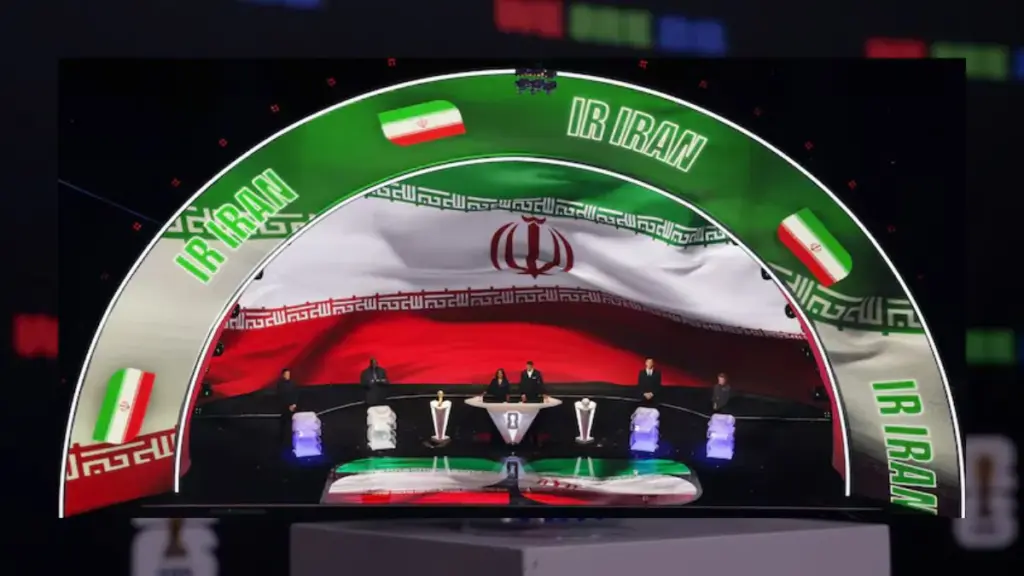
1. The Financial Guillotine: Article 6 and the $12 Million Debt
FIFA’s Rulebook is notoriously unforgiving when it comes to late-stage withdrawals. Under Article 6.2 of the 2026 World Cup Regulations, any federation that withdraws within 30 days of the opening match faces a minimum fine of $550,000 (500,000 CHF).
However, the fine is just the beginning. Iran has already received $1.5 million for tournament preparation and was slated for a $10.5 million participation fee.
If the boycott holds, the Iranian Football Federation (FFIRI) will be legally obligated to return the full $12 million to FIFA immediately.
Failure to pay could result in a total ban from the 2030 and 2034 World Cup cycles—a “sporting suicide” that could haunt Iranian football for a generation.
2. The Replacement Protocol: Who Inherits Group G?
The most controversial part of FIFA’s constitution is Article 6.7, which gives the FIFA Council “sole discretion” to pick a replacement. There is no automatic “next-in-line” rule, which has led to a fever pitch of lobbying behind the scenes.
- The Iraq Argument (Sporting Merit): Iraq is currently the front-runner. As the highest-ranked AFC team in the March inter-continental playoffs, Iraq’s coach Graham Arnold has already urged FIFA to make a swift decision. Giving the spot to Iraq keeps the “Asian quota” intact and avoids a legal battle with the Asian Football Confederation (AFC).
- The Italy “Wildcard” (Commercial Power): In the corridors of FIFA’s Zurich headquarters, the “Italy Option” is being discussed. Despite failing to qualify on the pitch, Italy’s #13 global ranking makes them the ultimate commercial savior. For broadcasters in the USA and Europe, replacing Iran with the four-time world champions would turn a Group G crisis into a ratings goldmine.
- The UAE Factor: If Iraq qualifies through their own playoff bracket this month, the UAE (ranked 68th) would technically be the next Asian team eligible for a “Lucky Loser” promotion.
3. The Trump-Infantino Diplomatic Tightrope
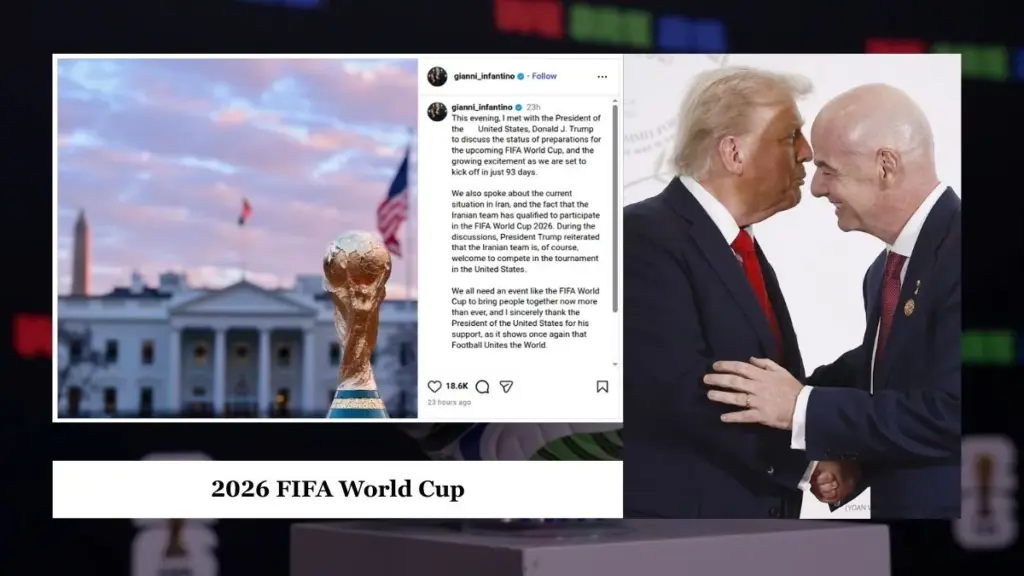
The drama reached a new level on March 12, when President Donald Trump took to Truth Social to address the situation. While Gianni Infantino claimed earlier in the week that Trump “welcomed” Iran, the U.S. President’s latest message was more cryptic: “The Iran National Soccer Team is welcome… but I really don’t believe it is appropriate that they be there, for their own life and safety.”
This “safety warning” has been interpreted by Tehran as a veiled threat. In response, the Iranian national team players—many of whom play for European clubs—issued a rare statement on March 13: “The World Cup is governed by FIFA, not by any individual country.” This internal friction between the Iranian government (who wants a boycott) and the players (who want to play) is the sub-plot that could define the tournament.
4. Chaos in Los Angeles and Seattle
The logistical nightmare cannot be overstated. Iran was drawn into Group G to play at the SoFi Stadium (Inglewood) and Lumen Field (Seattle).
- The Diaspora Factor: Southern California is home to the largest Iranian population outside of Iran. Thousands of “Team Melli” fans have already spent millions on non-refundable travel and tickets.
- The Ticket Crash: If a team like New Zealand or Egypt is forced to play a “placeholder” team with low drawing power, secondary market prices for Match 15 and Match 39 could collapse. However, if Italy is named as the replacement, expect those same tickets to hit the $4,000 mark overnight.
5. Can FIFA Ban Iran for Life?
Historically, FIFA hates political interference. If the withdrawal is deemed a “Government-mandated boycott” rather than a security issue, the FIFA Disciplinary Committee can invoke the ultimate sanction: Indefinite Suspension. We saw this with Yugoslavia in Euro 1992 (where Denmark replaced them and famously won). If Iran is barred, it won’t just be the 2026 World Cup they miss; it could be the end of their international football presence for the rest of the decade.
Frequently Asked Questions (FAQs)

Q1: When is the final deadline for Iran’s decision?
FIFA has established a “hard deadline” of March 31, 2026, which aligns with the conclusion of the final March qualifiers. After this date, FIFA will officially initiate the replacement protocol, ensuring that the new team has at least 70 days to secure U.S. visas.
Q2: Will fans get refunds if a different team plays?
No. FIFA’s ticketing terms state that you are buying a seat for a “Match Number” (e.g., Match 39), not a specific team. If Italy or Iraq replaces Iran, your ticket remains valid for that match.
Q3: Why is Iraq the favorite to replace them?
They are currently the highest-ranked team in the AFC Playoffs. Replacing one Asian team with another prevents a “Confederation War,” where other continents might claim FIFA is showing favoritism.
Q4: Is it possible for Group G to proceed with only 3 teams?
Highly unlikely. With the new 48-team format, a 3-team group would destroy the broadcasting schedule and create an unfair advantage for the teams that don’t have to play a third game.