The Biggest FIFA World Cup Ever has meant more than just goals and trophies — it’s a story of record-breaking attendances, dramatic expansions and unforgettable moments that reshaped global football.
The FIFA World Cup has grown exponentially since its inception in the 1930 World Cup, evolving from a 13-team tournament in Uruguay to what will be the largest, most ambitious football spectacle in human history in World Cup 2026.
From tournament formats that grew to include more nations to stadium crowds that set new records, this article explores which editions stand tallest in terms of size, impact and legacy.
The 2026 World Cup, featuring 48 teams, 104 matches, and games taking place across the USA, Mexico, and Canada, marks the largest expansion in the tournament’s history.
Read on to discover the World Cups that redefined the game — by numbers, fans and historical significance. Here’s a comprehensive look at the Biggest FIFA World Cup Ever by various metrics, historic attendance records, and what makes 2026 unprecedented.
2026 FIFA World Cup: The Biggest Tournament Ever
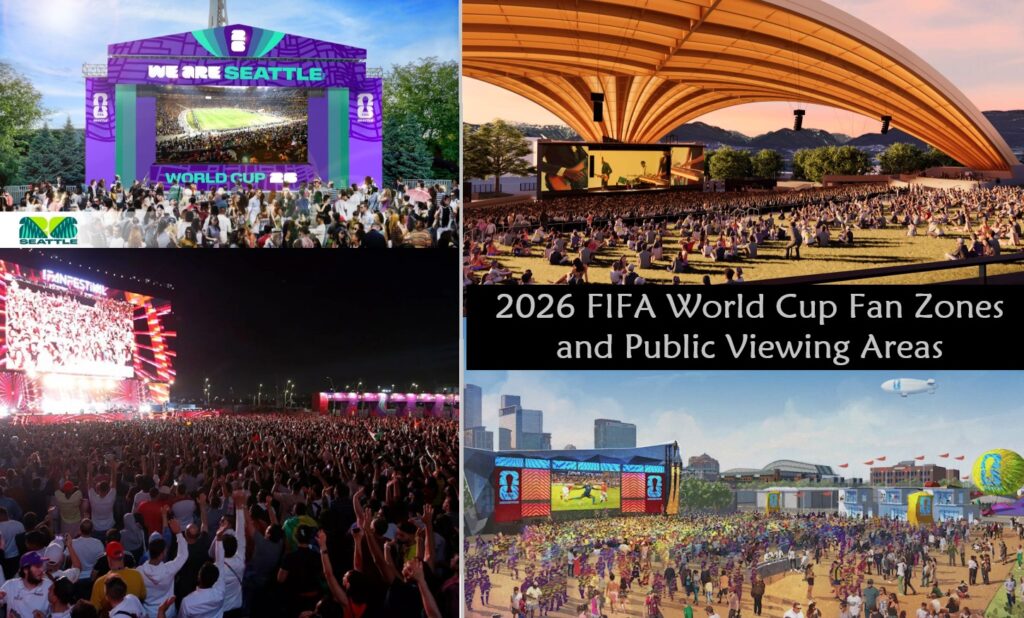
Tournament Scale and Format
The 2026 FIFA World Cup will be the first edition to feature 48 teams—an increase of 16 teams from the traditional 32-team format used since 1998.
Is the 104-match World Cup schedule attracting five million fans, making it the biggest FIFA World Cup ever?
Key Statistics:
| Metric | 2026 | Previous Record |
|---|---|---|
| Number of Teams | 48 | 32 (1998-2022) |
| Total Matches | 104 | 64 (1998-2022) |
| Group Format | 12 groups of 4 | 8 groups of 4 |
| Host Countries | 3 (USA, Mexico, Canada) | 1 |
| Duration | 39 days | 32 days (2014, 2018) |
| Top-2 Teams + 8 Best 3rd-Place | 32 teams to knockouts | 16 teams |
| Games for Finals Teams | 8 | 7 |
| Expected Attendance (projected) | 5 million+ | 3.4 million (2022) |
Tournament Structure Innovation
For the first time in FIFA World Cup history, not all group winners will automatically advance to the knockout stages. Instead, the 12 groups will produce:
- Top 2 teams from each group (24 teams)
- 8 best third-placed teams (8 teams)
- Total advancing to Round of 32: 32 teams
This unprecedented format creates unpredictability, as some group winners might finish in a lower bracket position than certain third-place finishers.
Historical Expansion Context
The expansion from 32 to 48 teams represents a 50% increase in participating nations—the largest single expansion in World Cup history. Previous tournaments maintained the 32-team format for 24 consecutive years (1998-2022).
Expansion Rationale:
- Increased inclusivity for developing nations and smaller football federations
- Additional revenue generation for FIFA and host nations
- More matches and extended fan engagement
- More opportunities for emerging football nations to compete
Largest FIFA World Cup Attendances in History – Biggest FIFA World Cup Ever
Record-Breaking Single Match Attendance
Here is a list of the record-breaking single match attendances from the 1930 World Cup to the 2022 FIFA World Cup facts –
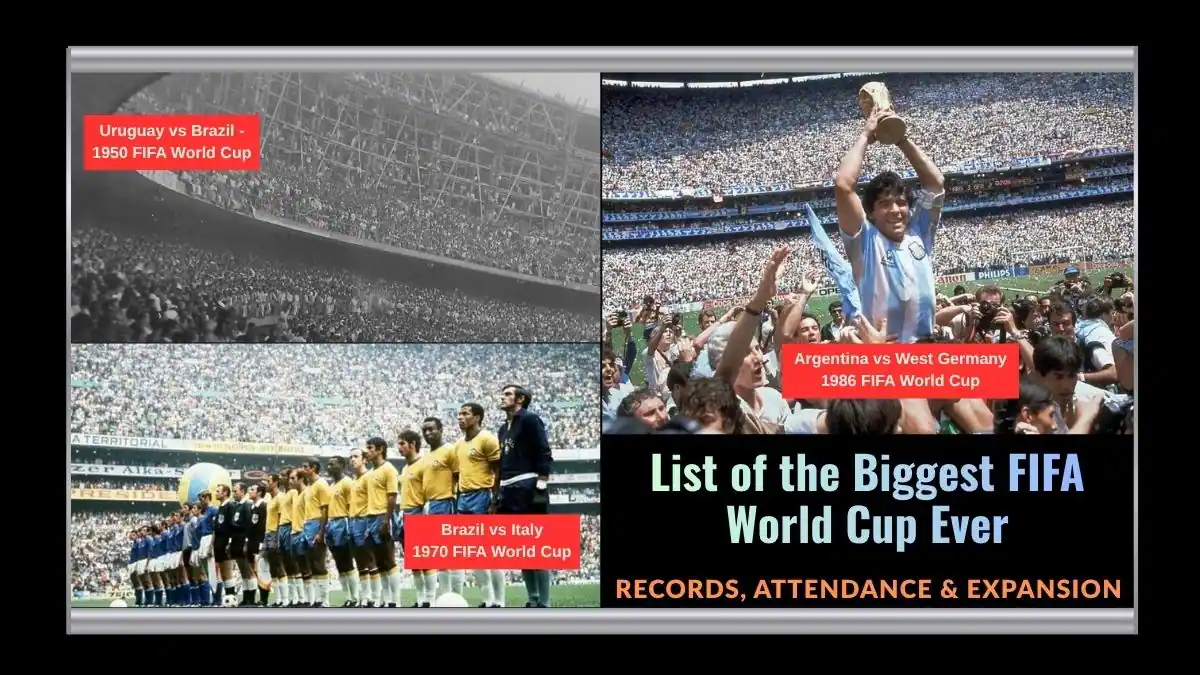
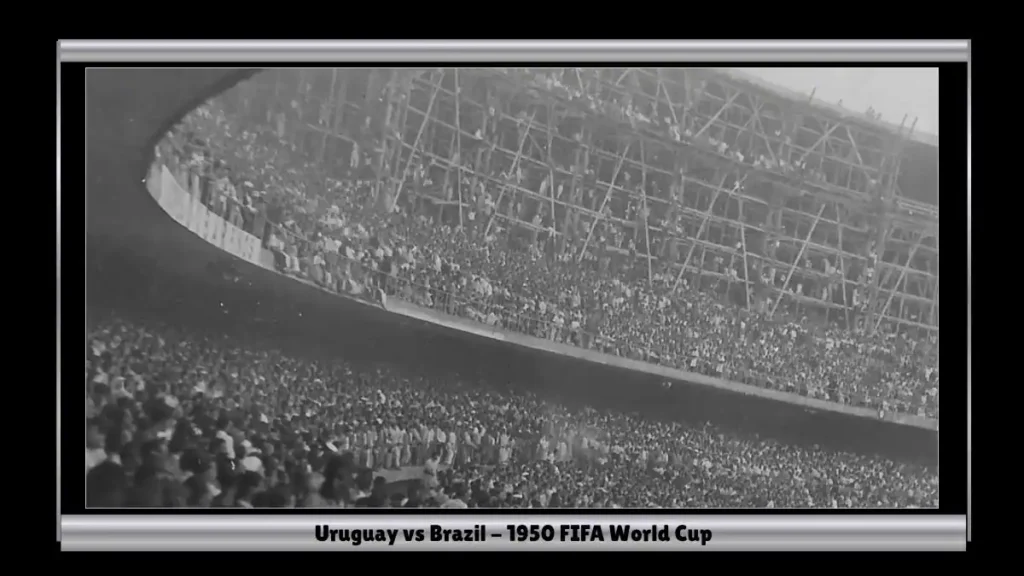
Uruguay 2-1 Brazil (1950 Maracana Stadium
The record for the largest attendance at a football match—professional or amateur, international or club—remains the 1950 World Cup match between Uruguay and Brazil.
| Metric | Details |
|---|---|
| Attendance | 173,850 (some sources cite 199,854) |
| Stadium | Maracana Stadium, Rio de Janeiro, Brazil |
| Date | July 16, 1950 |
| Match Context | Final group match (not technically a final) |
| Result | Uruguay 2-1 Brazil |
| Scorers | Juan Alberto Schiaffino, Alcides Ghiggia (URU); Friaca (BRA) |
| Significance | Largest attendance in World Cup history; largest attendance for any football match ever |
This match is historically significant because Brazil entered as overwhelming favorites to win the inaugural World Cup on home soil. The loss, known as “Maracanaço” (Maracana Catastrophe), remains one of football’s greatest upsets.
Top World Cup Final Attendances – Biggest FIFA World Cup Ever by Attendances
While the 1950 match holds the record, here are the largest attendance figures for World Cup finals specifically:
| World Cup | Teams | Records | Remarks |
|---|---|---|---|
| 1950 | Uruguay 2-1 Brazil | 173,850 at Maracana Stadium | Uruguay’s victory at the Maracanã Stadium in front of nearly 200,000 disbelieving Brazilian fans |
| 1986 | Argentina 3-2 West Germany | 114,600 at Estadio Azteca, Mexico City | Diego Maradona led Argentina to their second World Cup title |
| 1970 | Brazil 4-1 Italy | 107,412 at Estadio Azteca, Mexico City | Pelé’s coronation as football’s greatest player with Brazil’s third World Cup |
| 1994 | Brazil-2 Italy | 94,194 at Rose Bowl, Los Angeles | Brazil’s fourth World Cup title, won on penalties |
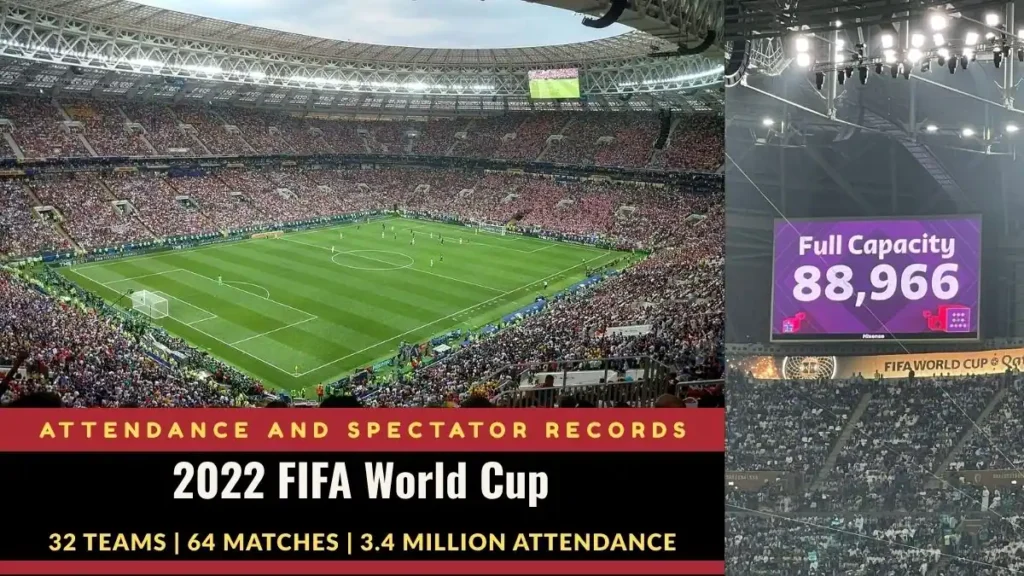
| 2022 | Argentina 4-2 France | 88,966 at Lusail Stadium, Qatar | The 2022, after penalties 3-3 and Lionel Messi’s first World Cup trophy |
| 2014 | Germany 1-0 Argentina | 74,738 at Maracana Stadium, Rio de Janeiro | Mario Götze’s goal in extra time |
2022 Qatar World Cup Attendance
While the 2022 Qatar World Cup didn’t rival the 1950 spectacle in single-match attendance, it set modern tournament records.
2022 Qatar Attendance Metrics:
- Total Spectators: 3.4 million across all matches
- Average Attendance Capacity: 96.3%
- FIFA Fan Festival: 1.8 million fans (Al Bidda Park, Doha)
- International Visitors: Over 1 million
- Top Visiting Nations: Saudi Arabia, India, USA, United Kingdom, Mexico
Largest World Cup Wins and Goal-Scoring Record – Biggest FIFA World Cup by wins and score in Single game
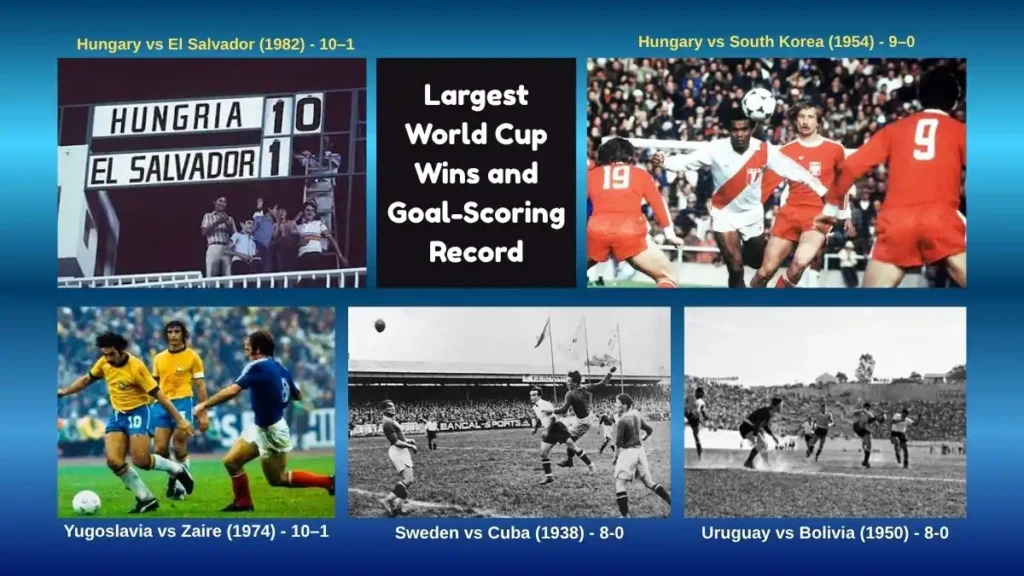
Record-Breaking Victories
The biggest wins in World Cup history demonstrate the skill gaps between advanced and emerging football nations during the tournament’s early editions.
Hungary vs El Salvador (1982) – 10–1
- Margin of Victory: 9 goals
- Location: Spain
- Record Holders: László Kiss (hat-trick as substitute in 7 minutes—fastest ever)
- Notable: Hungary’s combined two goals in three games eliminated them at the group stage despite this historic scoreline.
Hungary vs South Korea (1954) – 9–0
- Margin of Victory: 9 goals.
- Location: Switzerland
- Historical Significance: One of only two 9-goal victories in World Cup history
Yugoslavia vs Zaire (1974) – 10–1
- Margin of Victory: 9 goals
- Location: West Germany
- Record: Only African team to represent the continent that year (Zaire)
Sweden vs Cuba (1938) – 8-0
- Margin of Victory: 8 goals
- Harry Andersson (3 goals), Gustav Wetterström (3 goals), Tore Keller (1 goal)
Uruguay vs Bolivia (1950) – 8-0
- Margin of Victory: 8 goals
- Míguez 14′, 40′, 51′ Vidal 18′ Schiaffino 23′, 54′ Pérez 83′ Ghiggia 87′
Germany vs Saudi Arabia (2002) – 8-0
- Margin of Victory: 8 goals
- Miroslav Klose scored a hat-trick, with five other German players also hit goals.
All-Time Highest Goal Scorers by Tournament
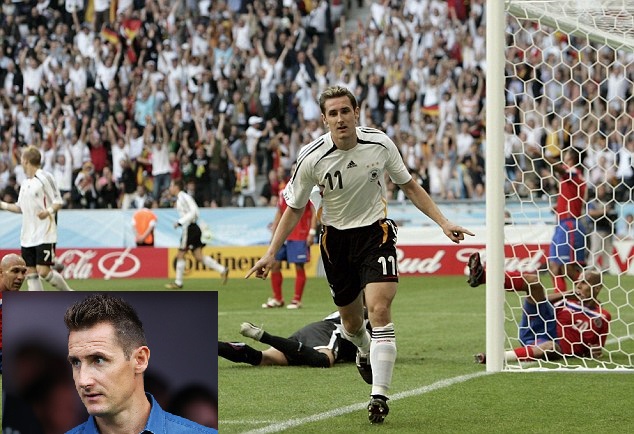
The World Cup has featured prolific goal-scorers across generations. Miroslav Klose (Germany) holds the all-time World Cup goal-scoring record with 16 goals across four tournaments (2002-2014).
Top individual World Cup scorers include legends like Pelé, Gerd Müller, Just Fontaine, Messi and Cristiano Ronaldo, who have all contributed to the tournament’s high-scoring history.
On the other hand, Lionel Messi holds the record for the most FIFA World Cup appearances by a player, with 26 matches.
National Team World Cup Records
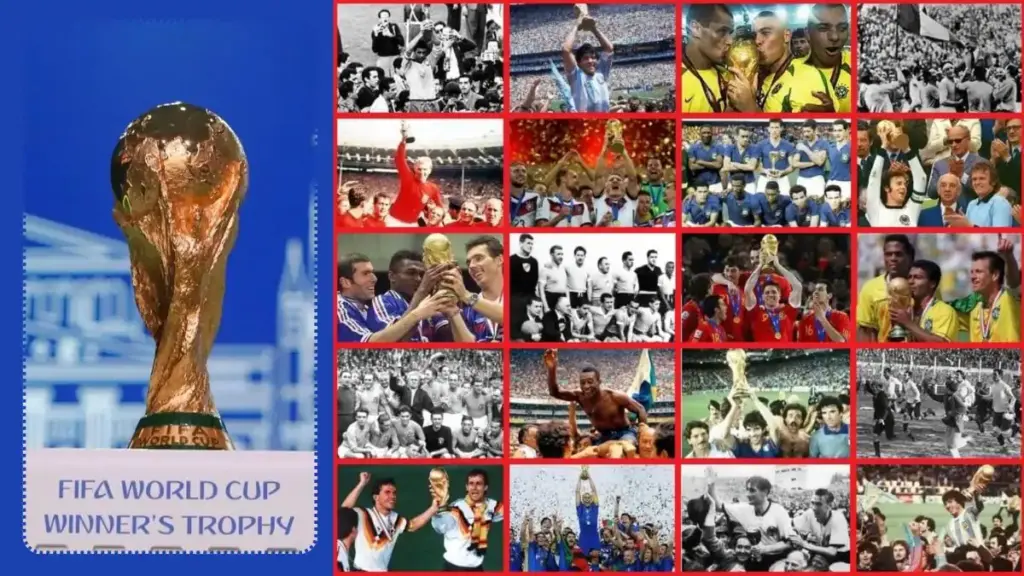
Most Successful Nations by Tournament Wins
Brazil leads all nations with 5 World Cup titles, won in 1958, 1962, 1970, 1994, and 2002:
| Rank | Nation | Titles | Years |
|---|---|---|---|
| 1 | Brazil | 5 | 1958, 1962, 1970, 1994, 2002 |
| 2 | Germany | 4 | 1954, 1974, 1990, 2014 |
| 2 | Italy | 4 | 1934, 1938, 1982, 2006 |
| 4 | France | 2 | 1998, 2018 |
| 4 | Argentina | 2 | 1978, 1986 (1 in 2022 with Messi) |
| 4 | Uruguay | 2 | 1930, 1950 |
| 4 | England | 1 | 1966 |
| 4 | Spain | 1 | 2010 |
All-Time World Cup Appearances – Biggest FIFA World Cup Ever with highest Record
Brazil is the only nation to have appeared in all 22 World Cup tournaments without failing to qualify. Their unbeaten record demonstrates the consistent quality of Brazilian football across generations.
All-Time Tournament Records (as of 2022 World Cup)
| Statistic | Record | Details |
|---|---|---|
| Most Matches Played | Brazil: 114 matches | 76 wins, 19 draws, 19 losses |
| Most Goals Scored | Brazil: 237 goals | Best goal difference: +129 |
| Most Points | Brazil: 247 points | Using modern 3-points-for-a-win system |
| Most Appearances | Brazil: 22 tournaments | Only nation in all World Cups |
| Best Goal Difference | Brazil: +129 | 237 goals for, 108 against |
| Total Nations Competed | 80 nations | Since 1930 |
2026 World Cup: Unprecedented Scale
Tournament Duration and Match Schedule
The 2026 World Cup will span 39 days—7 days longer than the previous standard 32-day format. This extended timeframe accommodates:
- 104 matches (40 additional matches vs. traditional 64-match format)
- 12 simultaneous final group-stage matches (crucial for fair group standings)
- Round of 32 instead of traditional Round of 16
Multiple Host Nations: A First
While host nations have rotated since 1930, the 2026 tournament represents the first World Cup to be hosted by three countries simultaneously: the USA, Mexico, and Canada. This unprecedented arrangement creates:
- 16 venues across North America
- Different time zones require coordinated scheduling
- Expanded fan base across three nations with a combined 580+ million people
- Projected 5+ million total attendance (surpassing 2022’s 3.4 million)
Expected Impact of Expansion
Positive Implications:
- Inclusivity: 16 additional teams means more nations have realistic World Cup aspirations
- Global Representation: Emerging nations like Uzbekistan, Jordan, Cape Verde, Venezuela, Iraq, and Gabon now qualify
- Fan Engagement: More matches mean more opportunities for fans to watch World Cup football
- Revenue Growth: Additional matches and venues generate significant FIFA revenue
- Continental Diversity: For the first time, nations from five continents reached the knockout stages in 2022; 2026 should expand this diversity further
Concerns Raised:
- Quality Dilution: Larger fields may produce mismatches with significant goal differentials (like the historic wins mentioned above)
- Fixture Congestion: Teams playing eight matches instead of seven, compounded by extended club competition calendars
- Group Stage Tedium: The inclusion of weaker teams could create uncompetitive early matches
- Broadcasting Complexity: Multiple time zones create scheduling challenges for global viewership
Comparative Tournament Statistics
Attendance and Spectator Records
| Tournament | Total Attendance | Average Per Match | Largest Single Match |
|---|---|---|---|
| 1950 (8 teams, 13 matches) | Not officially recorded | ~13,000 | 173,850 (URU vs BRA) |
| 2014 (32 teams, 64 matches) | 3.3 million | ~51,500 | 76,000+ (various) |
| 2018 (32 teams, 64 matches) | 2.85 million | ~44,500 | ~81,000+ (various) |
| 2022 (32 teams, 64 matches) | 3.4 million | ~53,000 | 88,966 (Final) |
| 2026 (projected, 48 teams, 104 matches) | 5+ million (est.) | ~48,000+ | Unknown (TBD) |
Biggest Stadium Venues for 2026
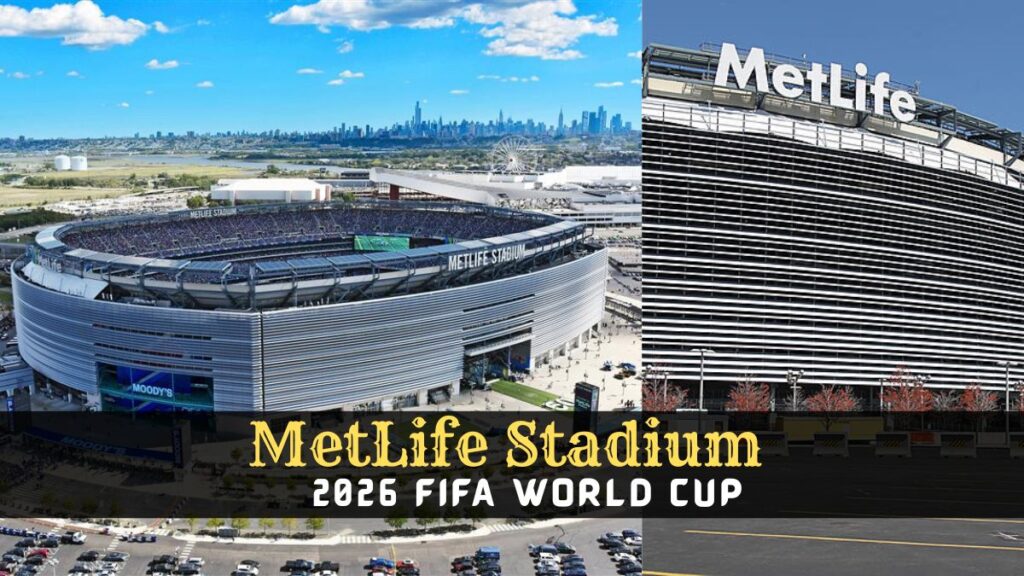
The 2026 World Cup, hosted by three nations, will feature enormous stadiums spread across North America:
Largest Confirmed Venues (Capacity)
- MetLife Stadium (New Jersey): 82,500+
- AT&T Stadium (Dallas): 80,000+
- Arrowhead Stadium (Kansas City): 76,400+
- SoFi Stadium (Los Angeles): 70,240
- Lucas Oil Stadium (Indianapolis): 67,000+
These venues will accommodate projected record-breaking attendance figures for the 2026 tournament.
How is the 2026 World Cup will be the Biggest FIFA World Cup Ever?
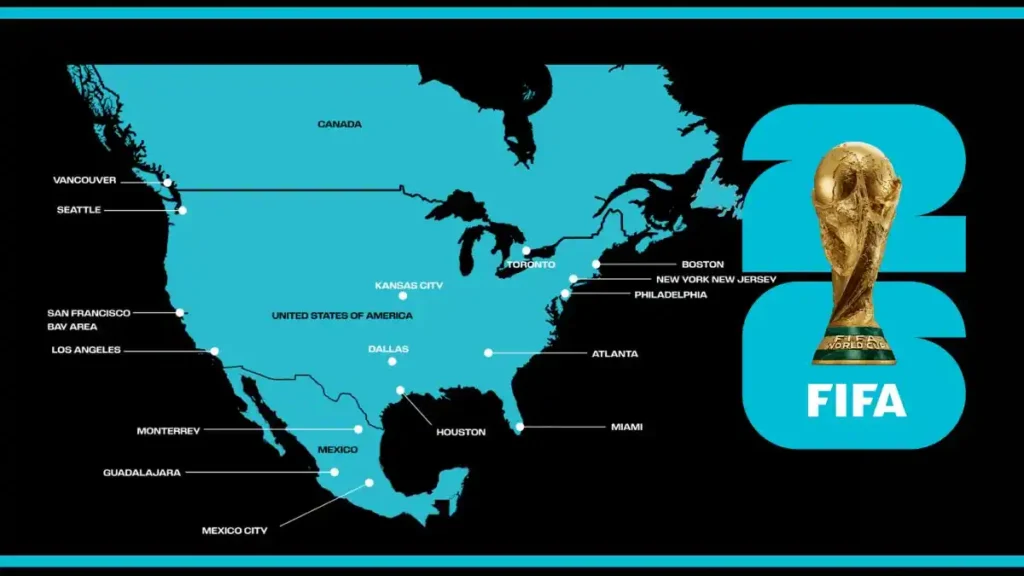
By virtually every measurable metric teams participating, total matches, host nations, expected attendance, tournament duration, and revenue generation—the 2026 FIFA World Cup will be the biggest in history.
Featuring 48 teams from across the globe, 104 matches Scheduled in three countries, and an expected attendance of over 5 million, this tournament marks a groundbreaking moment in the history of global football.
While historical records like Uruguay’s 173,850-strong 1950 final attendance and Hungary’s 10-1 demolition of El Salvador remain iconic World Cup moments, the 2026 edition will rewrite the book on scale, inclusivity, and global engagement.
The expanded format democratizes World Cup qualification, allowing emerging footballing nations genuine opportunities to compete on the sport’s grandest stage.
As FIFA president Gianni Infantino declared, the 2026 World Cup will be “the grandest sporting event in human history“—a claim supported by the unprecedented expansion and organizational scope now underway.