In international football, the World Cup is a mountain that every player wants to climb, even if they have to do it on one leg. With the final 26-man rosters officially locked in for the expanded 48-team FIFA World Cup 2026, national team managers have had to make some of the toughest decisions of their careers.
The biggest talking point of the recent squad announcements? The massive gambles taken on world-class superstars who are currently suffering from injuries but have still been selected.
From hamstring tears to late-stage ACL recoveries, these players are racing against time to be fit for the opening matchdays in June.
A complete and detailed breakdown of all injured players chosen for the FIFA World Cup 2026, along with the tactical risks involved in their selection.
The Superstars: High-Risk Inclusions

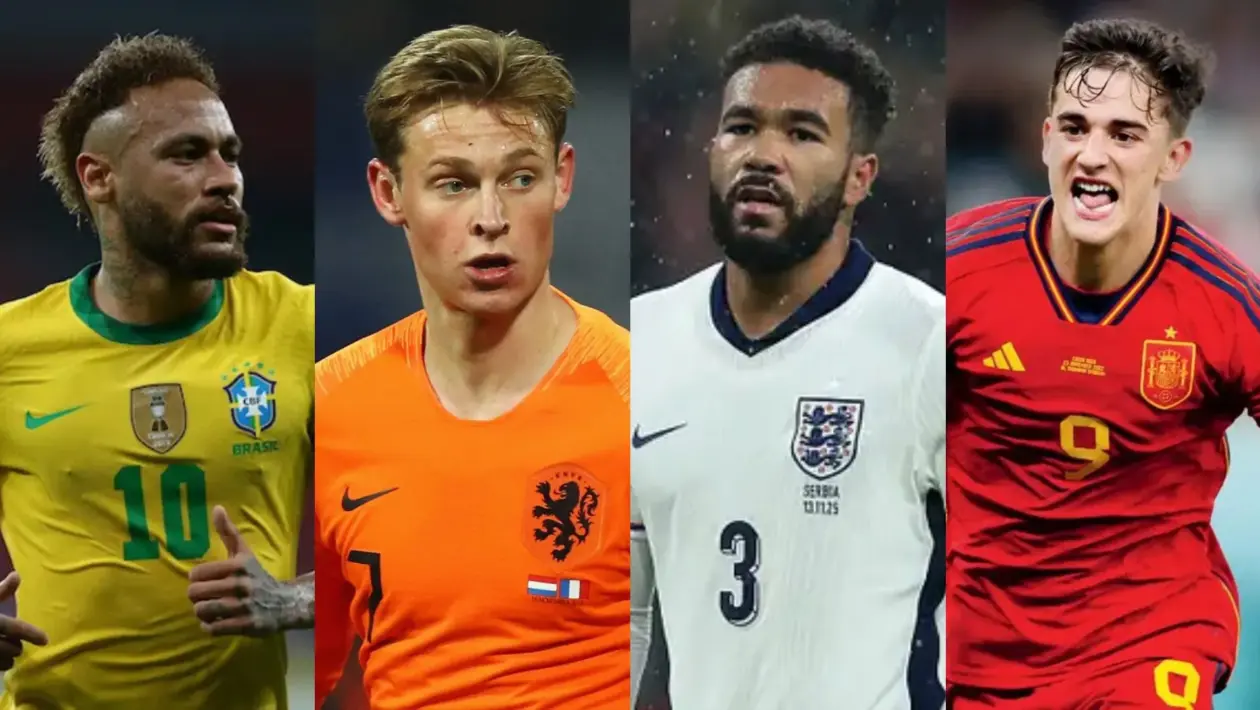
1. Neymar Jr. (Brazil)
Neymar out 2-3 weeks with calf injury
- Injury Type: Knee / Meniscus Discomfort (Post-ACL Management)
- Expected Return: Mid-Group Stage (June 2026)
- The Tactical Gamble: Brazil simply cannot leave Neymar behind. Even at 70% fitness, his presence in the dressing room and his ability to change a game with a single touch makes him indispensable for Dorival Júnior. Reports from the Seleção medical camp suggest that Neymar is undergoing intense double-session physical therapy. While he is almost certainly ruled out for Brazil’s opening group match, he has been selected with the guarantee that he will be ready to spearhead the attack by the knockout rounds.
2. Frenkie de Jong (Netherlands)

- Injury Type: Chronic Ankle Sprain / Ligament Weakness
- Expected Return: Late June 2026
- The Tactical Gamble: The Dutch midfield completely loses its transitional identity without Frenkie de Jong. After missing several key domestic games at the end of the club season, there were heavy rumors that he would be dropped. However, Ronald Koeman chose to take the risk. De Jong has been selected as a luxury player for the early stages, with the medical staff working around the clock to ensure his ankle can withstand the high-intensity pitches of North American stadiums.
3. Reece James (England)

- Injury Type: Recurrent Hamstring Strain
- Expected Return: Available from the Bench (Matchday 2)
- The Tactical Gamble: When fit, Reece James is arguably one of the most complete right-backs in world football. His career, however, has been plagued by muscle micro-tears. Gareth Southgate’s successor took a massive media beating for selecting James over fully fit domestic options. The gamble relies on England’s deep defensive roster covering for him during Matchday 1, allowing James to ease his way back into competitive match fitness.
4. Gavi (Spain)

- Injury Type: Lacking Match Fitness (Post-ACL Reconstruction)
- Expected Return: Fully Fit, but Lacking Sharpness
- The Tactical Gamble: Gavi’s inclusion is less about an active injury and more about the psychological toll of returning to the absolute highest tier of competitive sports after a long layoff. Spain’s medical team has cleared him to play, but managing his minutes will be a tightrope walk. His aggressive, high-pressing style leaves no room for hesitation, making his selection a highly debated topic among Spanish football experts.
The Complete World Cup 2026 Injury & Selection Tracker

To help you keep track of your World Cup Fantasy Teams and match predictions, here is the complete list of players who made the final cut despite carrying medical red flags:
| Player Name | Country | Specific Injury | Expected Availability | Expected Impact |
| Neymar Jr. | Brazil | Knee / Meniscus | Knockout Rounds | Game-Changer |
| Frenkie de Jong | Netherlands | Ankle Ligament | Matchday 3 | Tactical Anchor |
| Reece James | England | Hamstring Strain | Matchday 2 | Defensive Impact |
| Gavi | Spain | Post-ACL Rehab | Matchday 1 (Subs) | High Energy |
| Aurélien Tchouaméni | France | Metatarsal Stress | Matchday 2 | Midfield Shield |
| David Alaba | Austria | Knee Conditioning | Matchday 1 | Captain / Leader |
| Sven Botman | Netherlands | Knee Cartilage | Knockout Rounds | Squad Depth |
Why Do Managers Risk Selecting Injured Players?
To the average fan, picking a player who cannot run seems like a wasted squad slot. However, at a tournament of this scale, several hidden factors influence a manager’s mind:
The Psychological Factor
Superstars like Neymar or David Alaba carry immense cultural weight. Their presence in the hotel, on the training pitch, and on the bench boosts the morale of younger players.
Conversely, seeing them on the team sheet introduces an element of psychological anxiety for the opposing team’s defenders.
The 26-Man Squad Luxury
Back when World Cup squads were limited to 23 players, taking an injured individual was a massive tactical deficit.
Now, with 26 roster slots allowed by FIFA, managers can comfortably sacrifice one or two positions on “long-term projects” or players who will only be useful if the nation reaches the quarter-finals.
The Five-Substitution Rule
Modern football allows five substitutions per match. This means managers don’t need every player to be capable of running a full 90 minutes.
An elite asset can be selected purely to play 20 minutes of high-intensity, match-winning football at the end of a cagey knockout tie.
The Dark Side: When the Gamble Backfires
History is filled with cautionary tales of managers letting emotion override medical science. In 2002, an unfit Zinedine Zidane was rushed back for France’s final group game, only to look like a shadow of himself as the defending champions crashed out.
In 2014, Diego Costa was selected for Spain despite carrying a hamstring tear, a move that severely disrupted La Roja’s attacking flow.
If any of these 2026 gambles break down within the first ten days of the tournament, managers will face severe criticism from local media and the players’ domestic clubs, who fear long-term career damage to their million-dollar assets.
A High-Stakes Medical Lottery
The FIFA World Cup 2026 medical rooms are going to be just as busy as the tactical meeting rooms. The inclusion of these injured icons adds a fascinating layer of human drama to the tournament.
Will Neymar secure his fairytale ending, or will the physical demands of an expanded summer schedule break the walking wounded? We will find out when the ball rolls on June 11.