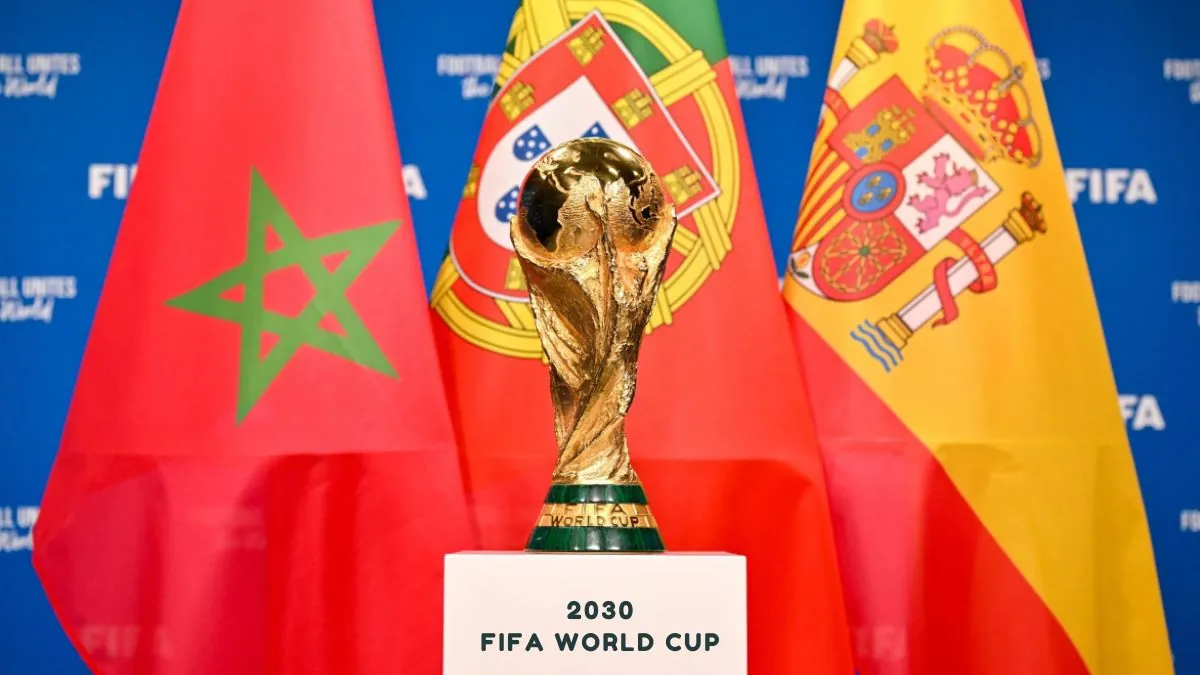
With the 2026 FIFA World Cup now complete, football fans around the world have already turned their attention to the next global spectacle—the 2030 FIFA World Cup. The tournament will mark the 100th anniversary of the FIFA World Cup, making it one of the most historic editions in football history.
For the first time ever, the FIFA World Cup will be held across three continents and six host nations. Spain, Portugal, and Morocco will host the majority of the matches, while Argentina, Uruguay, and Paraguay will stage the opening centenary fixtures in tribute to the inaugural 1930 World Cup.
In this guide, you’ll find everything you need to know about the 2030 FIFA World Cup, including the confirmed host countries, tournament dates, qualification format, stadiums, match schedule, expansion details, and the biggest challenges facing this historic edition.
2030 FIFA World Cup Host Countries
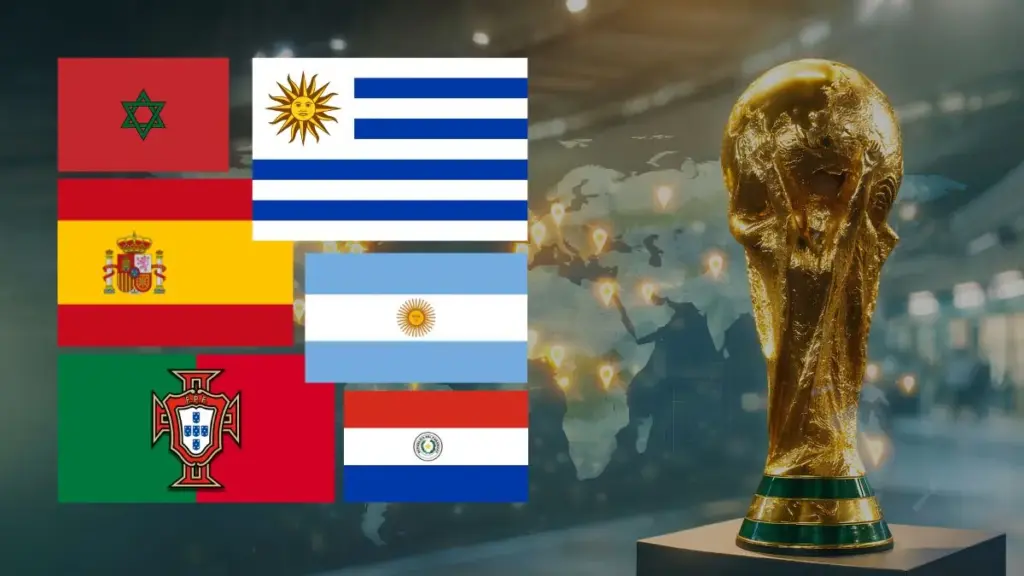
The 2030 FIFA World Cup will be jointly hosted by Spain, Portugal, and Morocco, while Argentina, Uruguay, and Paraguay will each host one opening match as part of FIFA’s centenary celebration.
This unique format makes the 2030 edition the first World Cup to be played across Europe, Africa, and South America, commemorating 100 years since the first FIFA World Cup was held in Uruguay in 1930.
The FIFA World Cup 2030 will be jointly hosted by:
Main Hosts (Majority of Matches):
- Spain
- Portugal
- Morocco
Centenary Matches (Special Celebration Games):
- Uruguay (one match at the iconic Estadio Centenario)
- Argentina
- Paraguay
This multi-country, multi-continental format was approved by FIFA in 2024 and represents a historic first for the tournament.
Why does the 2030 World Cup have the new format?
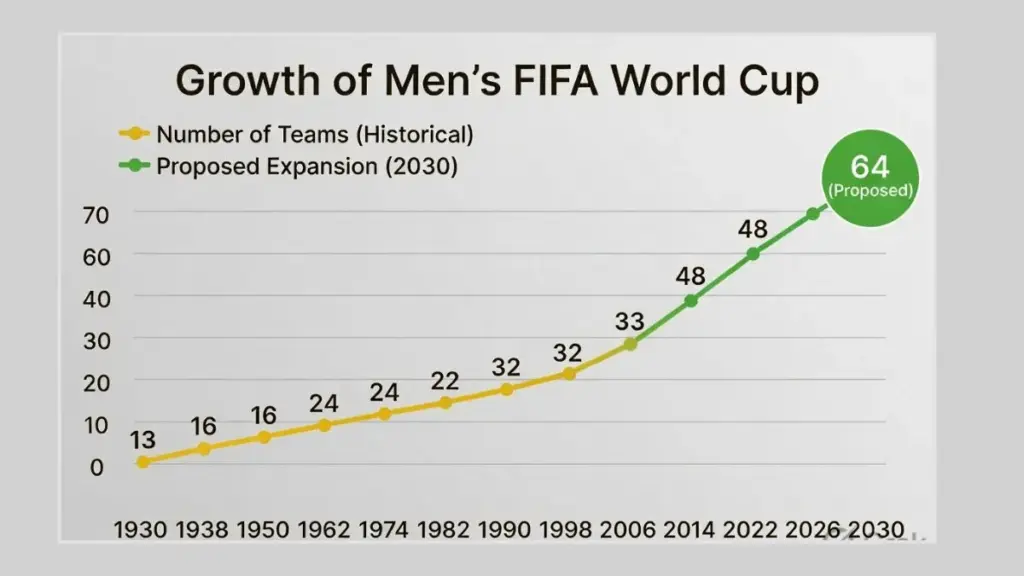
FIFA President Gianni Infantino described the 2030 hosting decision as “a celebration of football’s history and its future.”
The centenary matches in South America honour the first World Cup, which was held in Uruguay in 1930.
The Estadio Centenario in Montevideo will host one of the opening matches, creating a powerful symbolic link between the past and the present.
The bulk of the tournament will be played in Spain, Portugal, and Morocco, taking advantage of modern infrastructure, passionate football cultures, and excellent climate conditions in the summer months.
Key Details of the 2030 World Cup
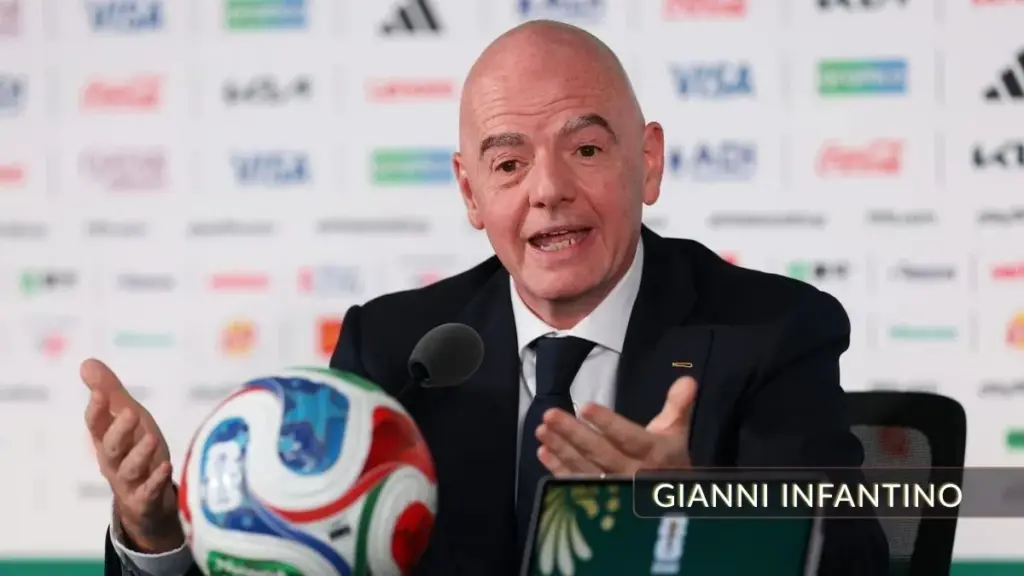
- Number of Teams: Expected to remain at 48 teams, although discussions about further expansion continue.
- Number of Matches: Around 104 matches.
- Venues: A total of 11–14 stadiums across the six host nations.
- Date: Likely June–July 2030 (exact dates to be confirmed).
- Opening Matches: Special games in Uruguay, with the main tournament kick-off in one of the primary host countries.
Stadiums and Infrastructure
Spain and Portugal already possess world-class stadiums from clubs like Real Madrid, Barcelona, Atlético Madrid, and Benfica/Porto. Morocco has invested heavily in modern venues following their strong bid.
Significant upgrades and new constructions are planned to meet FIFA’s high standards for the 2030 tournament.
Economic and Social Impact
Hosting the World Cup across six countries is expected to bring enormous economic benefits:
- Billions in revenue for tourism, hospitality, and infrastructure.
- Job creation across multiple nations.
- Increased global visibility for Morocco as an emerging football powerhouse.
The multi-continental approach also aims to promote football development in Africa while leveraging the strong football cultures of Europe and South America.
Challenges Ahead
While the concept is exciting, organizing a tournament across six countries and three continents presents logistical challenges:
- Player and team travel
- Scheduling coordination
- Fan travel and accommodation
- Security and infrastructure across different regions
FIFA and the host nations are already working on detailed plans to address these issues.
What Fans Can Expect
The 2030 World Cup promises to be a celebration like no other:
- Historic matches in Uruguay
- High-quality football in Spain and Portugal
- Passionate African support in Morocco
- A true global festival of football
Many football legends, including potentially Lionel Messi and Cristiano Ronaldo (depending on their playing status), are expected to attend as ambassadors or spectators.
The Road to 2030
With the 2026 World Cup now over, national teams will immediately begin focusing on qualification campaigns for 2030. European, African, Asian, and CONMEBOL qualifiers will be fiercely contested as countries fight for one of the 48 spots.
For the host nations, automatic qualification is expected for Spain, Portugal, and Morocco, with special arrangements for the South American centenary hosts.
A Historic Tournament Awaits
The 2030 FIFA World Cup will not just be another tournament — it will be a celebration of 100 years of the World Cup. By spreading the event across six countries and three continents, FIFA aims to make it the most inclusive and memorable edition yet.
Football fans around the world have four years to prepare. The journey to the 2030 World Cup has officially begun.
Next World Cup Hosts: Spain, Portugal, Morocco — with special centenary matches in Uruguay, Argentina, and Paraguay.
The greatest show on earth is coming — and it will be bigger and more historic than ever.