

The FIFA World Cup 2026 will be football’s biggest spectacle ever – 48 teams, 104 matches, and 16 world-class stadiums across the USA, Canada, and Mexico. From historic Estadio Azteca hosting the opening match to MetLife Stadium for the grand final, every venue has been transformed with natural grass pitches, cutting-edge tech, and sustainable upgrades to handle record crowds.
This complete guide breaks down capacities, renovations, transport links, technology, and legacy for all 16 stadiums – perfect whether you’re planning your World Cup trip or writing the ultimate infrastructure preview.
Top 7 Reasons Behind the FIFA World Cup 2026 Stadium Infrastructure
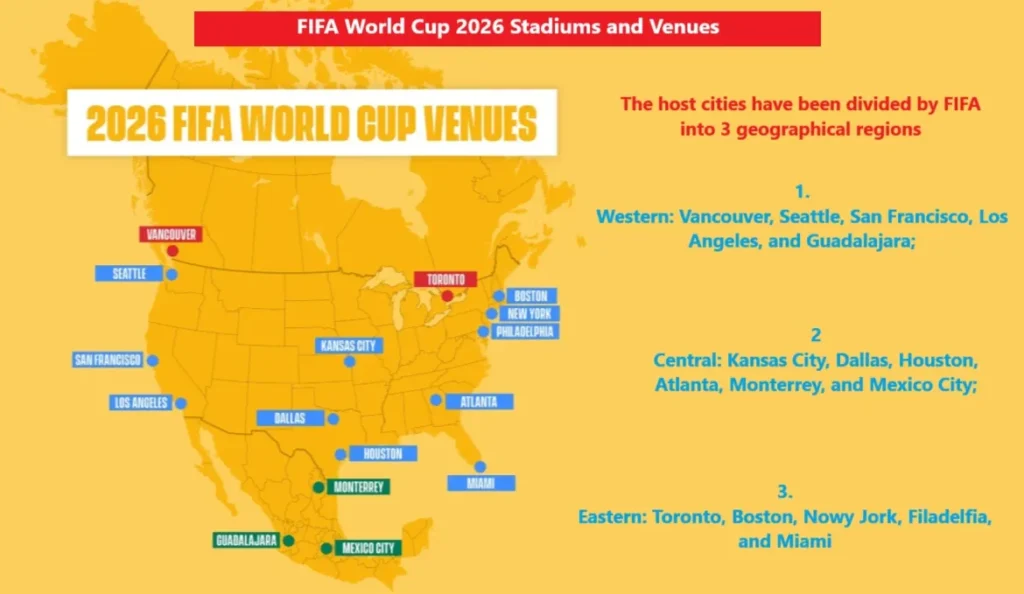
Unlike past World Cups with temporary stadiums, 2026 venues are existing NFL, MLS, and Liga MX homes that will continue thriving post-tournament. Upgraded pitches, accessibility improvements, renewable energy systems, and smart transport networks represent long-term infrastructure wins for host cities.
Experience three continents in one tournament: Mexico’s electric atmospheres, Canada’s waterfront domes, and America’s massive modern arenas. Whether you’re chasing the final in New York/New Jersey, opening night at Azteca, or a West Coast stadium roadtrip (Vancouver-Seattle-SoFi), 2026 delivers football’s ultimate venue showcase.
1. Tournament Scale and Stadium Map
- 16 stadiums in 16 host cities: 11 in the USA, 3 in Mexico, 2 in Canada.
- FIFA keeps the standard that World Cup venues must reach roughly 40,000+ capacity, which is why places like BMO Field in Toronto are being expanded for 2026.
Full List of World Cup 2026 Stadiums
| Country | City | Stadium (FIFA name) | Approx. Capacity* | Notes |
|---|---|---|---|---|
| Canada | Toronto | BMO Field (Toronto Stadium) | ~45,700 after expansion | Temporary extra seating added |
| Canada | Vancouver | BC Place (Vancouver Stadium) | ~54,500 | Retractable‑roof dome |
| Mexico | Mexico City | Estadio Azteca (Mexico City Stadium) | ~83,000 | Hosts opening match |
| Mexico | Guadalajara | Estadio Akron (Guadalajara Stadium) | ~48,000–49,800 | Home of Chivas |
| Mexico | Monterrey | Estadio BBVA (Monterrey Stadium) | ~53,500 | Modern, LEED‑rated arena |
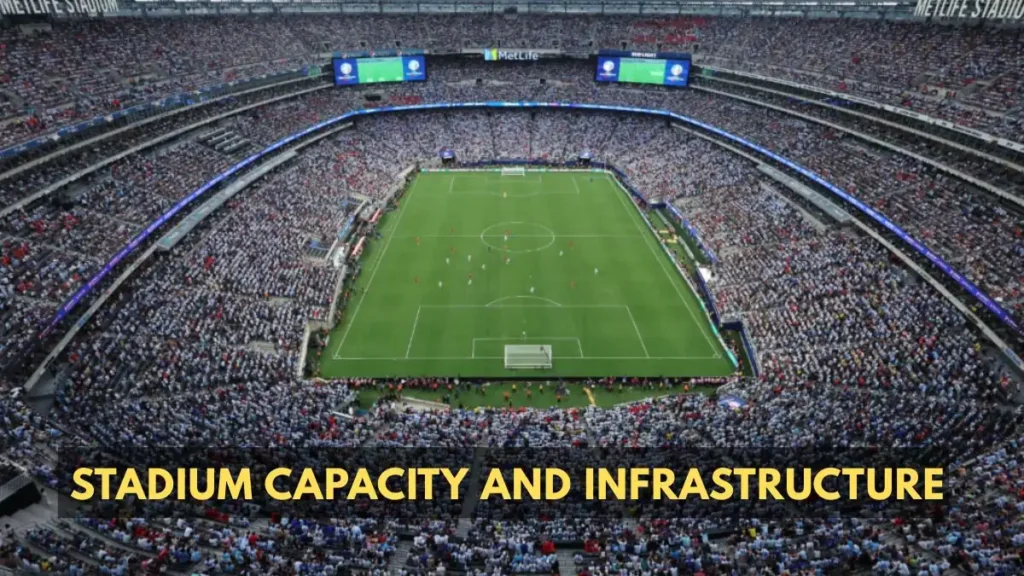
| USA | East Rutherford | MetLife Stadium (New York / New Jersey Stadium) | ~82,500 | Hosts the final |
| USA | Arlington (Dallas) | AT&T Stadium (Dallas Stadium) | ~80,000–94,000 WC configuration | Largest WC venue by capacity |
| USA | Inglewood (Los Angeles) | SoFi Stadium (Los Angeles Stadium) | ~70,000 (expandable to ~100k) | One of world’s most expensive arenas |
| USA | Atlanta | Mercedes‑Benz Stadium (Atlanta Stadium) | ~71,000–75,000 | Iconic retractable “halo” roof |
| USA | Miami Gardens | Hard Rock Stadium (Miami Stadium) | ~65,000 | Hosts third‑place match |
| USA | Santa Clara | Levi’s Stadium (San Francisco Bay Area Stadium) | ~68,500–71,000 | Bay Area hub |
| USA | Seattle | Lumen Field (Seattle Stadium) | ~69,000–70,000 | Famous for noise & atmosphere |
| USA | Houston | NRG Stadium (Houston Stadium) | ~72,000 | Retractable roof |
| USA | Kansas City | GEHA Field at Arrowhead (Kansas City Stadium) | ~73,000 World Cup cap | Guinness‑record crowd noise |
| USA | Foxborough (Boston) | Gillette Stadium (Boston Stadium) | ~65,800 | Northeast venue |
| USA | Philadelphia | Lincoln Financial Field (Philadelphia Stadium) | ~67,000–69,800 | Historic sports complex |
*Capacities are approximate and may vary slightly with FIFA‑specific configurations.
2. How Existing Stadiums Are Being Transformed
Natural Grass Pitches and Field Systems
- Many U.S. stadiums with artificial turf (e.g., Lumen Field, Gillette Stadium, MetLife, BC Place) will use temporary natural‑grass systems laid over their usual surface for the World Cup.
- These modular pitches include advanced drainage and ventilation systems to meet FIFA standards for ball roll, safety and recovery time between matches.
Capacity Boosts and Structural Upgrades
- BMO Field, Toronto: Undergoing a roughly $140–150m transformation, lifting capacity from around 30,000 to about 45,700 via new temporary stands, extra concourses, and video boards.
- BC Place, Vancouver: Already saw a huge post‑2010 renovation; 2026 work focuses on football‑specific seating layout, hospitality, and pitch tech rather than structural expansion.
- Several U.S. venues are adding or reworking locker rooms, mixed zones, media work areas, and camera platforms to meet World Cup broadcast specs.
3. Spotlight on the Flagship Stadiums
Estadio Azteca – Mexico City
- Opened: 1966 | Capacity: ~83,000 | Role: Opening match, Mexico group games, knockouts.
- First stadium ever to host three men’s World Cups (1970, 1986, 2026).
- Upgrades focus on seating, hospitality, accessibility and safety, preserving the classic bowl while modernising facilities.
MetLife Stadium – New York / New Jersey
- Opened: 2010 | Capacity: ~82,500 | Role: World Cup Final plus multiple knockouts.
- Already a Super Bowl host, it’s receiving field‑level, locker‑room and tech tweaks to become FIFA’s showpiece final venue.
AT&T Stadium – Dallas
- Opened: 2009 | Capacity: up to ~94,000 in WC mode
- Hosts more matches than any other stadium, including a semi‑final.
- Known for its massive retractable roof and giant central video board; 2026 work emphasises natural grass and football‑first sightlines.
SoFi Stadium – Los Angeles
- Opened: 2020 | Capacity: ~70,000 (expandable) | Role: Key group and knockout venue, including USA fixtures.
- Multi‑billion‑dollar arena with a translucent canopy and huge 360‑degree “Infinity Screen”, adapted for FIFA’s clean‑branding rules and pitch dimensions.
Mercedes‑Benz Stadium – Atlanta
- Opened: 2017 | Capacity: ~71–75k | Role: Major knockout venue, including a semi‑final.
- Iconic retractable roof and strong MLS atmosphere; upgrades include grass pitch installation and World Cup‑grade broadcast infrastructure.
4. Sustainability Inside the Stadiums
FIFA’s 2026 sustainability strategy defines common environmental goals across all venues.
Key stadium measures:
- Energy: LED lighting, efficient HVAC and in some cases on‑site renewables to lower energy use per spectator.
- Water: Efficient irrigation for natural grass, rainwater collection, and low‑flow fixtures to cut potable water demand.
- Waste: Zero‑waste or high‑diversion targets, with extensive recycling and composting at stadiums and fan zones.
- Materials: Preference for temporary, reusable structures (e.g., added seats at BMO Field) rather than permanent overbuild.
Some venues, such as Estadio BBVA in Monterrey and newer U.S. arenas, already feature LEED‑style green design, efficient envelopes and modern building systems.
5. Transport, Access and “Last‑Mile” Infrastructure
Hosting in three vast countries forces a serious focus on mobility and stadium access:
- All 16 venues plug into broader host‑city mobility plans with upgraded public transport, walking routes and traffic management.
- U.S. federal agencies (like FHWA) are using the tournament to test real‑time traffic operations, incident response and multimodal hubs.
Typical features around stadiums include:
- Extra metro, commuter rail or light rail service on matchdays in LA, New York, Atlanta, Boston, Seattle and others.
- Park‑and‑ride sites, shuttle buses, and rideshare drop‑off zones mapped to stadium security perimeters.
- “Last‑mile” pedestrian routes with temporary signage, road closures and fan‑fests guiding supporters from transit stops to stadium gates.
6. Technology and Operations Inside the Venues

Beyond the concrete and grass, 2026 stadiums are wired for a very high‑tech tournament:
- High‑density Wi‑Fi and 5G support streaming, live stats, AR experiences and mobile ticketing for tens of thousands of fans at once.
- Integration into city‑ and venue‑level digital twins, allowing operators to simulate crowd flows, entry queues and evacuation scenarios before match day.
- Upgraded control rooms with camera networks and data feeds to manage security, safety and match operations.
This infrastructure underpins wider FIFA initiatives like AI‑assisted officiating and analytics, but at ground level it translates to smoother entry, better connectivity and a more immersive in‑stadium experience.
7. Legacy: What These Stadium Investments Leave Behind
Unlike 2022, where several stadiums were built almost from scratch, 2026 relies on venues that already have regular tenants and packed event calendars.
Long‑term impacts:
- Clubs and leagues (NFL, MLS, CFL, Liga MX) inherit improved pitches, back‑of‑house areas and fan facilities that raise week‑to‑week standards.
- Host cities retain transport upgrades, accessibility improvements and sustainability systems built for the World Cup.
- For Canada and Mexico, it strengthens their reputation as repeat World Cup hosts, while U.S. stadiums confirm their status as the go‑to arenas for mega‑events like Super Bowls, Copa América and future global tournaments.