The 2026 FIFA World Cup, officially marketed as FIFA World Cup 26™, will be the 23rd edition of the world’s most prestigious football tournament. This historic event will take place from June 11 to July 19, 2026, and will be jointly hosted by 16 cities across three North American countries: the United States, Canada, and Mexico. For the first time in World Cup history, three nations will collaborate to host the FIFA World Cup 2026 tournament, marking a new era in international football.
This will be the first World Cup to feature 48 teams, an expansion of 16 teams from the previous seven tournaments. The expansion represents a 50% increase from the traditional 32-team format and promises to deliver the most inclusive and competitive World Cup in history.
Here is detailed information about the 2026 FIFA World Cup Format, Venues, Groups, Teams, Standing, Schedule, and What’s New in the upcoming Soccer World Cup.
Revolutionary New Format: How the 48-Team Tournament Works in the 2026 FIFA World Cup
Table of Contents
Group Stage Structure
The 48 teams will be split into 12 groups of 4 teams, with the top 2 of each group and the 8 best third-placed teams progressing to a new round of 32, as approved by the FIFA Council on March 14, 2023. This format change represents the first expansion and structural modification since the 1998 World Cup in France, which introduced the 32-team format that lasted for seven editions.
Group Stage Details:
- 12 Groups: Groups A through L, each containing 4 teams
- Match Structure: Each team plays three group stage matches
- Advancement: Top 2 teams from each group automatically advance (24 teams)
- Best Third-Place Teams: The 8 best third-place finishers also advance
- Total Advancing: 32 teams progress to the knockout stages
Tournament Progression
The total number of games played will increase from 64 to 104, and the number of games played by teams reaching the final four will increase from seven to eight. This means champions will need to win eight matches instead of seven to lift the trophy.
Knockout Stage Structure:
- Round of 32: 32 teams compete (16 matches)
- Round of 16: 16 teams compete (8 matches)
- Quarter-Finals: 8 teams compete (4 matches)
- Semi-Finals: 4 teams compete (2 matches)
- Third-Place Match: 1 match
- Final: 1 match
Tournament Duration
The tournament will last 39 days, an increase from 32 days in the 2014 and 2018 tournaments. Despite the increased number of matches, FIFA has structured the schedule to maintain competitive balance and adequate rest periods for teams.
The final matchday at club level for players named in the final squads is May 24, 2026; clubs have to release their players by May 25, with exceptions granted to players participating in continental club competition finals up until May 30.
All 16 Host Cities and Stadiums
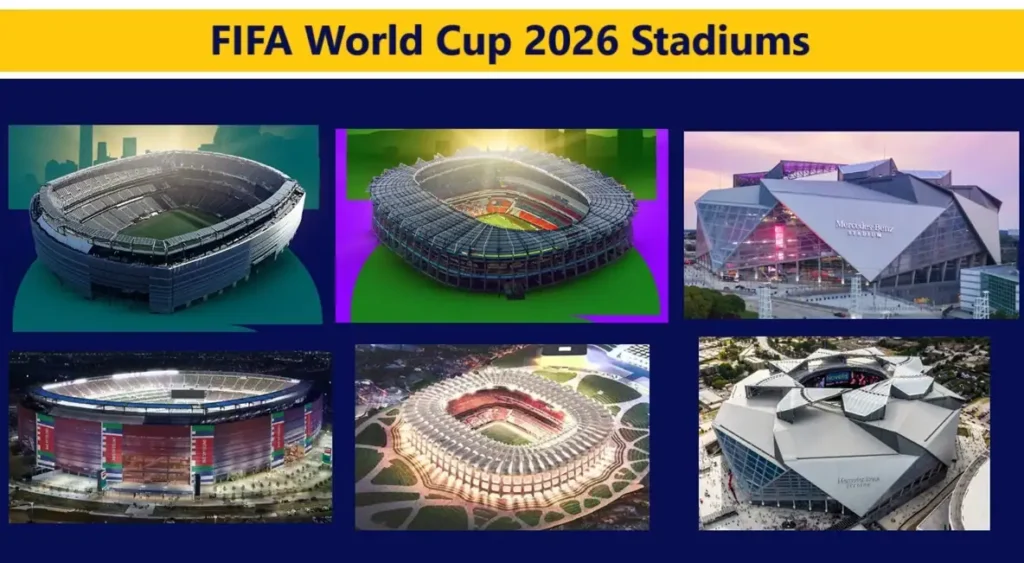
The 2026 World Cup will feature 16 world-class stadiums across three countries, representing the most venues used in a single World Cup since the 2002 tournament in Japan and South Korea.
United States Venues (11 Stadiums)
1. Mercedes-Benz Stadium – Atlanta, Georgia
- Capacity: 75,000
- Tenant Teams: Atlanta Falcons (NFL), Atlanta United FC (MLS)
- Notable Features: Retractable roof with climate control
- World Cup Matches: 6 group stage matches
2. Gillette Stadium – Foxborough, Massachusetts (Boston)
- Capacity: 70,000
- Tenant Teams: New England Patriots (NFL), New England Revolution (MLS)
- Notable Features: Signature 218-foot lighthouse, 360-degree observation deck
- Previous Tournament: Hosted FIFA Women’s World Cup 2003
- World Cup Matches: 6 matches, including the knockout stage
3. AT&T Stadium – Arlington, Texas (Dallas)
- Capacity: 94,000 (largest NFL stadium)
- Tenant Teams: Dallas Cowboys (NFL)
- Notable Features: Known as “The Death Star,” it features massive video boards
- World Cup Distinction: AT&T Stadium will host the most matches of any venue at the tournament, with nine.
- World Cup Matches: 9 matches, including knockout rounds
4. NRG Stadium – Houston, Texas
- Capacity: 72,000
- Tenant Teams: Houston Texans (NFL)
- Notable Features: Retractable roof, hosts many USMNT matches
- World Cup Matches: 7 matches
5. Arrowhead Stadium – Kansas City, Missouri
- Capacity: 76,000
- Tenant Teams: Kansas City Chiefs (NFL), Sporting KC (MLS)
- World Record: According to the Guinness World Records, the stadium in Missouri is the loudest outdoor sports venue in the world.
- World Cup Matches: 6 matches, including one quarter-final
6. SoFi Stadium – Inglewood, California (Los Angeles)
- Capacity: 70,000
- Tenant Teams: Los Angeles Rams (NFL), Los Angeles Chargers (NFL)
- Notable Features: Built in 2020, open-air with translucent roof, will host the LA 2028 Olympics ceremonies
- World Cup Distinction: The opening game for the United States will take place on June 12 at SoFi Stadium in Inglewood.
- World Cup Matches: 8 matches, including knockout rounds
7. Hard Rock Stadium – Miami Gardens, Florida
- Capacity: 65,000
- Tenant Teams: Miami Dolphins (NFL)
- Notable Features: $350 million renovation completed in 2016, hosted 6 Super Bowls
- Previous Tournaments: Hosts Formula 1 Miami Grand Prix, Miami Open tennis
- World Cup Matches: 7 matches
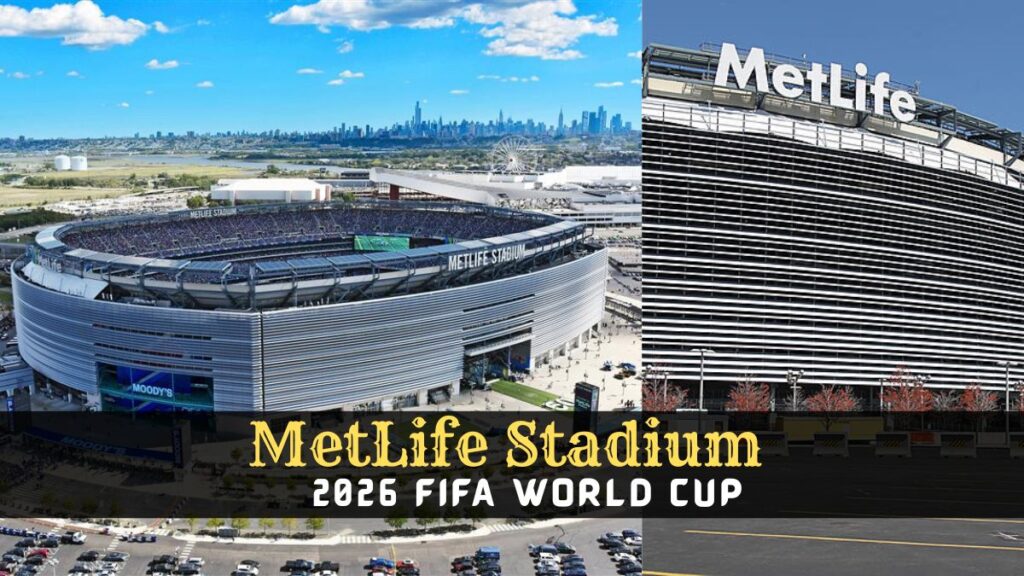
8. MetLife Stadium – East Rutherford, New Jersey (New York/New Jersey)
- Capacity: 82,500
- Tenant Teams: New York Giants (NFL), New York Jets (NFL)
- World Cup Distinction: MetLife Stadium in East Rutherford, New Jersey, will host the final on July 19.
- World Cup Matches: 8 matches, including the final
9. Lincoln Financial Field – Philadelphia, Pennsylvania
- Capacity: 69,000
- Tenant Teams: Philadelphia Eagles (NFL)
- World Cup Matches: 6 matches
10. Levi’s Stadium – Santa Clara, California (San Francisco Bay Area)
- Capacity: 70,909
- Tenant Teams: San Francisco 49ers (NFL)
- Notable Features: Will also host the 2026 Super Bowl
- World Cup Matches: 6 matches
11. Lumen Field – Seattle, Washington
- Capacity: 69,000
- Tenant Teams: Seattle Seahawks (NFL), Seattle Sounders FC (MLS)
- Notable Features: Renowned for incredible atmosphere, views of downtown Seattle
- USMNT Schedule: The USMNT’s second game is scheduled for June 19 at Seattle’s Lumen Field—a stadium revered for its atmosphere.
- World Cup Matches: 6 matches, including knockout rounds
Canada Venues (2 Stadiums)
12. BMO Field – Toronto, Ontario
- Capacity: 45,736 (expanded for World Cup)
- Tenant Teams: Toronto FC (MLS), Toronto Argonauts (CFL)
- Notable Features: $120 million renovation to meet European stadium standards
- World Cup Distinction: The opening match involving Canada will take place on June 12 at BMO Field in Toronto.
- World Cup Matches: 6 matches
13. BC Place – Vancouver, British Columbia
- Capacity: 54,000
- Tenant Teams: Vancouver Whitecaps FC (MLS), BC Lions (CFL)
- Notable Features: Hosted Opening and Closing Ceremonies of the 2010 Winter Olympics
- Location: Positioned between ocean and the mountains with spectacular scenery
- World Cup Matches: 7 matches
Mexico Venues (3 Stadiums)
14. Estadio Azteca – Mexico City
- Capacity: 83,000
- Tenant Teams: Club América, Cruz Azul, Mexico national team
- Historic Significance: This iconic football stadium in the Mexican capital, Mexico City hosted the World Cup finals in 1970 and 1986, where it welcomed Pele and Diego Maradona. It will become the first stadium to host matches in three World Cups.
- World Cup Distinction: The opening match was announced to include Mexico, taking place on June 11, 2026, at the Estadio Azteca in Mexico City.
- World Cup Matches: 8 matches including knockout rounds
15. Estadio BBVA – Monterrey
- Capacity: 53,500
- Tenant Teams: CF Monterrey
- Notable Features: State-of-the-art stadium built in recent years
- Previous World Cup: Hosted matches in 1986
- World Cup Matches: 7 matches
16. Estadio Akron – Guadalajara
- Capacity: 48,000+
- Tenant Teams: CD Guadalajara (Chivas)
- Notable Features: One of Mexico’s largest stadiums, hosted the 2011 Pan American Games
- Cultural Significance: Guadalajara is regarded as the cultural center of Mexico and the home of mariachi music
- World Cup Distinction: The only tournament venue that will not host a knockout stage fixture
- World Cup Matches: 6 group stage matches
Qualified Teams: The Road to 2026

As of December 2, 2025, 42 teams have now qualified for the 48-team tournament. The final six spots will be determined through playoff matches in March 2026.
Automatic Qualifiers by Confederation
Here are all the qualified teams after the 2026 FIFA World Cup Qualification process below –
Host Nations (3 teams – CONCACAF)
UEFA – Europe (12 of 16 qualified)
2026 FIFA World Cup European Qualification
- Austria
- Belgium
- Croatia
- England
- France
- Germany
- Netherlands
- Norway
- Portugal
- Scotland
- Spain
- Switzerland
CONMEBOL – South America (6 qualified)
2026 FIFA World Cup South America Qualification
CAF – Africa (9 qualified)
2026 FIFA World Cup African Qualification
- Algeria
- Cape Verde (debut)
- Egypt
- Ghana
- Ivory Coast
- Morocco
- Saudi Arabia
- Senegal
- South Africa
- Tunisia
AFC – Asia (8 qualified)
2026 FIFA World Cup Asian Qualification
CONCACAF – North/Central America & Caribbean (3 qualified, plus 3 hosts)
2026 FIFA World Cup Concacaf Qualification
- Curaçao (debut)
- Haiti
- Panama
OFC – Oceania (1 qualified)
2026 FIFA World Cup Oceania Qualification
- New Zealand
Historic Qualifications and Debuts
Cape Verde, Curaçao, Jordan, and Uzbekistan will all make their World Cup debuts.
Curaçao – Smallest Nation Ever: Tiny Caribbean island country Curacao will go to the 2026 FIFA World Cup as the smallest nation by population ever to qualify for the marquee event in men’s football, after a 0-0 draw in Jamaica on Tuesday saw them finish top of a four-team group.
Scotland Returns: Scotland have qualified for the World Cup for the first time since 1998 after a wild 4-2 victory over Denmark.
Haiti’s Historic Return: Haiti ended a 51-year wait to qualify for their second World Cup appearance in stunning fashion as they beat Honduras and Costa Rica to top spot in CONCACAF Group C.
Seven Arab Nations: For the first time, seven Arab nations (Algeria, Egypt, Jordan, Morocco, Qatar, Saudi Arabia, and Tunisia) will be competing for the World Cup.
Remaining Qualification Spots (6 teams)
UEFA Play-offs (4 spots) for the UEFA playoffs, four paths were created. Each path consists of four teams contesting two semifinals, with the winners facing off in the final to book a place at the World Cup.
The semifinals will be played on March 26, 2026, and the finals on March 31, 2026:
Path A:
- Italy vs. Northern Ireland
- Wales vs. Bosnia and Herzegovina
Path B:
- Denmark vs. Slovakia
- Ireland vs. Poland
Path C:
- Turkey vs. Romania
- Ukraine vs. Czech Republic
Path D:
- Sweden vs. Albania
- Kosovo vs. North Macedonia
Intercontinental Play-offs (2 spots) For the interconfederation playoffs, two paths were created for six total teams. The two teams with the highest Soccer FIFA ranking — DR Congo and Iraq — were seeded and advanced directly to each path’s final.
Matches will be played in March 2026 in Mexico (Guadalajara and Monterrey):
Playoff Path A:
- New Caledonia vs. Jamaica
- Winner plays DR Congo (seeded)
Playoff Path B:
- Bolivia vs. Suriname
- Winner plays Iraq (seeded)
Draw Process and Group Formation
Draw Details
The 48 teams will be divided into four pots of 12. Pot 1 will consist of the three hosts and the top nine teams in the November 2025 FIFA World Rankings, excluding the hosts. Pots 2, 3, and 4 will consist of the remaining teams, ranked accordingly.
Pot Structure
Based on current FIFA rankings, Pot likely includes:
Pot 1:
United States (host), Canada (host), Mexico (host), Spain, Argentina, France, England, Brazil, Portugal, Netherlands, Belgium, Germany
Pot 2:
Croatia, Morocco, Colombia, Uruguay, Switzerland, Japan, Senegal, Iran, South Korea, Ecuador, Austria, Australia
Pot 3:
Norway, Panama, Egypt, Algeria, Scotland, Paraguay, Tunisia, Ivory Coast, Uzbekistan, Qatar, Saudi Arabia, South Africa
Pot 4:
Jordan, Cape Verde, Ghana, Curacao, Haiti, New Zealand, UEFA Play-off Qualifier A, UEFA Play-off Qualifier B, UEFA Play-off Qualifier C, UEFA Play-off Qualifier D, Confed Play-off Qualifier 1, Confed Play-off Qualifier 2
Draw Restrictions
Two countries from the same confederation cannot be drawn into the same group. The one caveat is Europe, from which 16 countries will qualify, making it impossible to prevent a clash. Therefore, four groups will contain two UEFA teams.
Placeholder Teams
It is expected that Pot 4 will contain placeholders for those four UEFA playoff qualifiers and two interconfederation playoff qualifiers, as has been the case in past World Cups. Final group assignments for these teams will be determined after the March 2026 play-offs conclude.
Group Allocation
Host Nation Groups:
| Groups | Teams |
|---|---|
| Group A | Mexico; South Africa; Republic of Korea; UEFA Play-off D winner |
| Group B | Canada; UEFA Play-off A winner; Qatar; Switzerland |
| Group C | Brazil; Morocco; Haiti; Scotland |
| Group D | USA; Paraguay; Australia; UEFA Play-off C winner |
| Group E | Germany; Curacao; Côte d’Ivoire; Ecuador |
| Group F | Netherlands; Japan; UEFA Play-off B winner; Tunisia |
| Group G | Belgium; Egypt; Islamic Republic of Iran; New Zealand |
| Group H | Spain; Cabo Verde; Saudi Arabia; Uruguay |
| Group I | France; Senegal; FIFA Play-off 2 winner; Norway |
| Group J | Argentina; Algeria; Austria; Jordan |
| Group K | Portugal; FIFA Play-off 1 winner; Uzbekistan; Colombia |
| Group L | England; Croatia; Ghana; Panama |
Match Distribution by Country
The United States will host 78 matches, including from the quarter-final stage onward, while Canada and Mexico will each host 13. All knockout matches from the quarter-finals onwards will be played in the United States.
2026 FIFA World Cup Complete Tournament Schedule
Key Dates and Timeline
- Tournament Period: June 11 to July 19, 2026 (39 days)
- Tournament Draw: The 2026 FIFA World Cup draw placed at 12:00 UTC−5 (EST) on Friday, December 5, 2025, at the Kennedy Center in Washington, D.C.
Phase-by-Phase 2026 FIFA World Cup Schedule
On Saturday, 5 December, FIFA announced the venues and kick-off times for the 2026 World Cup, set to run from 11 June to 19 July across Canada, Mexico, and the United States.
Group Stage: June 11-27, 2026
- Duration: 17 days
- Total Matches: 48 matches (4 matches per group × 12 groups)
- Match Days: Multiple matches per day across different venues
- Rest Between Matches: Each team plays with a minimum 3-day rest
Group A fixtures
Teams: Mexico; South Africa; Republic of Korea; UEFA Play-off D winner
| Date | Match | Match Number | Stadium |
|---|---|---|---|
| June 11, 2026 | Mexico vs South Africa | Match 1 | Estadio Azteca, Mexico City |
| June 11, 2026 | South Korea vs UEFA Path D winner | Match 2 | Estadio Akron, Zapopan |
| June 18, 2026 | UEFA Path D winner vs South Africa | Match 25 | Mercedes-Benz Stadium, Atlanta |
| June 18, 2026 | Mexico vs South Korea | Match 28 | Estadio Akron, Zapopan |
| June 24, 2026 | UEFA Path D winner vs Mexico | Match 53 | Estadio Azteca, Mexico City |
Group B fixtures
Teams: Canada; UEFA Play-off A winner; Qatar; Switzerland
| Date | Match | Match Number | Stadium |
|---|---|---|---|
| June 12, 2026 | Canada vs UEFA Path A winner | Match 3 | BMO Field, Toronto |
| June 13, 2026 | Qatar vs Switzerland | Match 8 | Levi’s Stadium, Santa Clara |
| June 18, 2026 | Switzerland vs UEFA Path A winner | Match 26 | SoFi Stadium, Inglewood |
| June 18, 2026 | Canada vs Qatar | Match 27 | BC Place, Vancouver |
| June 24, 2026 | Switzerland vs Canada | Match 51 | BC Place, Vancouver |
Group C fixtures
Teams: Brazil; Morocco; Haiti; Scotland
| Date | Match | Match Number | Stadium |
|---|---|---|---|
| June 13, 2026 | Brazil vs Morocco | Match 5 or 7 | Gillette Stadium, Foxborough or MetLife Stadium, East Rutherford |
| June 13, 2026 | Haiti vs Scotland | Match 5 or 7 | Gillette Stadium, Foxborough or MetLife Stadium, East Rutherford |
| June 19, 2026 | Brazil vs Haiti | Match 29 or 30 | Lincoln Financial Field, Philadelphia or Gillette Stadium, Foxborough |
| June 19, 2026 | Scotland vs Morocco | Match 29 or 30 | Lincoln Financial Field, Philadelphia or Gillette Stadium, Foxborough |
| June 24, 2026 | Scotland vs Brazil | Match 49 or 50 | Hard Rock Stadium, Miami Gardens or Mercedes-Benz Stadium, Atlanta |
| June 24, 2026 | Morocco vs Haiti | Match 49 or 50 | Hard Rock Stadium, Miami Gardens or Mercedes-Benz Stadium, Atlanta |
Group D fixtures
Teams: USA; Paraguay; Australia; UEFA Play-off C winner
| Date | Match | Match Number | Stadium |
|---|---|---|---|
| June 12, 2026 | United States vs Paraguay | Match 4 | SoFi Stadium, Inglewood |
| June 13, 2026 | Australia vs UEFA Path C winner | Match 6 | BC Place, Vancouver |
| June 19, 2026 | UEFA Path C winner vs Paraguay | Match 31 | Levi’s Stadium, Santa Clara |
| June 19, 2026 | United States vs Australia | Match 32 | Lumen Field, Seattle |
| June 25, 2026 | UEFA Path C winner vs United States | Match 59 | SoFi Stadium, Inglewood |
Group E fixtures
Teams: Germany; Curacao; Côte d’Ivoire; Ecuador
| Date | Match | Match Number | Stadium |
|---|---|---|---|
| June 14, 2026 | Germany vs Curaçao | Match 9 or 10 | Lincoln Financial Field, Philadelphia or NRG Stadium, Houston |
| June 14, 2026 | Ivory Coast vs Ecuador | Match 9 or 10 | Lincoln Financial Field, Philadelphia or NRG Stadium, Houston |
| June 20, 2026 | Germany vs Ivory Coast | Match 33 or 34 | BMO Field, Toronto or Arrowhead Stadium, Kansas City |
| June 20, 2026 | Ecuador vs Curaçao | Match 33 or 34 | BMO Field, Toronto or Arrowhead Stadium, Kansas City |
| June 25, 2026 | Ecuador vs Germany | Match 55 or 56 | Lincoln Financial Field, Philadelphia or MetLife Stadium, East Rutherford |
| June 25, 2026 | Curaçao vs Ivory Coast | Match 55 or 56 | Lincoln Financial Field, Philadelphia or MetLife Stadium, East Rutherford |
Group F fixtures
Teams: Netherlands; Japan; UEFA Play-off B winner; Tunisia
| Date | Match | Match Number | Stadium |
|---|---|---|---|
| June 14, 2026 | Netherlands vs Japan | Match 11 or 12 | AT&T Stadium, Arlington or Estadio BBVA, Guadalupe |
| June 14, 2026 | UEFA Path B winner vs Tunisia | Match 11 or 12 | AT&T Stadium, Arlington or Estadio BBVA, Guadalupe |
| June 20, 2026 | Netherlands vs UEFA Path B winner | Match 35 or 36 | NRG Stadium, Houston or Estadio BBVA, Guadalupe |
| June 20, 2026 | Tunisia vs Japan | Match 35 or 36 | NRG Stadium, Houston or Estadio BBVA, Guadalupe |
| June 25, 2026 | Tunisia vs Netherlands | Match 57 or 58 | AT&T Stadium, Arlington or Arrowhead Stadium, Kansas City |
| June 25, 2026 | Japan vs UEFA Path B winner | Match 57 or 58 | AT&T Stadium, Arlington or Arrowhead Stadium, Kansas City |
Group G fixtures
Teams: Belgium; Egypt; Islamic Republic of Iran; New Zealand
| Date | Match | Match Number | Stadium |
|---|---|---|---|
| June 15, 2026 | Belgium vs Egypt | Match 15 or 16 | SoFi Stadium, Inglewood or Lumen Field, Seattle |
| June 15, 2026 | Iran vs New Zealand | Match 15 or 16 | SoFi Stadium, Inglewood or Lumen Field, Seattle |
| June 21, 2026 | Belgium vs Iran | Match 39 or 40 | SoFi Stadium, Inglewood or BC Place, Vancouver |
| June 21, 2026 | New Zealand vs Egypt | Match 39 or 40 | SoFi Stadium, Inglewood or BC Place, Vancouver |
| June 26, 2026 | New Zealand vs Belgium | Match 63 or 64 | Lumen Field, Seattle or BC Place, Vancouver |
Group H fixtures
Teams: Spain; Cabo Verde; Saudi Arabia; Uruguay
| Date | Match | Match Number | Stadium |
|---|---|---|---|
| June 15, 2026 | Spain vs Cape Verde | Match 13 or 14 | Hard Rock Stadium, Miami Gardens or Mercedes-Benz Stadium, Atlanta |
| June 15, 2026 | Saudi Arabia vs Uruguay | Match 13 or 14 | Hard Rock Stadium, Miami Gardens or Mercedes-Benz Stadium, Atlanta |
| June 21, 2026 | Spain vs Saudi Arabia | Match 37 or 38 | Hard Rock Stadium, Miami Gardens or Mercedes-Benz Stadium, Atlanta |
| June 21, 2026 | Uruguay vs Cape Verde | Match 37 or 38 | Hard Rock Stadium, Miami Gardens or Mercedes-Benz Stadium, Atlanta |
| June 26, 2026 | Uruguay vs Spain | Match 65 or 66 | NRG Stadium, Houston or Estadio Akron, Zapopan |
| June 26, 2026 | Cape Verde vs Saudi Arabia | Match 65 or 66 | NRG Stadium, Houston or Estadio Akron, Zapopan |
Group I fixtures
Teams: France; Senegal; FIFA Play-off 2 winner; Norway
| Date | Match | Match Number | Stadium |
|---|---|---|---|
| June 16, 2026 | France vs Senegal | Match 17 or 18 | MetLife Stadium, East Rutherford or Gillette Stadium, Foxborough |
| June 16, 2026 | IC Path 2 winner vs Norway | Match 17 or 18 | MetLife Stadium, East Rutherford or Gillette Stadium, Foxborough |
| June 22, 2026 | France vs IC Path 2 winner | Match 41 or 42 | MetLife Stadium, East Rutherford or Lincoln Financial Field, Philadelphia |
| June 22, 2026 | Norway vs Senegal | Match 41 or 42 | MetLife Stadium, East Rutherford or Lincoln Financial Field, Philadelphia |
| June 26, 2026 | Norway vs France | Match 61 or 62 | Gillette Stadium, Foxborough or BMO Field, Toronto |
| June 26, 2026 | Senegal vs IC Path 2 winner | Match 61 or 62 | Gillette Stadium, Foxborough or BMO Field, Toronto |
Group J fixtures
Teams: Argentina; Algeria; Austria; Jordan
| Date | Match | Match Number | Stadium |
|---|---|---|---|
| June 16, 2026 | Argentina vs Algeria | Match 19 or 20 | Arrowhead Stadium, Kansas City or Levi’s Stadium, Santa Clara |
| June 16, 2026 | Austria vs Jordan | Match 19 or 20 | Arrowhead Stadium, Kansas City or Levi’s Stadium, Santa Clara |
| June 22, 2026 | Argentina vs Austria | Match 43 or 44 | AT&T Stadium, Arlington or Levi’s Stadium, Santa Clara |
| June 22, 2026 | Jordan vs Algeria | Match 43 or 44 | AT&T Stadium, Arlington or Levi’s Stadium, Santa Clara |
| June 27, 2026 | Jordan vs Argentina | Match 69 or 70 | Arrowhead Stadium, Kansas City or AT&T Stadium, Arlington |
| June 27, 2026 | Algeria vs Austria | Match 69 or 70 | Arrowhead Stadium, Kansas City or AT&T Stadium, Arlington |
Group K fixtures
Teams: Portugal; FIFA Play-off 1 winner; Uzbekistan; Colombia
| Date | Match | Match Number | Stadium |
|---|---|---|---|
| June 17, 2026 | Portugal vs IC Path 1 winner | Match 23 or 24 | NRG Stadium, Houston or Estadio Azteca, Mexico City |
| June 17, 2026 | Uzbekistan vs Colombia | Match 23 or 24 | NRG Stadium, Houston or Estadio Azteca, Mexico City |
| June 23, 2026 | Portugal vs Uzbekistan | Match 47 or 48 | NRG Stadium, Houston or Estadio Akron, Zapopan |
| June 23, 2026 | Colombia vs IC Path 1 winner | Match 47 or 48 | NRG Stadium, Houston or Estadio Akron, Zapopan |
| June 27, 2026 | Colombia vs Portugal | Match 71 or 72 | Hard Rock Stadium, Miami Gardens or Mercedes-Benz Stadium, Atlanta |
| June 27, 2026 | IC Path 1 winner vs Uzbekistan | Match 71 or 72 | Hard Rock Stadium, Miami Gardens or Mercedes-Benz Stadium, Atlanta |
Group L fixtures
Teams: England; Croatia; Ghana; Panama
| Date | Match | Match Number | Stadium |
|---|---|---|---|
| June 17, 2026 | England vs Croatia | Match 21 or 22 | BMO Field, Toronto or AT&T Stadium, Arlington |
| June 17, 2026 | Ghana vs Panama | Match 21 or 22 | BMO Field, Toronto or AT&T Stadium, Arlington |
| June 23, 2026 | England vs Ghana | Match 45 or 46 | Gillette Stadium, Foxborough or BMO Field, Toronto |
| June 23, 2026 | Panama vs Croatia | Match 45 or 46 | Gillette Stadium, Foxborough or BMO Field, Toronto |
| June 27, 2026 | Panama vs England | Match 67 or 68 | MetLife Stadium, East Rutherford or Lincoln Financial Field, Philadelphia |
| June 27, 2026 | Croatia vs Ghana | Match 67 or 68 | MetLife Stadium, East Rutherford or Lincoln Financial Field, Philadelphia |
Round of 32: June 28 – July 3, 2026
- Duration: 6 days
- Total Matches: 16 matches
- Format: Single-elimination knockout
Round of 16: July 4-7, 2026
- Duration: 4 days
- Total Matches: 8 matches
Quarter-Finals: July 9-11, 2026
- Duration: 3 days
- Total Matches: 4 matches
- All venues: United States only
Semi-Finals: July 14-15, 2026
- Duration: 2 days
- Total Matches: 2 matches
Third-Place Play-Off: July 18, 2026
- Total Matches: 1 match
2026 FIFA World Cup Final: July 19, 2026
- Venue: MetLife Stadium, East Rutherford, New Jersey
- Capacity: 82,500
Opening Matches by Host Nation
Mexico Opening Match: June 11, 2026
- Venue: Estadio Azteca, Mexico City
- Significance: Tournament opener featuring Mexico in Group A
Canada Opening Match: June 12, 2026
- Venue: BMO Field, Toronto
- Group: Group B
USA Opening Match: June 12, 2026
- Venue: SoFi Stadium, Inglewood (Los Angeles)
- Group: Group D
Each host nation was scheduled to play its three matches in the group stage within its own country.
What’s New in the 2026 FIFA World Cup: Historic Changes and Innovations
1. Largest Expansion in Modern World Cup History
The jump from 32 to 48 teams represents the most significant expansion since the tournament grew from 16 to 24 teams in 1982. This 50% increase allows for greater global representation and opportunities for emerging football nations.
2. First Three-Nation Host
The tournament will be the first to be hosted by three nations. While Japan and South Korea co-hosted in 2002, this marks the first time three countries will collaborate to stage the event.
3. New Round of 32
The introduction of a Round of 32 is a direct result of the expanded format, creating an additional knockout round before the traditional Round of 16.
4. Group Format Change
The tournament initially planned to use 16 groups of 3 teams, but FIFA changed this due to concerns about potential collusion. The 12 groups of 4 format maintains the integrity of the competition while accommodating more teams.
5. Record Number of Matches
With 104 total matches (compared to 64 in 2022), the tournament offers unprecedented football action. Fans worldwide will have more opportunities to watch their teams compete.
6. Extended Tournament Duration
At 39 days, this will be one of the longest World Cups in history, though FIFA has ensured adequate rest periods for players and manageable travel schedules.
7. Mexico’s Historic Third Hosting
With its past hosting of the 1970 and 1986 tournaments, Mexico will become the first country to host or co-host the men’s World Cup three times.
8. Estadio Azteca Makes History
Estadio Azteca becomes the first stadium to host matches in three different World Cups (1970, 1986, 2026), cementing its status as one of football’s most iconic venues.
9. Enhanced Global Representation
The expanded qualification slots mean:
- 16 UEFA teams (up from 13)
- 9 CAF teams (up from 5)
- 8 AFC teams (up from 4.5)
- 6 CONMEBOL teams (up from 4.5)
- 6 CONCACAF teams (up from 3.5, including hosts)
- 1 OFC team (first guaranteed spot ever)
10. Oceania’s Guaranteed Spot
For the first time in World Cup history, Oceania (OFC) receives a guaranteed qualification spot, ensuring representation from all six continental confederations.
11. More Debutant Nations
With four confirmed debutants (Cape Verde, Curaçao, Jordan, Uzbekistan) and potential for more through play-offs, 2026 will welcome more first-time participants than recent tournaments.
12. Return to Summer Schedule
Following the unique winter schedule of Qatar 2022 (November–December), the event will return to its usual Northern Hemisphere summer timetable.
13. Advanced Stadium Technology
Many venues feature:
- Retractable roofs with climate control (Atlanta, Dallas, Houston, Vancouver)
- State-of-the-art video boards and fan experience technology
- Grass field installations in venues that typically use artificial turf
14. Enhanced Player Release Protocols
The final matchday at club level for players named in the final squads is May 24, 2026; clubs have to release their players by May 25, with exceptions granted to players participating in continental club competition finals up until May 30.
15. Geographical Clustering for Travel Efficiency
Host cities were strategically grouped into regions (Western, Central, Eastern) to minimize travel distances for teams and fans, despite the vast geographical spread across three countries.
Impact and Expectations
Economic Impact
The 2026 FIFA World Cup is projected to generate significant economic benefits for the three host nations:
- Billions in direct economic activity
- Infrastructure improvements in host cities
- Tourism boom across North America
- Job creation in hospitality, transportation, and event management sectors
Football Development
The expanded format is expected to:
- Accelerate football development in emerging nations
- Increase global investment in youth academies and infrastructure
- Expand the sport’s reach in North America, particularly the United States
- Build on the legacy of USA 1994, which helped establish Major League Soccer
Cultural Significance
With 2026 FIFA World Cup matches across diverse cities like Mexico City, Toronto, Vancouver, Miami, and Seattle, the tournament will showcase:
- North American cultural diversity
- The region’s passion for football
- World-class infrastructure and organizational capabilities
- Unity through sport across three nations
Broadcasting and Media
The tournament will reach unprecedented global audiences through Global Broadcasting rights:
- Expanded 2026 FIFA World Cup match schedule provides more broadcast windows
- Time zones favorable for the Americas, manageable for Europe
- Record-breaking viewership expected given expanded teams and global interest
- Enhanced digital coverage and fan engagement platforms
Conclusion of the 2026 FIFA World Cup Tournaments

The 2026 FIFA World Cup represents a watershed moment in football history. With 48 teams, 104 matches, 16 world-class venues, and the first-ever three-nation hosting arrangement, this tournament promises to be the most inclusive, competitive, and spectacular World Cup ever staged.
From the opening match at the iconic Estadio Azteca on June 11, 2026, to the final at MetLife Stadium on July 19, 2026, football fans worldwide will witness history as nations from every corner of the globe compete for the sport’s ultimate prize.
As the 2026 FIFA World Cup qualification concludes and the final draw approaches in December 2025, excitement continues to build for what promises to be an unforgettable summer of football across North America.
Whether you’re supporting a traditional powerhouse like Brazil or Argentina and European Champion Portugal or Spain, a rising force like Morocco or Japan, or a debutant nation making history, the 2026 FIFA World Cup will deliver moments that will be remembered for generations.
Mark your calendars: June 11 – July 19, 2026. The beautiful game’s greatest celebration is coming to North America.
Frequently Asked Questions (FAQ)

When does the 2026 FIFA World Cup start and end?
The 2026 FIFA World Cup will take place from June 11 to July 19, 2026, spanning 39 days across the United States, Canada, and Mexico. The opening match kicks off on June 11 at Estadio Azteca in Mexico City, while the final will be held on July 19 at MetLife Stadium in East Rutherford, New Jersey.
How many teams will participate in the 2026 World Cup?
The 2026 FIFA World Cup will feature 48 teams, a significant expansion from the traditional 32-team format. This represents a 50% increase and marks the first time FIFA has expanded the tournament since 1998. The 48 teams will be divided into 12 groups of 4 teams each.
What is the new tournament format for 2026?
The tournament will feature 12 groups of 4 teams in the group stage. The top 2 teams from each group (24 teams) plus the 8 best third-place finishers will advance to a new Round of 32.
From there, the tournament proceeds through traditional knockout stages: Round of 16, Quarter-Finals, Semi-Finals, and the Final. Teams reaching the final will play 8 matches instead of the previous 7.
How many matches will be played in total?
The 2026 FIFA World Cup will feature 104 matches, an increase from the 64 matches played in previous tournaments. This includes 48 group stage matches, 16 Round of 32 matches, 8 Round of 16 matches, 4 Quarter-Finals, 2 Semi-Finals, 1 Third-Place match, and the Final.
Which countries are hosting the 2026 FIFA World Cup?
The tournament will be jointly hosted by three North American countries: the United States, Canada, and Mexico. This marks the first time in World Cup history that three nations will co-host the tournament. The United States will host 78 matches (including all knockout rounds from the quarter-finals onward), while Canada and Mexico will each host 13 matches.
How many stadiums will be used and where are they located?
The tournament will be played across 16 world-class stadiums: 11 in the United States (Atlanta, Boston, Dallas, Houston, Kansas City, Los Angeles, Miami, New York/New Jersey, Philadelphia, San Francisco Bay Area, Seattle), 3 in Mexico (Mexico City, Monterrey, Guadalajara), and 2 in Canada (Toronto, Vancouver).
Where will the final be played?
The 2026 FIFA World Cup Final will be held on July 19, 2026, at MetLife Stadium in East Rutherford, New Jersey. The stadium has a capacity of 82,500 and will host a total of 8 matches during the tournament, including the championship match.
When is the World Cup draw taking place?
The official draw for the 2026 FIFA World Cup will take place on December 5, 2025, at 12:00 PM EST at the Kennedy Center in Washington, D.C. This draw will determine the group stage matchups and set the tournament schedule.
How many teams have qualified so far?
As of November 21, 2025, 42 of the 48 teams have qualified for the tournament. The final 6 spots will be determined through UEFA playoffs (4 teams) and intercontinental playoffs (2 teams) scheduled for March 2026.
Which teams have already qualified?
As of Now, 42 Qualified teams include all three host nations (USA, Mexico, Canada), defending champions Argentina, traditional powerhouses like Brazil, Germany, France, Spain, England, Portugal, and the Netherlands, plus several first-time qualifiers, including Cape Verde, Curaçao, Jordan, and Uzbekistan. A complete list of all qualified teams is available in the “Qualified Teams” section above.
How do I buy tickets for the 2026 FIFA World Cup?
Tickets can be purchased through FIFA’s official ticketing portal at FIFA.com/tickets. Multiple sales phases are available, including the Random Selection Draw (after December 5 draw), and Last-Minute Sales (spring 2026). You must create a FIFA ticketing account to apply for tickets. Be wary of unofficial sellers and only purchase through FIFA’s official channels.
How much do World Cup tickets cost?
FIFA is using dynamic pricing for the first time in World Cup history. Initial pricing starts at $60 for some group stage matches in Category 4 seating, while tickets for the final can reach up to $6,730 in Category 1. Prices fluctuate based on demand, match importance, and venue location. Category 1 offers the most expensive seats in premium locations, while Category 4 provides the most affordable options in upper tiers.
What is dynamic pricing and how does it work?
Dynamic pricing adjusts ticket costs in real-time based on supply and demand, similar to airline or hotel pricing. Prices can increase for high-demand matches (like USA games or the final) or potentially decrease for less popular matchups. FIFA recommends purchasing tickets early, as prices may rise closer to the tournament.
Can I resell my World Cup tickets?
Yes, FIFA operates an official Resale/Exchange Marketplace where fans can safely buy and sell tickets. Unlike previous World Cups, FIFA is allowing uncapped resale prices in the United States and Canada, meaning tickets can be resold above face value. FIFA charges a 15% commission to both buyers and sellers (30% total) on each resale transaction. Avoid unofficial resale websites and only use FIFA’s official platform.
Are hospitality packages available?
Yes, On Location is the official hospitality provider for the 2026 FIFA World Cup. Hospitality packages include premium seating, gourmet food, open bars, climate-controlled lounges, and exclusive access. Prices range from approximately $5,300 to $73,200 per person depending on the package type and matches included. For the Final at MetLife Stadium, hospitality packages range from $3,500 to $73,200 per person.
Will the host nation teams play at home?
Yes, all three host nations (USA, Mexico, and Canada) will play all three of their group stage matches on home soil. The USA opens June 12 at SoFi Stadium in Los Angeles, Canada plays their opener June 12 at BMO Field in Toronto, and Mexico starts the tournament June 11 at Estadio Azteca in Mexico City.
What is the significance of Estadio Azteca hosting the opening match?
Estadio Azteca in Mexico City will become the first stadium in World Cup history to host matches in three different tournaments (1970, 1986, and 2026). It previously hosted the finals in both 1970 and 1986, witnessing iconic moments from Pelé and Diego Maradona. The 2026 opening match on June 11 will feature Mexico and add another historic chapter to this legendary venue.
How does qualification work for the 2026 FIFA World Cup?
The 48 spots are distributed among FIFA’s six confederations: UEFA (Europe) receives 16 spots, CAF (Africa) gets 9, CONMEBOL (South America) has 6, AFC (Asia) receives 8, CONCACAF (North/Central America & Caribbean) gets 6 including the 3 hosts, and OFC (Oceania) has 1 guaranteed spot for the first time. Additional spots are determined through intercontinental playoffs.
What happens if teams are tied on points in the group stage?
If teams finish level on points in a group, FIFA uses tiebreakers in the following order: goal difference, total goals scored, head-to-head results, fair play points (yellow and red cards), and if still tied, a drawing of lots. For the 8 best third-place teams advancing to the Round of 32, teams are first ranked by points, then goal difference, goals scored, and fair play record.
Will VAR (Video Assistant Referee) be used?
Yes, VAR technology will be used throughout the 2026 FIFA World Cup, as it has been in major tournaments since 2018. VAR assists referees in reviewing crucial decisions including goals, penalty decisions, direct red cards, and cases of mistaken identity.
What are the kick-off times for matches?
Specific kick-off times will be announced after the December 5, 2025 draw when the complete schedule is finalized. Matches will be scheduled across multiple time zones to accommodate global television audiences. Games will likely range from early afternoon to evening local time in each host city.
Can I attend multiple matches at different venues?
Yes, fans can purchase tickets for multiple matches across different venues. FIFA offers various ticket packages including “Follow Your Team” packages (all group stage matches for one team), “Venue Series” packages (all matches at one stadium), and individual match tickets. Travel between venues will require careful planning given the distances between host cities.
What languages will be spoken at the tournament?
The official languages of the 2026 FIFA World Cup will be English, Spanish, and French (FIFA’s official languages). Stadium announcements, signage, and official communications will be available in these languages, with English and Spanish being the primary languages used across North America.
Are there any age restrictions for attending matches?
Children under 2 years old do not require a ticket if they sit on an adult’s lap. Children 2 years and older require their own ticket. FIFA offers cheap-price tickets for fans under 18 and seniors over 60 in certain categories, though availability varies by match and sales phase.
What should I know about traveling between host cities?
The 16 host cities span three countries and multiple time zones. Distances between some cities can be significant (e.g., Vancouver to Miami is over 2,800 miles). Fans planning to attend multiple matches should consider domestic flights, as driving between most venues is impractical. International visitors may need appropriate visas for cross-border travel between the USA, Canada, and Mexico.
Will there be fan festivals and public viewing areas?
Yes, FIFA and host cities typically organize official Fan Festivals in each host city. These free public events feature live match broadcasts on large screens, entertainment, food vendors, and interactive activities. Specific locations and schedules for 2026 Fan Festivals will be announced closer to the tournament.
What happens if a match goes to a penalty shootout?
In knockout stage matches (Round of 32 onwards), if teams are tied after 90 minutes of regular play, they will play 30 minutes of extra time (two 15-minute periods). If still tied after extra time, the match will be decided by a penalty shootout. Group stage matches cannot go to extra time or penalties—they end in a draw if level after 90 minutes.
Can I bring a camera to World Cup matches?
Generally, small personal cameras and smartphones are permitted for personal, non-commercial use. However, professional camera equipment, selfie sticks, tablets, and video recording devices may be prohibited. Specific photography policies will be detailed on FIFA’s official website and on your ticket confirmation. Commercial use of any photos or videos is strictly prohibited.
What items are prohibited inside World Cup stadiums?
Typically prohibited items include: large bags or backpacks, weapons of any kind, illegal substances, glass bottles, cans, alcoholic beverages (unless purchased inside), laser pointers, fireworks, flares, smoke devices, large flags with poles, and unauthorized banners. Security protocols will be strictly enforced at all venues, with bag checks and metal detectors at all entrances.
How early should I arrive at the stadium?
FIFA recommends arriving at least 2-3 hours before kick-off to allow time for security screening, finding your seat, and enjoying the pre-match atmosphere. For high-profile matches (opening games, knockouts, finals), consider arriving even earlier as security lines through volunteers and crowds will be larger.
What is the prize money for the 2026 World Cup?
FIFA has not yet announced the official prize money for the 2026 FIFA World Cup. For reference, the 2022 Qatar World Cup had a total prize pool of $440 million, with champions Argentina receiving $42 million. Given FIFA’s projected $13 billion revenue target for the 2023-2026 cycle, prize money is expected to increase significantly for 2026.
Will Lionel Messi play in the 2026 World Cup?
Argentina and Lionel Messi have already qualified for the 2026 FIFA World Cup. At 39 years old during the tournament, this could potentially be Messi’s final World Cup appearance. His participation has significantly driven ticket demand, particularly for Argentina’s matches.
Where can I find official World Cup merchandise?
Official FIFA World Cup 2026 merchandise will be available through FIFA’s official online store, at stadium shops during matches, and at authorized retail partners. The official match ball, jerseys, and other licensed products will be released closer to the tournament. Be cautious of counterfeit merchandise from unauthorized sellers.
How can I stay updated on 2026 FIFA World Cup news?
Stay informed by following FIFA’s official website (FIFA.com), and FIFA World Cup News Website (FWCN) subscribing to FIFA’s newsletter, and visiting FIFA World Cup News (FWCN) for comprehensive coverage, including team updates, qualification results, tactical analysis, and match schedules of the USA and the match schedule in Canada.
Stay tuned to FIFA World Cup News (FWCN) for continued updates on qualification results, team announcements, match schedules, and comprehensive coverage leading up to and during the 2026 FIFA World Cup.